Why Do Onions Make You Cry?
When you cut an onion, you trigger a process of biochemistry that results in tears. Onions are highly effective at absorbing sulfur from the soil, which they…

Why Do Onions Make You Cry?
When you cut an onion, you trigger a process of biochemistry that results in tears. Onions are highly effective at absorbing sulfur from the soil, which they incorporate into various amino acids.1
When the onion is sliced, its cell walls break, allowing previously separated enzymes to mix with these sulfur-rich amino acids. This reaction produces unstable sulfenic acids, which then rearrange into a volatile chemical called syn-propanethial-S-oxide (also known as the lacrimatory factor). Because this substance vaporizes easily, it travels through the air and contacts your eyes, causing a burning sensation. Your brain, attempting to protect your eyes from this irritant, triggers a tear response to wash it away.12
To reduce this effect, you can refrigerate or freeze onions before chopping, as cold temperatures slow down the enzymes responsible for the reaction. Additionally, choosing less sulfurous varieties, such as sweet onions, can help minimize the irritation.1
How do enzymes function in plants?
In plants, enzymes function as essential biological catalysts that regulate the complex biochemical reactions necessary for life. These proteins accelerate specific chemical processes far more efficiently than human-made catalysts, ensuring that metabolic pathways operate at the required rates.34
Mechanisms of Control
Plant cells exhibit a high degree of metabolic compartmentalization, with enzymes regulated within specific organelles like chloroplasts and mitochondria. Control occurs through two primary methods:5
- Coarse Control: Regulated by gene expression, where the synthesis of an enzyme is inhibited once a critical concentration of its reaction product is reached.5
- Fine Control: Involves “effectors”—special metabolites that interact directly with an enzyme to initiate or block its activity.5
Physiological Roles
Beyond internal metabolism, enzymes serve diverse roles in plant development and defense:
- Structural Support: Enzymes in the cell wall cross-link proteins like extensin to form rigid networks, helping plants control their final size.6
- Defense: Certain enzymes protect plants by breaking down the cell walls of fungal pathogens, which triggers further defense responses.6
- Developmental Changes: Cell wall-degrading enzymes are responsible for processes such as the softening of ripe fruit and the shedding of leaves in autumn.6
Why do onions store sulfur in their cells?
Onions, like all living organisms, require sulfur as a fundamental building block for life. It is an essential component of certain amino acids—such as cysteine and methionine—which are necessary for the synthesis of proteins, enzymes, and coenzymes that regulate plant metabolism and growth.28
Beyond its role in basic cellular function, the specific storage of sulfur compounds in onions serves as a chemical defense mechanism. Onions absorb sulfates from the soil and incorporate them into specialized precursors, such as S-1-propenylcysteine S-oxide. When the plant tissue is damaged—for instance, by an herbivore or a knife—these precursors interact with enzymes to produce volatile compounds like the lacrimatory factor. These substances are part of a broader class of organosulfur compounds that can deter pests and provide antimicrobial protection, while also contributing to the distinct flavor and aroma profiles characteristic of the Allium genus.928
Are there other plants that use chemical defense mechanisms?
Yes, many plants utilize sophisticated chemical defense mechanisms to protect themselves from herbivores, pathogens, and environmental stress. These strategies often involve the production of secondary metabolites—complex compounds that are not essential for basic growth but are vital for survival.11
Common Chemical Defenses
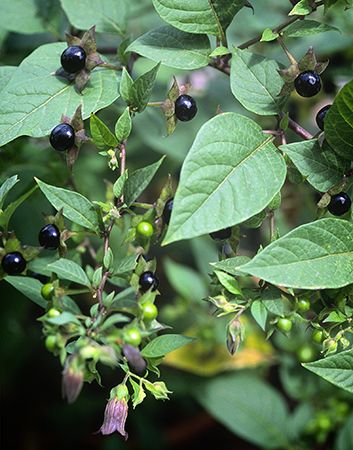
- Toxins and Poisons: Many plants produce substances that sicken or deter predators. For example, milkweed contains cardenolides, which are toxic to many vertebrates but are sequestered by monarch butterfly larvae for their own protection. Other plants, such as deadly nightshade and castor beans, contain potent poisons that are dangerous if consumed.121113
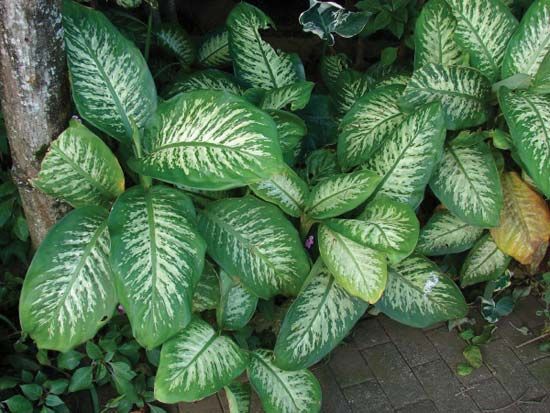
- Mechanical-Chemical Hybrids: Some plants use specialized structures to deliver chemicals. Stinging nettles possess trichomes—hair-like structures that break upon contact to inject a mixture of irritants, including formic acid and histamine. Similarly, dieffenbachia uses idioblasts to fire calcium oxalate crystals into predators, followed by the release of venom-like enzymes.1213
- Chemical Signaling: Plants can communicate threats to neighboring plants by releasing volatile organic compounds (VOCs). This “botanical smoke signal” can trigger nearby plants to increase their own production of toxic compounds or attract predators that feed on the attacking pests.12
Sources
- Why Do Onions Make You Cry? — Encyclopædia Britannica
- organosulfur compound - Reactions — Encyclopædia Britannica
- Protein - Enzymes — Encyclopædia Britannica
- Cell wall - Proteins — Encyclopædia Britannica
- catalysis - Biological catalysts: the enzymes — Encyclopædia Britannica
- Plant - Control mechanisms — Encyclopædia Britannica
- Plant - Principal pathways and cycles — Encyclopædia Britannica
- organosulfur compound - Disulfides and polysulfides and their oxidized products — Encyclopædia Britannica
- Sulfur cycle — Encyclopædia Britannica
- organosulfur compound — Encyclopædia Britannica
- Chemoreception - Defensive tastes — Encyclopædia Britannica
- Botanical Barbarity: 9 Plant Defense Mechanisms — Encyclopædia Britannica
- What’s the Difference Between Venomous and Poisonous? — Encyclopædia Britannica
- mimicry - The chemical basis for repulsion — Encyclopædia Britannica
Published on · 3 min read