Winteraceae
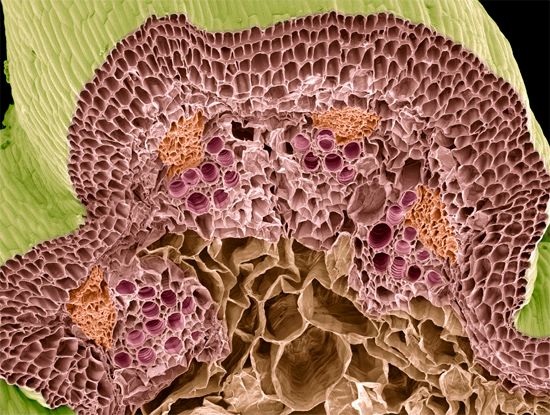
The most distinctive feature of the Winteraceae family is that its members possess vesselless wood.
What unique features distinguish the wood anatomy of Winteraceae from other plant families?
The most distinctive feature of the Winteraceae family is that its members possess vesselless wood.123
While most angiosperms have evolved a specialized vessel system consisting of vessel members to conduct water efficiently, Winteraceae rely solely on tracheids for water transport and structural support. This trait is considered a primitive character in the evolution of flowering plants. Because tracheids are less efficient at water conduction than vessels, most species in this family are restricted to damp, shady habitats to prevent excessive water loss through transpiration.143
Additionally, the family is characterized by:
- Aromatic properties: Many species produce acrid, peppery-tasting sap and leaves, which serve as a chemical defense mechanism against herbivores.123
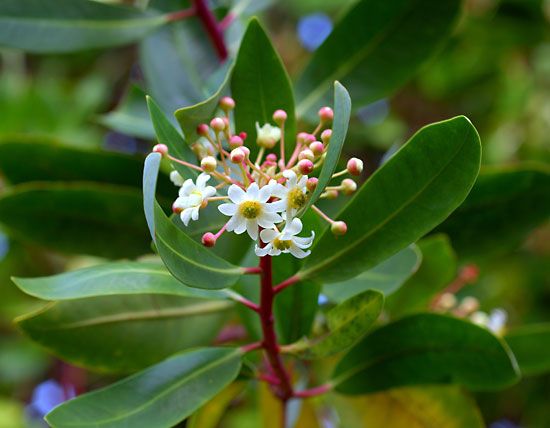
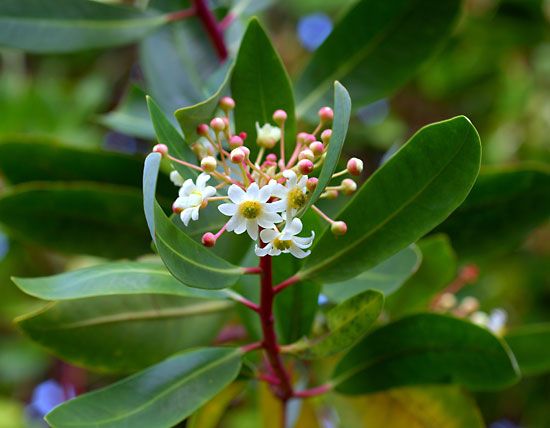
- Gland-dotted leaves: The leathery leaves typically feature gland-dotted surfaces.2
- Primitive floral structures: The family exhibits various primitive traits, such as spirally arranged petals and, in some genera like Belliolum, leaflike stamens.3
Where are Winteraceae plants primarily found in the world?
Winteraceae plants are primarily found in the Southern Hemisphere, with a distribution that spans Southeast Asia and Australasia.34
The family’s geographic range includes several specific regions:
- Australasia and Southeast Asia: This area contains a significant portion of the family’s diversity, with the genus Tasmannia extending from the Philippines to Australia and reaching its greatest diversity in New Guinea.4
- New Zealand: The genus Pseudowintera is restricted to this region.4
- The Americas: The genus Drimys is found in Central and South America, ranging from Mexico to Tierra del Fuego. One species is also found in the Juan Fernández Islands off the coast of Chile.4
- New Caledonia and the Solomon Islands: Several genera, including Belliolum, Exospermum, and Bubbia, are located in these areas.4
- Madagascar: The genus Takhtajania is found here.4
What role do Winteraceae plants play in their native ecosystems?
In their native ecosystems, Winteraceae plants primarily serve as components of damp, shady forest habitats, where they have evolved specific strategies to survive and interact with their environment.3
Their ecological roles and interactions include:
- Defense Against Herbivory: Many species produce acrid, peppery-tasting sap and leaves, which act as a chemical deterrent against browsing animals. In New Zealand, for example, the genus Pseudowintera has notably increased in population because it is unpalatable to introduced deer, which have otherwise severely impacted other native shrubs and trees.3
- Pollination Networks: The family relies on a diverse range of pollinators, including beetles, primitive moths, flies, thrips, and even caterpillars, to facilitate reproduction.3
- Forest Composition: In certain regions, such as the Juan Fernández Islands, species like Drimys are among the most common forest trees, playing a significant role in the local vegetation structure.3
- Medicinal and Historical Utility: While their primary ecological function is within their native habitats, some species, such as Drimys winteri, have historically been utilized by humans for their medicinal properties, including as a treatment for scurvy.73
What are the main characteristics of the Winteraceae plant family?
The Winteraceae family consists of approximately 9 genera and 120 species of aromatic trees and shrubs. As members of the magnoliid clade, they are considered an early branch in the angiosperm tree and possess several distinct characteristics:
- Wood Anatomy: A defining primitive feature of the family is that their wood lacks water-conducting vessels, relying instead on tracheids.34
- Leaves: The plants feature leathery, gland-dotted leaves that are typically arranged alternately. Many species produce an acrid, peppery-tasting sap that serves as a chemical defense against browsing animals.13
- Stomata: To manage transpiration in their preferred damp, shady habitats, their stomata are often partially obstructed by a porous, waxy material called cutin.3
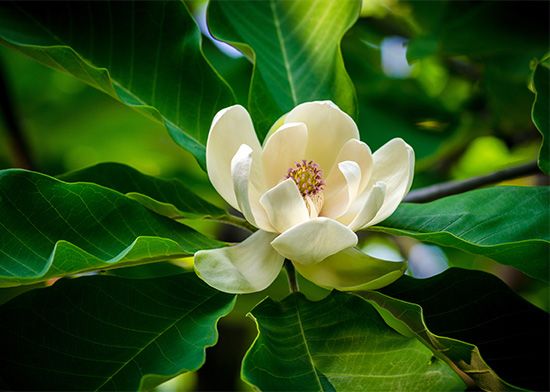
- Flowers: The flowers are generally small and bisexual, often appearing in clusters. They typically consist of a small cup of sepals and spirally arranged petals. The stamens range from primitive, leaflike forms to more advanced structures.13
- Pollen and Fruit: Most species produce distinctive pollen in tetrads with reticulate sculpturing. The resulting fruit is usually indehiscent and berrylike.3
Sources
- magnoliid clade - Vegetative structures — Encyclopædia Britannica
- Tracheid — Encyclopædia Britannica
- Winteraceae — Encyclopædia Britannica
- Canellales — Encyclopædia Britannica
- Rosales - Distribution and abundance — Encyclopædia Britannica
- Winteraceae — Merriam-Webster
- Asteraceae - Pollination — Encyclopædia Britannica
Published on · 3 min read