Ladies’ Tresses
Ladies’ tresses refers to a genus of terrestrial orchids known as Spiranthes, which comprises approximately 45 species found in grasslands and woodlands…
What is Ladies’ tresses?
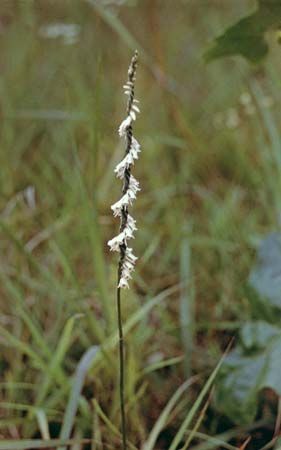
Ladies’ tresses refers to a genus of terrestrial orchids known as Spiranthes, which comprises approximately 45 species found in grasslands and woodlands globally.1
These plants are characterized by a fleshy root system and narrow basal leaves. Their most distinctive feature is a spiral arrangement of small flowers located at the top of a spike. While the size and color of these flowers vary by species, they typically feature six tepals that may form a hood over the central lip.12
Common examples include the nodding ladies’ tresses (S. cernua) and slender ladies’ tresses (S. lacera) in North America, as well as the autumn ladies’ tresses (S. spiralis) found in Europe. Note that the creeping ladies’ tresses (Goodyera repens) is a separate, unrelated species.1
How do orchids differ from other types of flowering plants?
Orchids are distinguished from other flowering plants primarily by a unique combination of morphological characteristics, particularly within their floral structure. While individual features—such as specialized pollen masses or specific reproductive arrangements—can be found in other plant groups, the Orchidaceae family is defined by the specific way these traits are combined.3
Key differences include:
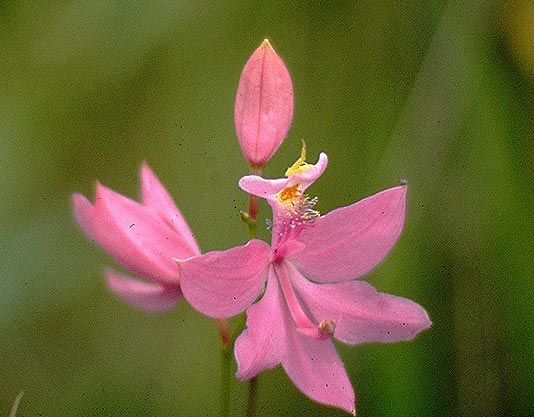
- Floral Morphology: The stamens and pistil are fused into a single structure called a column. Additionally, orchid flowers are typically bilaterally symmetrical, with one petal modified into a landing platform known as the lip or labellum.34
- Pollen Organization: Orchids often package their pollen into cohesive masses called pollinia, which are designed to adhere to pollinators.34
- Seed Development: Unlike most angiosperms, orchid seeds lack endosperm, the nutrient-rich tissue that typically fuels germination. Consequently, all orchids are mycoheterotrophs during their initial development, relying on a symbiotic fungus to provide the necessary nutrients to sprout.56
What role do pollinators play in the life cycle of Spiranthes?
Pollinators are essential to the life cycle of Spiranthes (ladies’ tresses) and other orchids, as they facilitate the transfer of pollen between flowers, enabling reproduction.78
Orchids have evolved highly specialized mechanisms to ensure this process occurs with precision:
- Floral Structure: The orchid flower is uniquely adapted to function as a landing platform for insects. The labellum (lip) guides the visitor toward the column, where the stamens and pistil are fused. This ensures that when an insect visits, the flower can precisely deposit or receive pollinia—cohesive masses of pollen—on the insect’s body.79
- Attraction Strategies: While some orchids provide nectar as a reward, many species, including some within the orchid family, rely on deceptive attractants. These may include mimicking the appearance or scent of female insects to lure males, or producing pseudopollen to entice visitors.798
- Precision and Dependency: Because orchids often package pollen into specific masses, the mechanical fit between the flower and the pollinator is critical. If a flower is too large or small for its specific visitor, the transfer of pollen to the stigma may fail.8
Why are some orchids considered terrestrial while others are epiphytic?
Orchids exhibit diverse growth forms, primarily categorized as either terrestrial or epiphytic, based on their environmental adaptations and evolutionary history.
- Terrestrial Orchids: These species grow directly in the soil and are the predominant form found in temperate zones. They often inhabit environments such as bogs, prairies, and forests, where they draw nutrients and water from the ground.121314
- Epiphytic Orchids: Primarily found in tropical regions, these plants grow upon other objects—typically trees—merely for physical support. By growing in the canopy, they gain better access to sunlight in dense, shaded forests and exploit nutrients from organic debris that collects on branches. Epiphytes do not rely on the ground for nutrients; instead, they absorb water and minerals from rain, moisture in the air, and accumulated debris. Many epiphytic orchids have evolved specialized thickened stems called pseudobulbs to store water, an adaptation that supports their life above the ground.1512
While these categories are distinct, some orchids show remarkable ecological tolerance, growing on cacti, mangrove roots, or even bare rocks.14
Sources
- ladies’ tresses — Encyclopædia Britannica
- ladies' tresses — Merriam-Webster
- orchid - Structural diversity — Encyclopædia Britannica
- orchid - Natural history — Encyclopædia Britannica
- orchid - Floral structure — Encyclopædia Britannica
- mycoheterotroph — Encyclopædia Britannica
- orchid - Pollination — Encyclopædia Britannica
- orchid - Bee pollination — Encyclopædia Britannica
- Botanical Sex: 9 Alluring Adaptations — Encyclopædia Britannica
- mimicry - Orchids — Encyclopædia Britannica
- Chemoreception - Sex-attractant pheromones — Encyclopædia Britannica
- orchid - Ecology — Encyclopædia Britannica
- Epiphyte — Encyclopædia Britannica
- orchid - Growth forms — Encyclopædia Britannica
- orchid: Top Questions — Encyclopædia Britannica
Published on · 3 min read