Silver Fir
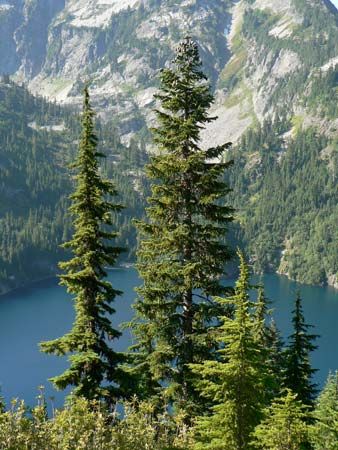
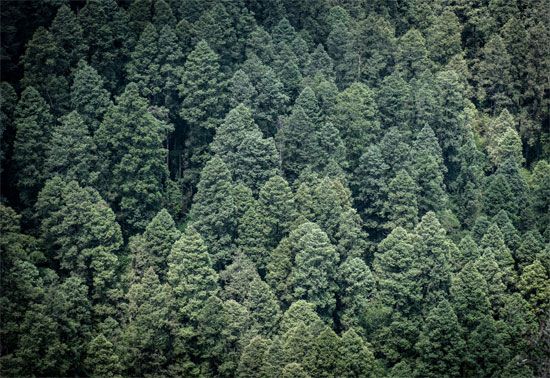
The silver fir (Abies alba) is a lofty evergreen conifer tree that can reach heights of up to 45 meters (150 feet). It is characterized by large, horizontal…
What is Silver fir?
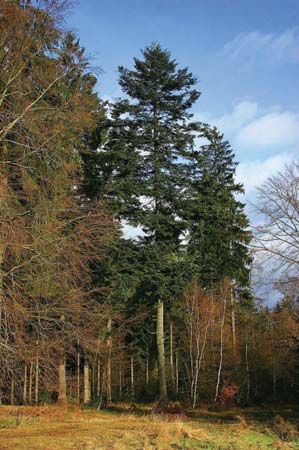
The silver fir (Abies alba) is a lofty evergreen conifer tree that can reach heights of up to 45 meters (150 feet). It is characterized by large, horizontal boughs that curve upward at their extremities.12
Native to Europe and Asia, the silver fir is abundant in the mountain ranges of central and southern Europe, including the Alps, the Rhineland, the Apennines, and the Pyrenees. In Asia, it is found in the Caucasus and Ural mountains, as well as parts of the Altai chain.2
The species is valued as both an ornamental and a source of timber. Its soft wood is easily worked, making it useful for carpentry, and its bark yields high-quality turpentine and other resin products.2
How do true firs differ from other coniferous trees?
True firs (genus Abies) are distinguished from other coniferous trees primarily by their unique foliage and reproductive structures. While many conifers are colloquially called “firs”—such as the Douglas fir or hemlock—true firs possess specific botanical characteristics that set them apart:2
- Needle Attachment: The needlelike leaves of a true fir grow directly from the branch. When these needles fall, they leave behind conspicuous, circular, suction-cup-shaped scars on the branch.2
- Cone Orientation: Unlike many other conifers, the female cones of true firs are borne in an upright position.2
- Cone Disintegration: When a true fir cone reaches maturity, it falls apart while still on the tree, leaving only a spikelike central axis attached to the branch.2
- Seed Structure: Each thin, rounded scale of the cone bears two broadly winged seeds.2
These features provide a reliable way to identify true firs within the broader conifer group, which otherwise exhibits significant diversity in leaf shape, bark texture, and reproductive habits.234
What are some common uses for the wood and resin of fir trees?
Fir trees are highly valued for both their timber and the resin they produce. Below are some of their common uses:
Uses of Fir Wood
Fir is a primary source of softwood timber, which is essential in the construction industry.5
- Construction and Carpentry: Fir is widely used for structural framing, including studs, joists, and rafters for houses and small buildings.6
- Composite Products: Beyond raw lumber, fir wood is utilized in the production of plywood, particleboard, and chipboard10.
- Acoustic Applications: Due to its density and elasticity, fir wood is sometimes used in the construction of musical instruments, where it helps amplify sound.7
Uses of Fir Resin
Resin from fir trees serves various industrial and specialized purposes:
- Strasbourg Turpentine: An oleoresin obtained primarily from the silver fir (Abies alba), historically used for various applications.8
- Microscopy: Canadian balsam, derived from the resin blisters on the bark of the balsam fir, is used as a mounting medium for microscopic preparations.5
- Chemical Derivatives: Components such as turpentine and rosin can be extracted from firs, serving as raw materials for adhesives, perfumes, flavourings, and industrial solvents.9
Why are some species of fir trees considered endangered?
Several species of fir trees are currently listed as endangered species by the IUCN Red List of Threatened Species. The primary drivers behind the decline of these populations include:
- Overharvesting: The unsustainable extraction of timber and other resources has significantly reduced the numbers of certain fir species.2
- Habitat Loss: The destruction of forest ecosystems for agriculture, development, or other land-use changes has fragmented and diminished the natural environments required for these trees to thrive.211
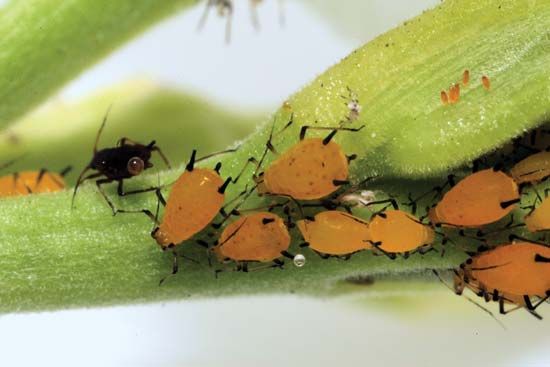
- Invasive Species and Disease: The introduction of non-native pests and pathogens—often facilitated by global trade—can devastate fir populations that lack natural resistance. For example, aphids have made it difficult to maintain commercial crops of the European silver fir in certain regions.12
- Environmental Stress: Factors such as climate change, fire, and drought can further weaken forest health, making trees more susceptible to insect infestations and fungal diseases.1211
Species such as the Guatemalan fir, Korean fir, Spanish fir, and Ziyuan fir are currently of conservation concern, with the Algerian fir and Sicilian fir classified as critically endangered.2
Sources
- silver fir — Encyclopædia Britannica
- fir — Encyclopædia Britannica
- gymnosperm - Pinophyta — Encyclopædia Britannica
- conifer - Stem — Encyclopædia Britannica
- wood - Extractives — Encyclopædia Britannica
- Strasbourg turpentine — Merriam-Webster
- wood - Acoustic properties — Encyclopædia Britannica
- fir — Merriam-Webster
- carpentry — Encyclopædia Britannica
- conifer - Economic importance — Encyclopædia Britannica
- forestry - Insect and disease control — Encyclopædia Britannica
- Deforestation - Effects — Encyclopædia Britannica
Published on · 3 min read