How Can Some Trees Survive for Thousands of Years?
The survival of trees for thousands of years, such as the bristlecone pines, is attributed to a combination of environmental luck and unique biological…
How Can Some Trees Survive for Thousands of Years?
The survival of trees for thousands of years, such as the bristlecone pines, is attributed to a combination of environmental luck and unique biological traits.12
Ancient trees have successfully avoided external threats like fires, diseases, and human activity over millennia. Biologically, they differ from animals in how they age. Studies indicate that some species, such as the ginkgo, show little evidence of cell death in their vascular cambium, and others maintain stable mutation rates over time.1
Structurally, trees are modular, allowing them to replace lost limbs or leaves. Furthermore, they are highly energy-efficient; because up to 95 percent of an old tree consists of dead woody tissue, it requires minimal metabolic activity to maintain its structure. These factors, paired with robust chemical defenses against pests, allow these organisms to endure for extraordinary lengths of time.1
What is the difference between non-clonal and clonal trees?
The distinction between non-clonal and clonal trees primarily concerns how an individual organism is defined and how it reproduces.
Non-Clonal Trees
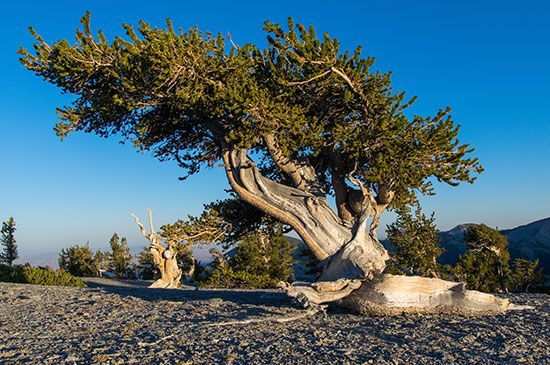
A non-clonal tree is a single, distinct individual that grows from a seed. Its age is determined by the continuous growth of its original meristems—the tissues responsible for growth—which have been active since the tree first germinated from an embryo. The Great Basin bristlecone pine is considered the oldest known non-clonal organism on Earth, with some individuals exceeding 5,000 years of age. In these trees, age can often be verified by counting annual rings in the trunk5.415
Clonal Trees
Clonal trees, by contrast, are part of a colony where multiple stems or trunks are genetically identical and often connected by a shared root system. While the individual stems may appear to be separate trees, they are biologically part of the same organism, which can persist for much longer than any single trunk.4
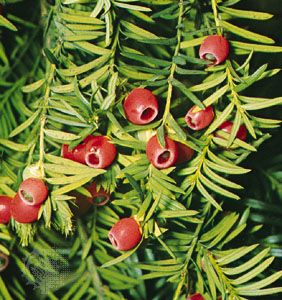
Confusion regarding the age of trees often arises when multiple trunks fuse together, making a group of younger trees appear to be one ancient individual. For example, some specimens of English yews and other species were historically overestimated in age because researchers mistook fused, close-growing trunks for a single, ancient non-clonal tree.4
How do scientists determine the age of an ancient tree?
Scientists determine the age of an ancient tree primarily through dendrochronology, the scientific study of tree rings. Because many tree species in regions with seasonal climate variations produce one growth ring per year, counting these rings provides a reliable estimate of age.678
Methods of Analysis
- Increment Boring: Researchers use an increment borer—a small, hollow metal tube—to extract a core sample from the tree’s bark to its center. This allows for the counting and measurement of rings without harming the tree.68
- Cross-Dating: By comparing the ring patterns of living trees with those of deadwood or ancient structural beams, scientists can create overlapping chronologies that extend back thousands of years.697
- Radiocarbon Dating: For samples where tree rings are difficult to analyze or to verify the accuracy of ring-based chronologies, carbon-14 dating is used. By measuring the decay of radioactive carbon isotopes in organic material, scientists can estimate the time elapsed since the tree or a specific part of it died.57
Challenges and Limitations
Determining age is not always straightforward. In the tropics, where growth is continuous, rings may not form clearly. Additionally, researchers must be cautious of trunk fusion, where multiple trees grow together, potentially leading to significant overestimations of a single tree’s age.78
What are some of the oldest living tree species found outside of North America?
While the bristlecone pine of North America is widely recognized as the oldest non-clonal tree, other regions of the world are home to remarkably ancient species.
One notable example found outside of North America is the alerce (Fitzroya cupressoides), a coniferous tree native to the temperate rainforests of southern Chile and Argentina. The alerce is considered a southern relative of the giant sequoia and is capable of reaching extreme ages, with the oldest known individuals estimated to be approximately 4,000 years old.1
Additionally, the ginkgo (Ginkgo biloba), native to China, is renowned for its extraordinary longevity. Research into the vascular cambium of ginkgo trees has shown little evidence of the cell death typically associated with aging in other organisms, allowing these trees to persist for millennia.10
These examples highlight that extreme longevity in trees is a global phenomenon, often supported by simple, low-maintenance body plans and robust biological defenses against environmental stressors.10
Sources
- How Can Some Trees Survive for Thousands of Years? — Encyclopædia Britannica
- conifer - Diversity of size and structure — Encyclopædia Britannica
- lower vascular plant - Vascular system — Encyclopædia Britannica
- bristlecone pine — Encyclopædia Britannica
- life span - Problem of defining age — Encyclopædia Britannica
- dendrochronology — Encyclopædia Britannica
- geochronology - Tree-ring growth — Encyclopædia Britannica
- How does carbon dating work? — Encyclopædia Britannica
- Holocene Epoch - Chronology and correlation — Encyclopædia Britannica
- alerce — Encyclopædia Britannica
- The Clone Giants - “The Clone Giants” transcript — Encyclopædia Britannica
- pine - Major North American pines — Encyclopædia Britannica
Published on · 3 min read