11 Questions About Birds Answered
Birds are fascinating creatures with complex behaviors and unique physiological traits. Here are 11 questions and answers regarding their natural history:
What are 11 Questions About Birds Answered?
Birds are fascinating creatures with complex behaviors and unique physiological traits. Here are 11 questions and answers regarding their natural history:
- What are the unique characteristics of birds? They are warm-blooded vertebrates with feathers, a four-chambered heart, hard-shelled eggs, and forelimbs modified into wings.1
- How do birds fly? They flap their wings to generate lift and thrust, using their tails for steering. Their wing aerodynamics are highly adaptable, allowing for varied flight styles.2
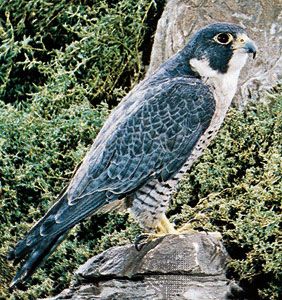
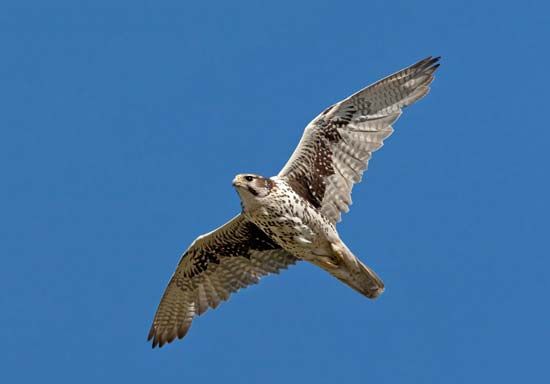
- What is the fastest bird? The peregrine falcon is the fastest, reaching speeds in a dive exceeding 320 km/hr (200 mph).2
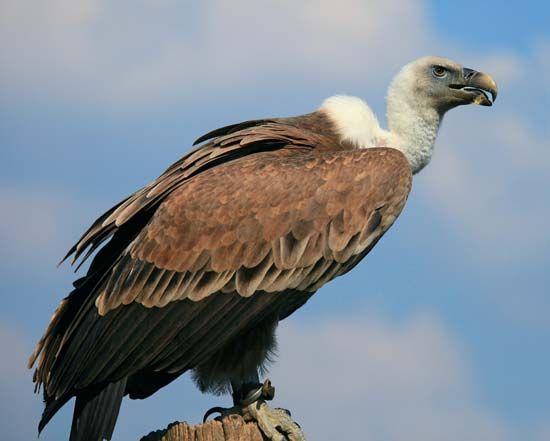
- How high do birds fly? Most fly below 150 meters, but some migrate at 610–1,525 meters. The Rüppell’s griffon vulture has been recorded at 11,300 meters.3
- Why do birds sing? Birdsong is primarily used by males during breeding for territorial defense and attracting mates.4
- Are birds related to mammals? No, they are more closely related to reptiles.1
- What do birds eat? Diets vary widely, from insects and fish to nectar, seeds, and carrion, often involving specialized bills and tongues.5
- How do birds maintain their feathers? They perform comfort movements like preening, oiling, and shaking to keep feathers in good condition for flight and insulation.6
- Do birds defend territory? Yes, many species defend nesting and foraging areas, often using ritualized displays to avoid physical fighting.6
- How do birds adapt to high altitudes? They possess highly efficient respiratory systems to extract oxygen and can reduce their metabolic rates.3
- How has research on birds influenced science? Studies on Darwin’s finches were instrumental in formulating the theory of natural selection.1
How do birds navigate across long distances during migration?
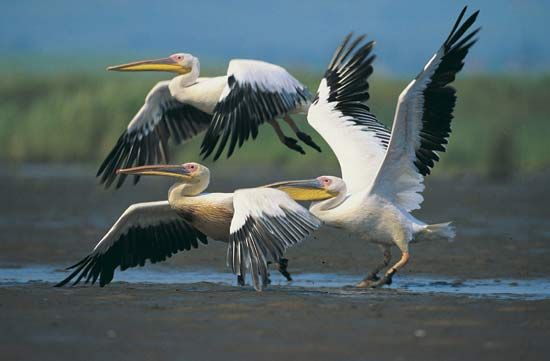
Birds navigate across vast distances using a sophisticated combination of innate compasses and learned spatial maps. Their ability to return to specific locations, known as homing, relies on several environmental and physiological cues.89
Navigational Mechanisms
- Celestial Navigation: Diurnal birds use the Sun as a compass, compensating for its movement throughout the day using an internal clock. Nocturnal migrants orient themselves using the stars, effectively determining their latitude and longitude based on celestial patterns.810
- Magnetic Sensitivity: Birds possess a compass sense, likely derived from a sensitivity to the intensity and direction of the Earth’s magnetic field, which allows them to maintain a constant heading.810
- Landmarks and Olfaction: Near their destination, birds rely on visual landmarks, such as coastlines or mountain ranges. Some species, including homing pigeons, also utilize olfaction to detect environmental odors, helping them pinpoint specific locations.91110
Compass vs. Map
Navigation involves two distinct components: a compass for directional orientation and a map for goal orientation. While the compass sense is often innate, the “map” component—which informs a bird of its position relative to its destination—frequently develops through experience. For instance, young birds may rely solely on a compass, whereas experienced adults can adjust their flight path to reach a goal even when displaced from their usual route.810
What are the primary differences between bird songs and bird calls?
The primary distinction between bird songs and bird calls lies in their complexity, purpose, and timing.
Bird Songs
- Purpose: Songs are primarily used during the breeding season to attract mates and defend territories against rivals of the same species.212
- Complexity: They are typically longer, more complex, and often more melodic than calls.2
- Performance: In most passerine species, the “true song” is performed by the male. While songs are often learned, they are also influenced by heredity.132
- Function: They serve as a form of communication that allows other birds to identify the singer’s species, mood, and individual identity.2
Bird Calls
- Purpose: Calls are functional vocalizations used for immediate needs, such as alerting others to danger (alarm notes), keeping flocks or pairs together (location notes), or stimulating parents to feed their young (begging calls).12
- Complexity: Calls are generally simpler and shorter than songs.2
- Performance: Both males and females use calls throughout the year for various social and survival situations, including aggression and courtship.1312
Both types of sounds are produced by the syrinx, a specialized vocal organ located at the base of the trachea.14
How do bird respiratory systems differ from those of mammals?
Bird respiratory systems differ significantly from those of mammals, primarily in their structure and ventilation efficiency, which are adapted to support the high metabolic demands of flight.
Key Structural and Functional Differences
- Ventilation Pattern: Unlike mammals, which utilize a tidal, bidirectional flow where air enters and exits through the same path, birds employ a unidirectional flow. Their lungs maintain a constant volume and do not inflate or deflate; instead, air is moved through the system by a series of air sacs that act like interconnected bellows.15
- Efficiency: Because of this continuous, one-way airflow, bird lungs are more completely ventilated than mammalian lungs. This arrangement allows for superior gas exchange between the air capillaries and blood capillaries, which is essential for high-altitude flight and intense physical activity.15
- Anatomy: While the mammalian lung relies on an alveolar surface, birds utilize tertiary bronchi that branch into fine air capillaries. Additionally, the total volume of a bird’s respiratory system is roughly twice that of a mammal of comparable size.15
Sources
- Bird - Flight — Encyclopædia Britannica
- Birdsong — Encyclopædia Britannica
- How high do birds fly? — Encyclopædia Britannica
- Bird - Feeding habits — Encyclopædia Britannica
- Coraciiform - Habitat selection and ecological diversity — Encyclopædia Britannica
- Bird: Top Questions — Encyclopædia Britannica
- Bird - Behaviour — Encyclopædia Britannica
- Migration - Birds — Encyclopædia Britannica
- Migration - Navigation and orientation — Encyclopædia Britannica
- Chemoreception - Homing — Encyclopædia Britannica
- Animal learning - Navigation — Encyclopædia Britannica
- Syrinx — Encyclopædia Britannica
- Passeriform - Sound production — Encyclopædia Britannica
- Bird - Sound — Encyclopædia Britannica
- Respiratory system - Birds — Encyclopædia Britannica
- Pelecaniform - Distinguishing characteristics — Encyclopædia Britannica
Published on · 4 min read