7 of the World’s Most Dangerous Lizards and Turtles
While many lizards and turtles are harmless, certain species possess aggressive behaviors, powerful jaws, or venom that can pose risks to humans. Here are…
What are 7 of the World’s Most Dangerous Lizards and Turtles?
While many lizards and turtles are harmless, certain species possess aggressive behaviors, powerful jaws, or venom that can pose risks to humans. Here are seven notable examples:1
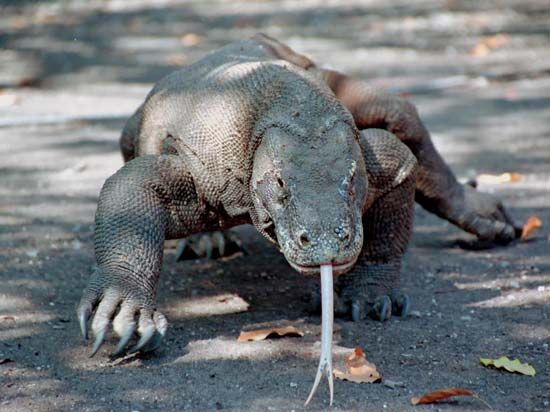
- Komodo dragon: The world’s largest lizard, it can kill humans. It uses a venomous bite that inhibits blood clotting, causing victims to go into shock.1
- Alligator snapping turtle: Known for its powerful bite capable of severing human fingers, this large freshwater turtle uses a wormlike tongue lure to attract prey.12
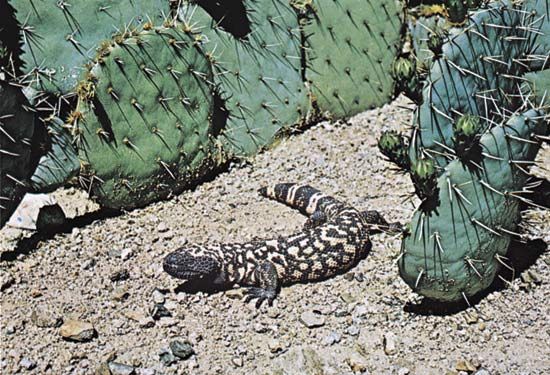
- Gila monster: This venomous lizard delivers nerve poison through grooved teeth while locking its muscular jaws onto its victim.1
- Mexican beaded lizard: A relative of the Gila monster, it also uses grooved teeth to funnel nerve poison into its prey.1
- Common snapping turtle: While usually unaggressive in water, these turtles can lunge and snap viciously when on land.13
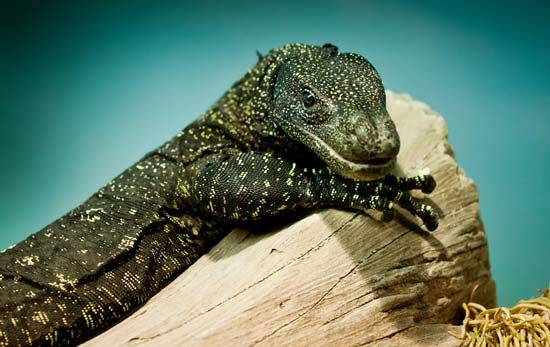
- Crocodile monitor: Known for being highly aggressive, this large monitor lizard is considered risky to encounter.1
- Common water monitor: These active predators can inflict wounds with sharp claws, a whip-like tail, and a venomous bite.1
How do venomous lizards like the Gila monster deliver their toxins?
Venomous lizards in the genus Heloderma, such as the Gila monster and the Mexican beaded lizard, deliver their toxins through a specialized mechanical process involving their jaws and teeth.51
These lizards possess large heads and powerful, muscular jaws that allow them to maintain a firm, locked grip on their prey or target. Unlike many venomous snakes that inject venom through hollow fangs, these lizards utilize grooved teeth. Specifically, many of their mandibular (lower jaw) teeth feature longitudinal grooves or folds on the inner side.516
When the lizard bites, these grooves act as channels, funneling the nerve poison from glands located in the lower jaw directly into the wound as the venom seeps in during the time the lizard holds its bite.516
What unique physical adaptations help the alligator snapping turtle hunt?
The alligator snapping turtle utilizes several unique physical adaptations to hunt effectively in its aquatic environment:
- Lingual Lure: The most distinctive feature is a pink, fleshy, wormlike projection on the floor of its mouth. The turtle lies motionless on the river or lake bottom with its mouth open, wiggling this appendage to attract unsuspecting fish or frogs within striking distance.734
- Camouflage: The turtle’s carapace features three large, pronounced ridges known as keels, which are covered in spikes. This rugged, “prehistoric” appearance, combined with the growth of algae on its shell, helps the turtle blend into the murky bottom of its habitat, effectively disguising it from prey.38
- Powerful Jaws: It possesses extremely strong jaws capable of exerting several hundred newtons of force. This allows the turtle to easily crush shells and bone, ensuring that once prey is within reach, it can be captured and consumed efficiently.3
- Chemical Sensing: Beyond visual luring, the turtle is capable of using a chemical sense to locate specific prey, such as mud turtles and musk turtles, in its environment.3
Why is the Komodo dragon considered the largest and most dangerous lizard?
The Komodo dragon (Varanus komodoensis) is recognized as the world’s largest living lizard species, reaching lengths of up to 3 meters (10 feet) and weights typically around 135 kg (298 pounds), with some individuals reaching 165 kg (364 pounds).910
Its reputation as a dangerous predator stems from several specialized physical and behavioral adaptations:
- Venomous Bite: The Komodo dragon delivers a venomous bite containing toxins that inhibit blood clotting. This causes rapid blood loss and shock in prey, which often succumb to the effects shortly after the initial strike.101
- Physical Trauma and Bacteria: Beyond venom, the lizard’s mouth contains sharp, serrated, backward-curving teeth. The physical trauma of the bite, combined with the introduction of harmful bacteria into the wound, plays a significant role in incapacitating prey.101
- Ambush Tactics: They are powerful predators that wait along game trails to ambush large mammals, such as pigs, deer, and cattle. They are also capable of running swiftly and have been known to attack and kill human beings.101
Sources
- 7 of the World’s Most Dangerous Lizards and Turtles — Encyclopædia Britannica
- reptile - Striking and biting — Encyclopædia Britannica
- alligator snapping turtle — Encyclopædia Britannica
- snapping turtle — Encyclopædia Britannica
- Gila monster — Encyclopædia Britannica
- lizard - Dentition — Encyclopædia Britannica
- alligator snapping turtle — Merriam-Webster
- turtle - Form and function — Encyclopædia Britannica
- Komodo dragon: Top Questions — Encyclopædia Britannica
- Komodo dragon — Encyclopædia Britannica
Published on · 3 min read