Bijagós Islands
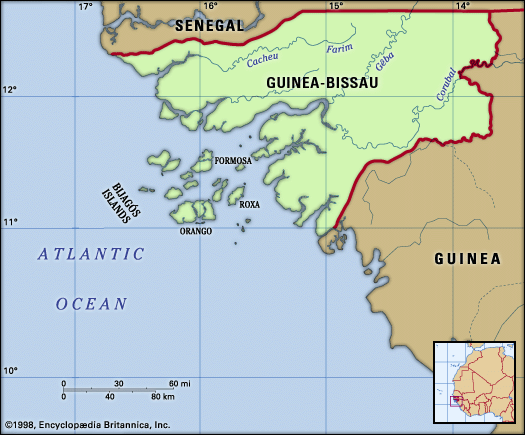
The Bijagós Islands are an archipelago located approximately 30 miles (48 km) off the coast of Guinea-Bissau in western Africa. Extending southwestward into…
What is Bijagós Islands?
The Bijagós Islands are an archipelago located approximately 30 miles (48 km) off the coast of Guinea-Bissau in western Africa1. Extending southwestward into the Atlantic Ocean, the archipelago consists of 15 main islands, including Caravela, Carache, Formosa, Uno, Orango, Orangozinho, Bubaque, and Roxa.12
These islands form the Bolama region, where the town of Bolama serves as the regional capital. The landscape is characterized by lush vegetation, sandy beaches, mangrove forests, and swamps. Economically, the region relies on agriculture, with palm products, oil palms, and rice serving as major crops. Additionally, Caravela Island contains phosphate deposits. The primary ethnic group inhabiting the islands is the Bijagós people.21
What unique traditions do the Bijag3s people practice?
How do mangrove forests support the local ecosystem?
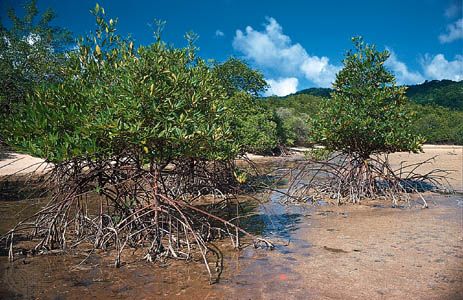
Mangroves are specialized trees and shrubs that serve as vital keystone species within coastal ecosystems. By acting as a buffer between marine and terrestrial environments, they provide essential protection against storm surges, flooding, and coastal erosion, significantly reducing the impact of damaging winds and waves on shorelines.34
Their complex root systems are fundamental to their ecological role:
- Water Quality: Roots trap sediments and pollutants, which improves water clarity and helps maintain the health of nearby coral reefs and seagrass beds.34
- Biodiversity: These forests serve as critical nursery habitats for a wide array of fish, crabs, shrimp, and shellfish. Many species rely on these areas for breeding, spawning, and hatching, making them indispensable to the survival of local fisheries.34
- Habitat Support: Beyond marine life, mangroves provide nesting sites for various birds and support a diverse range of terrestrial organisms.4
What are the main challenges facing the environment in Guinea-Bissau?
Guinea-Bissau faces several significant environmental challenges, many of which are linked to agricultural practices, historical conflict, and infrastructure limitations.
- Soil Degradation and Erosion: Traditional slash-and-burn agriculture and crop rotation practices have left large portions of land uncultivated and vulnerable to soil erosion. Additionally, the destruction of protective riverine dikes during past anti-colonial warfare has led to excessive salination of arable soils, compromising their fertility.67
- Wildlife Threats: While the country possesses diverse flora and fauna, many wild animals are hunted for their meat and hides. Some species, such as sea turtles, are considered endangered, and the country’s once-substantial elephant population has been virtually eliminated.8
- Water and Infrastructure: Although the country has abundant water resources, the quality of water and the delivery systems for both human consumption and agriculture require significant improvement.9
- Susceptibility to Flooding: The country’s flat coastal topography and mature floodplains make many areas highly susceptible to flooding during the rainy season.7
Sources
- Bijagós Islands — Encyclopædia Britannica
- Bolama — Encyclopædia Britannica
- mangrove: Top Questions — Encyclopædia Britannica
- Amazing Mangroves — Encyclopædia Britannica
- Mangroves Matter - Learn more — Encyclopædia Britannica
- Guinea-Bissau - Agriculture, forestry, and fishing — Encyclopædia Britannica
- Guinea-Bissau - Drainage and soils — Encyclopædia Britannica
- Guinea-Bissau - Resources and power — Encyclopædia Britannica
- Gulf of Guinea — Encyclopædia Britannica
- Guinea-Bissau - Plant and animal life — Encyclopædia Britannica
- Deforestation - Effects — Encyclopædia Britannica
Published on · 2 min read