Brazil Nut
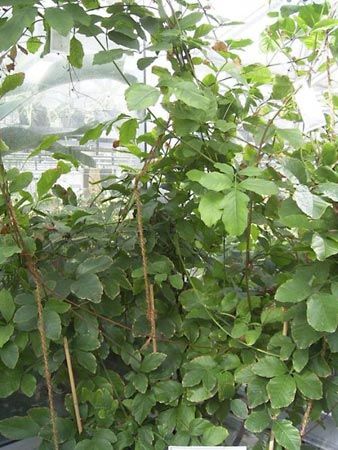
The Brazil nut tree (Bertholletia excelsa) is a vital component of the Amazon rainforest, serving as a prime example of mutualism and ecological…
What role do Brazil nuts play in the Amazon rainforest ecosystem?
The Brazil nut tree (Bertholletia excelsa) is a vital component of the Amazon rainforest, serving as a prime example of mutualism and ecological interdependence. Because these trees require specific conditions to reproduce, they cannot be grown in plantations and must be harvested from undisturbed habitats.12
Their survival relies on a complex chain of interactions:
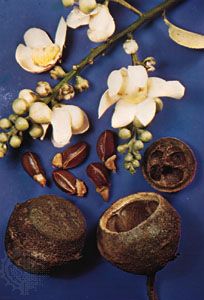
- Pollination: The tree’s semi-enclosed flowers can only be accessed by euglossine bees. Female bees pollinate the flowers while feeding on nectar, a process essential for nut production.123
- Orchid Dependency: Male euglossine bees must visit specific orchids to collect fragrant chemicals required for mating. Without these orchids, the bee population cannot sustain itself, and the Brazil nut trees remain unpollinated.23
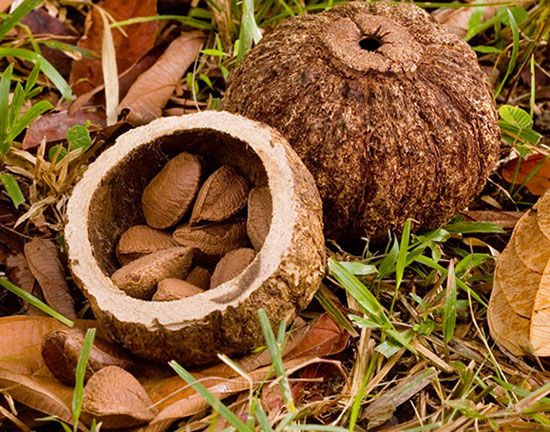
- Seed Dispersal: Once the hard, woody pods fall to the forest floor, agoutis—large rodents—are the only animals capable of chewing through the shells. By scattering and burying the seeds, they facilitate the regeneration of the forest.12
What is the historical significance of Brazil nuts in South American cultures?
The Brazil nut (Bertholletia excelsa) has held significant cultural and economic importance in South America for centuries, particularly within the Amazon basin. Historically and into the present day, these nuts have served as a vital source of protein and calories for tribal, rural, and urban populations across the region.14
Beyond their nutritional value, Brazil nuts are deeply integrated into the traditional knowledge and practices of native Amazonian communities. These groups have utilized various parts of the tree for practical purposes: the empty, woody fruit pods are frequently repurposed as containers, and the tree’s bark is traditionally brewed to treat liver ailments.1
Economically, the Brazil nut remains one of the most valuable non-timber products in the Amazon. Because the trees cannot be cultivated in plantations and rely on undisturbed forest ecosystems to reproduce, they are primarily harvested in the wild by local forest-based communities. This collection and sale provide a sustainable source of income for many residents. In some areas, such as the Brazilian state of Pará, the nuts are so central to the local identity that they are commonly referred to as castanha-do-pará (Pará nuts).15
What are some interesting facts about the Brazil nut tree itself?
The Brazil nut tree (Bertholletia excelsa) is a remarkable giant of the Amazonian forests, known for its impressive stature and unique biological requirements. Here are some fascinating facts about this species:
- Towering Stature: These trees are among the tallest in the Amazon, often reaching heights of 49 meters (160 feet) or more, with crowns that can spread over 30 meters (100 feet) in diameter.1
- Hard-Shelled “Coconuts”: The tree produces spherical, woody pods that resemble large coconuts. A single 15-cm (6-inch) pod can weigh up to 2.3 kg (5 pounds) and contains 12–24 seeds arranged like the segments of an orange.1
- Strict Ecological Needs: Because they require specific pollination by euglossine bees and seed dispersal by agoutis, these trees cannot be grown in plantations. They only produce fruit in undisturbed habitats.12
- Nutritional Powerhouse: The seeds are highly nutritious, providing significant amounts of protein, selenium, magnesium, and thiamin.1
How are Brazil nuts used in cooking and baking?
Brazil nuts are highly versatile in culinary applications, prized for their rich flavor and dense nutritional profile. They are commonly consumed raw or blanched as a standalone snack, providing a significant source of protein, dietary fibre, and essential minerals like selenium and magnesium.1
In cooking and baking, these nuts are frequently incorporated into various dishes to add texture and a distinct, earthy taste. While the provided information highlights their primary use as a raw or blanched food item, they are widely recognized in global markets as a premium ingredient often found in mixed nut assortments, baked goods, and confectionery products.1
Beyond their direct use in food, the oil extracted from the seeds is also a notable byproduct, though it is more commonly utilized in personal care products like soaps and shampoos rather than as a primary cooking oil.1
Sources
- Brazil nut — Encyclopædia Britannica
- No rainfores, no Brazil nuts — Encyclopædia Britannica
- euglossine bee — Encyclopædia Britannica
- Brazil nut — Merriam-Webster
- Amazon River - Agriculture and forestry — Encyclopædia Britannica
- South America - Food crops — Encyclopædia Britannica
Published on · 3 min read