Cat Snake
Cat snakes, a group of arboreal or semiarboreal rear-fanged snakes in the family Colubridae, are found on every continent except Antarctica. Their…
In which regions of the world are cat snakes typically found?
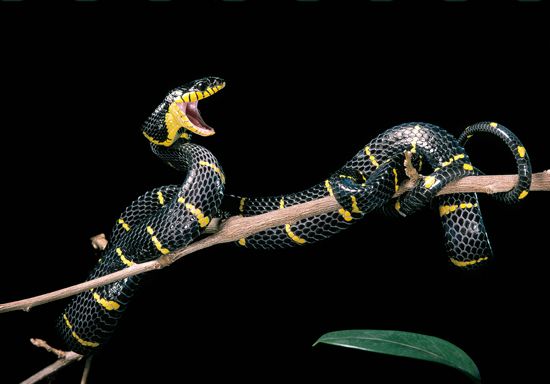
Cat snakes, a group of arboreal or semiarboreal rear-fanged snakes in the family Colubridae, are found on every continent except Antarctica. Their distribution varies by group:1
- Eurasian cat snakes (Telescopus): Inhabit dry regions across southeastern Europe, southwestern Asia, and northern Africa.1
- Old World cat snakes (Boiga): Primarily distributed throughout Southeast Asia and the East Indies, with a range extending from Pakistan to Australia. Two species are also found in Africa.1
- African cat snakes (Dipsadoboa): Primarily restricted to rainforests and open woodlands south of the Sahara.1
- New World cat-eyed snakes (Leptodeira): Found in dry habitats ranging from Mexico to Argentina.1
These snakes are named for their vertically elliptical pupils, which resemble those of felines. While they possess rear fangs and produce venom, it is generally not considered dangerous to humans.1
How do cat snakes compare to other arboreal snake species in terms of their adaptations and lifestyle?
Cat snakes are distinguished from many other arboreal species by their specialized nocturnal lifestyle and specific physical adaptations. While many arboreal snakes rely on prehensile tails or extremely elongated bodies for stability, cat snakes are primarily defined by their thin, laterally compressed bodies and triangular heads, which facilitate movement through trees and shrubs.35
Adaptations and Lifestyle Comparisons
- Vision and Activity: Unlike many diurnal arboreal snakes, cat snakes are nocturnal hunters that become active at twilight. Their most notable adaptation is their vertically elliptical pupils, which contract to narrow slits during the day and expand to a nearly circular shape at night to maximize light intake.3
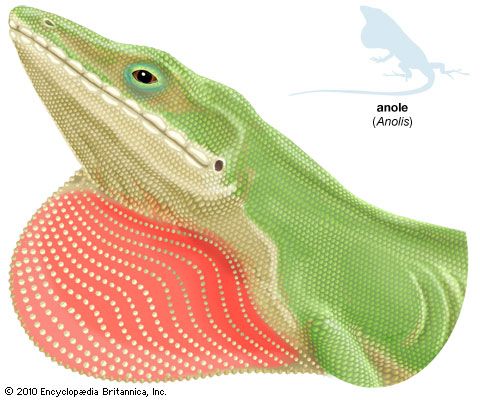
- Locomotion: While other arboreal reptiles, such as geckos and anoles, utilize specialized footpads or claws to cling to surfaces, cat snakes rely on their slender, compressed body shape to navigate their environment. In contrast to vine snakes, which possess strengthened vertebrae allowing them to bridge gaps between branches like an I-beam, cat snakes do not exhibit the same extreme horizontal rigidity.36
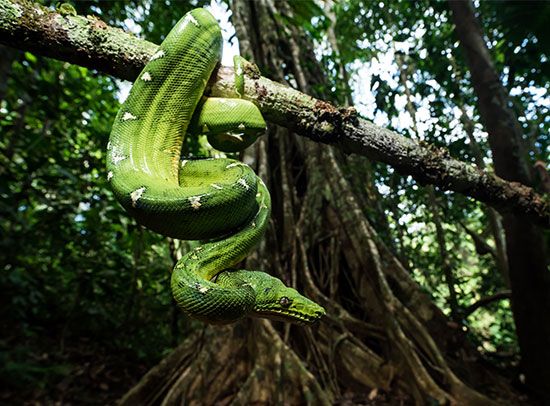
- Feeding Strategies: Cat snakes are rear-fanged and use mild venom to subdue prey, which includes birds, mammals, lizards, and frogs. This contrasts with other arboreal specialists like boas or pythons, which typically use constriction to secure prey.36
How do cat snakes reproduce, and what is their typical lifespan?
Cat snakes are oviparous, meaning they reproduce by laying eggs. While specific reproductive details vary by group, breeding females generally deposit their clutches in protected, damp, and warm environments.10113
Reproductive Habits
- Clutch Sizes: The number of eggs per clutch varies significantly among the different genera of cat snakes:
- Eurasian cat snakes (Telescopus): Typically lay 4–12 eggs, though some species, such as the European cat snake (T. fallax), lay smaller clutches of 4–6 eggs.10
- Old World cat snakes (Boiga): Breeding females lay between 3 and 15 eggs.10
- African cat snakes (Dipsadoboa): Females typically lay 2–8 eggs per clutch.10
- New World cat-eyed snakes (Leptodeira): Females deposit clutches ranging from 3 to 12 eggs.10
General Reproductive Process
Like other snakes, cat snakes utilize internal fertilization via the male’s hemipenis. After mating, the female deposits the eggs in a suitable location and typically abandons the clutch, leaving the embryos to develop independently.1213311
Regarding their lifespan, the provided search results do not contain information on the typical life expectancy of cat snakes.
What are the key characteristics that distinguish cat snakes from other snake species?
Cat snakes are a diverse group of arboreal or semiarboreal snakes belonging to the family Colubridae. They are distinguished from other snake species by several key physical and behavioral characteristics:
- Distinctive Eyes: Their most notable feature is the presence of vertically elliptical pupils, which resemble those of felines. These pupils allow the snakes to adapt to varying light levels, contracting into narrow slits during the day and expanding to a nearly circular shape at night to maximize light intake for nocturnal hunting.31
- Body and Head Shape: Cat snakes typically possess a thin, laterally compressed body and a triangular head that is clearly distinct from the neck. This body structure is an adaptation for their arboreal lifestyle, allowing them to navigate effectively through trees and shrubs.314
- Rear-Fanged Venom: They are rear-fanged, meaning they possess enlarged teeth at the back of the mouth equipped with grooves or canals to deliver venom. While this venom is effective for subduing their prey—which includes lizards, birds, frogs, and mammals—it is generally considered mild and not dangerous to humans.31
- Nocturnal Activity: Unlike many other snake species that are diurnal, cat snakes are primarily nocturnal hunters that become active at twilight.3
Sources
- cat snake — Merriam-Webster
- mangrove snake — Encyclopædia Britannica
- cat snake — Encyclopædia Britannica
- Black-and-yellow mangrove snake — Encyclopædia Britannica
- reptile - Clinging and climbing — Encyclopædia Britannica
- Locomotion - Arboreal amphibians and reptiles — Encyclopædia Britannica
- snake - Natural history — Encyclopædia Britannica
- What eats snakes? — Encyclopædia Britannica
- reptile - Asia — Encyclopædia Britannica
- snake - Egg formation and laying — Encyclopædia Britannica
- snake - Mating — Encyclopædia Britannica
- reptile - Embryonic development and parental care — Encyclopædia Britannica
- reptile: Top Questions — Encyclopædia Britannica
- snake - Skull and sense organs — Encyclopædia Britannica
- Boigidae — Merriam-Webster
Published on · 3 min read