Franklinia
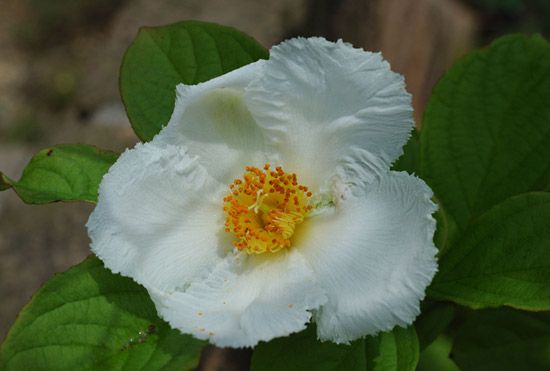
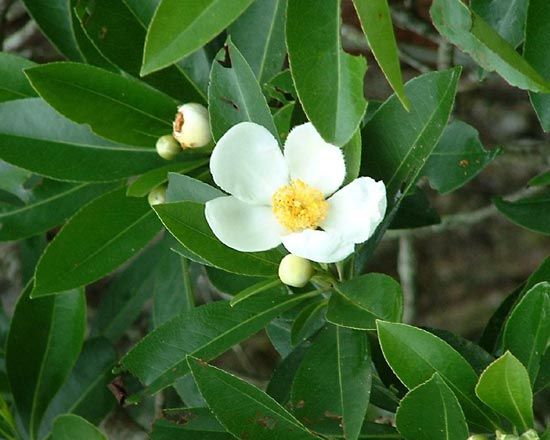
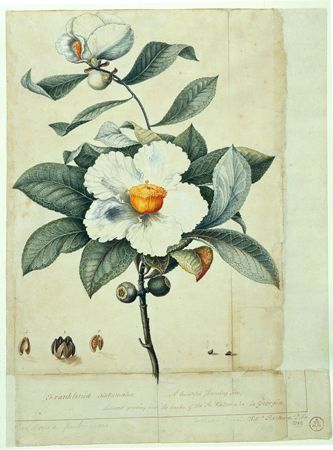
Franklinia (Franklinia alatamaha), also known as the Franklin tree or mountainbay, is a small tree or shrub belonging to the tea family (Theaceae).
What is franklinia?
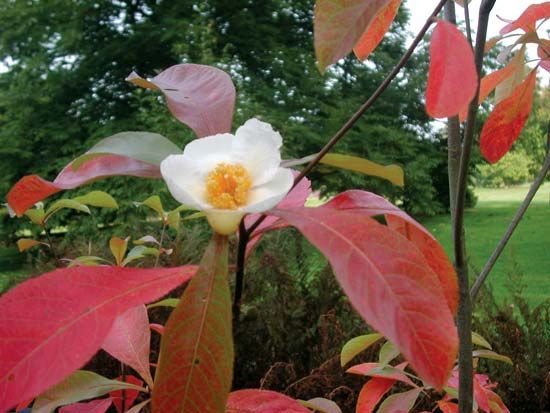
Franklinia (Franklinia alatamaha), also known as the Franklin tree or mountainbay, is a small tree or shrub belonging to the tea family (Theaceae).12
First identified in 1765 by botanist John Bartram along the Altamaha River in Georgia, the plant was named in honor of Benjamin Franklin. Growing up to 9 meters (30 feet) tall, it is prized for its large leaves and showy, cupped white flowers that bloom from midsummer until the first frost.12
Notably, the Franklinia is extinct in the wild; all existing specimens are descendants of seeds and plants collected by Bartram. Because its fruits take a full year to mature after pollination, it remains a unique subject of botanical interest.1
Who was John Bartram and what were his contributions to botany?
John Bartram (1699–1777) was a self-taught naturalist and explorer widely regarded as the “father of American botany”. His contributions were foundational to the development of natural history in North America and its recognition abroad.34
Key contributions include:
- Botanical Exploration: Bartram conducted extensive scientific expeditions throughout the Alleghenies, the Carolinas, and other regions of North America. In 1765–66, he was commissioned by King George III to explore Florida alongside his son, William Bartram.35
- Botanical Garden: He established a famous botanical garden near Philadelphia in 1728, which remains the oldest surviving garden of its kind in North America.35
- Plant Exchange: He collected and exported hundreds of native North American plants and seeds to Europe, significantly influencing British gardens and establishing professional relationships with prominent scientists like Carolus Linnaeus.34
- Scientific Innovation: Bartram was the first North American experimenter to successfully hybridize flowering plants.3
Why did the Franklinia disappear from its natural habitat?
The exact cause of the Franklinia’s disappearance from its natural habitat along the Altamaha River in Georgia remains a mystery. While the tree was first identified by John Bartram in 1765, it has not been found in the wild since the early 19th century.1
Because the species is now known only in cultivation—with all existing specimens descended from the seeds and plants originally collected by Bartram—scientists have proposed several theories for its extinction in the wild. These include potential changes in the local environment, the impact of plant diseases, or the possibility that the species was already extremely rare and restricted to a very small geographic area when it was first discovered.1
What are other examples of plants that are extinct in the wild?
Beyond the Franklinia, several other plant species are classified as “extinct in the wild,” meaning they no longer exist in their natural habitats but survive through human cultivation in botanic gardens, greenhouses, or private collections.6
Notable examples include:
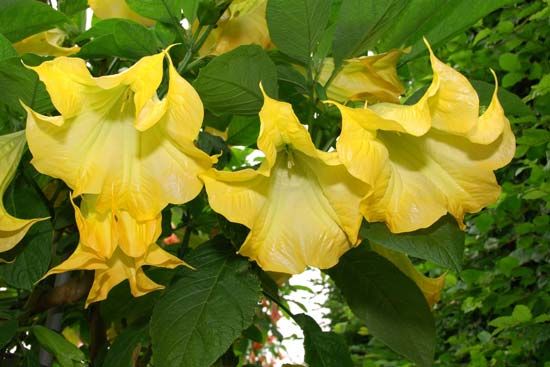
- Angel’s Trumpets (Brugmansia): All seven species in this genus are functionally extinct in their original South American ranges. It is believed that the animals responsible for dispersing their seeds, such as giant ground sloths, have gone extinct, preventing the plants from reproducing naturally.6
- Alula (Brighamia insignis): This Hawaiian plant, native to sea cliffs on Kauai and Niihau, lost its primary pollinator, rendering it unable to reproduce in the wild. Following natural disasters like Hurricane Iniki, only one individual is known to remain in its native habitat, though it is widely grown as an ornamental.6
- Ginkgo (Ginkgo biloba): Often called a “living fossil,” the ginkgo was long believed to be extinct in the wild. While some populations have been discovered in eastern China, there is ongoing scientific debate regarding whether these are truly wild or were historically planted by monks. Regardless, the species is secure due to its popularity as a street tree and medicinal plant.6
Sources
- franklinia — Encyclopædia Britannica
- Franklin tree — Merriam-Webster
- John Bartram — Encyclopædia Britannica
- gardening - The plant hunters — Encyclopædia Britannica
- William Bartram — Encyclopædia Britannica
- Extinct in the Wild but Still Around: 5 Plants and Animals Kept Alive by Humans — Encyclopædia Britannica
- IUCN Red List of Threatened Species — Encyclopædia Britannica
- conservation - Fire suppression as habitat loss — Encyclopædia Britannica
- conservation - Terrestrial hot spots — Encyclopædia Britannica
- Cultivar — Encyclopædia Britannica
- endangered species - IUCN Red List of Threatened Species — Encyclopædia Britannica
- Domestication - Origins of domestication — Encyclopædia Britannica
Published on · 3 min read