Norway Deep
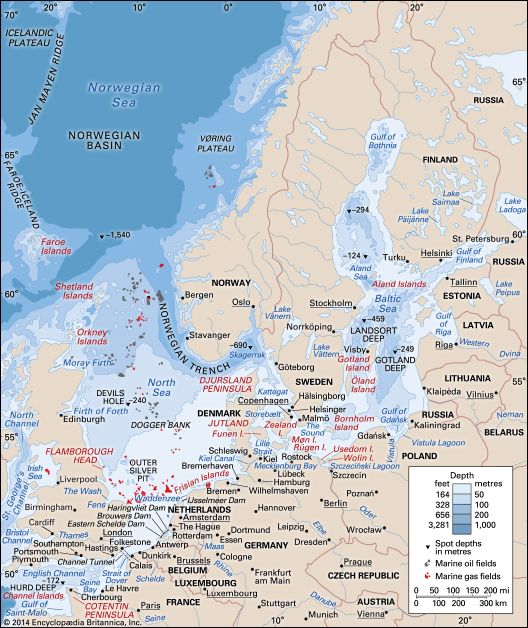
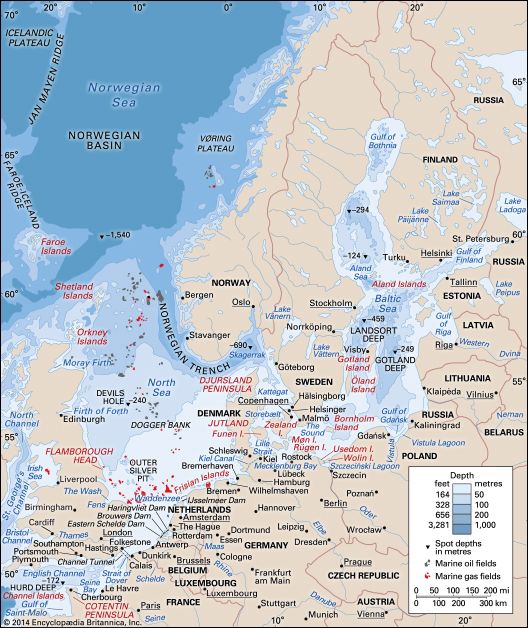
Norway Deep is an undersea trough located in the northeastern North Sea. It stretches southward from Ålesund along the coast of Norway, eventually curving…
What is Norway Deep?
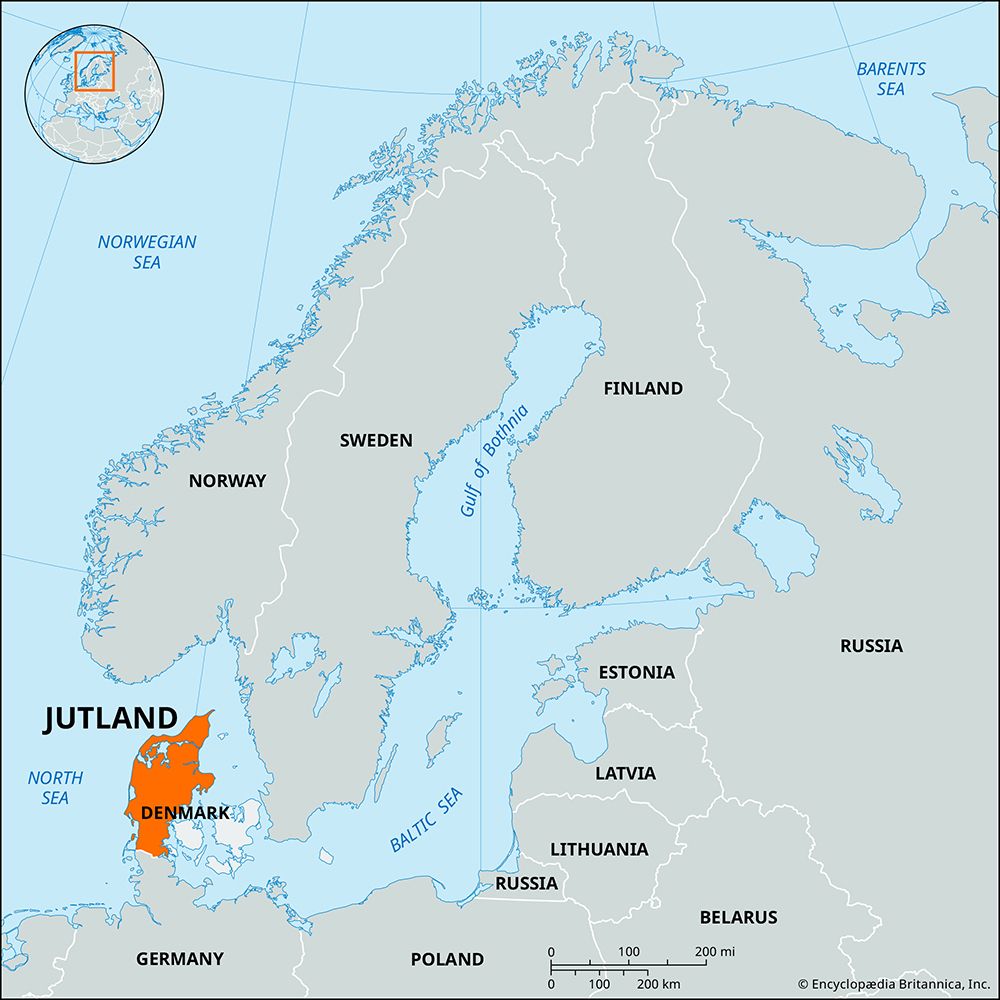
Norway Deep is an undersea trough located in the northeastern North Sea. It stretches southward from Ålesund along the coast of Norway, eventually curving around the country’s southern tip into the Skagerrak—the strait separating Norway from the Jutland peninsula of Denmark—and extending as far as Oslo. Within the Skagerrak, the trough reaches depths of up to 2,400 feet (730 metres).1
How was the Norway Deep formed?
The Norway Deep (also known as the Norwegian Trench) is an unusual undersea depression that was likely formed during the last glaciation period.1
Geologists suggest that as parts of the North Sea remained free of ice during this time, rivers flowing from the mainland were able to erode deep channels into the basin floor. Additionally, the formation of such large-scale troughs is often attributed to the action of ice streams—large, fast-moving tongues of ice that drained from continental ice sheets and sculpted the seafloor.12
While some researchers emphasize the role of glacial erosion in creating these deep basins, others note that the exact origin of such features can be complex, potentially involving a combination of glacial activity, preglacial stream erosion, and tectonic processes.3
What is the significance of the Skagerrak strait?
The Skagerrak is a vital maritime corridor that serves as a primary link between the North Sea and the Baltic Sea via the Kattegat.89
Its significance is defined by several key factors:
- Commercial Navigation: It is a heavily trafficked shipping lane, providing essential access to major ports including Oslo and Kristiansand in Norway, as well as Uddevalla and Strömstad in Sweden.8
- Strategic History: The region holds historical military importance, most notably as the site of the Battle of Jutland, a pivotal naval engagement during World War I that took place in its vicinity in 1916.8
- Hydrographic Role: By connecting the North Sea to the Baltic, the Skagerrak acts as a critical transition zone for water exchange, influencing the salinity and circulation patterns of the surrounding seas.89
What kind of marine life lives in the North Sea?
The North Sea is one of the world’s most productive marine environments, supported by a constant mixing of waters that provides a rich supply of nutrient salts. These nutrients fuel the growth of plant and animal plankton, which form the essential base of the sea’s food chain.10
Fish Species
The abundance of plankton supports a diverse range of commercially valuable fish. Key species found in the North Sea include:
Marine Mammals
The North Sea also hosts various marine mammals. While specific regional populations fluctuate, the broader North Atlantic basin is home to several species of cetaceans (whales and dolphins) and pinnipeds (seals), such as the harbor seal and gray seal.1112
The ecological health of these populations is monitored by organizations like the International Council for the Exploration of the Sea, which has compiled extensive records on the marine life and environmental conditions of the region.13
Sources
- Norway Deep — Encyclopædia Britannica
- North Sea - Physiography — Encyclopædia Britannica
- North Sea - Geology — Encyclopædia Britannica
- glacial landform - Erosional landforms of continental glaciers — Encyclopædia Britannica
- Quaternary - Landforms — Encyclopædia Britannica
- iceberg - Impact on ocean structure — Encyclopædia Britannica
- Arctic - Continental ice sheets of the past — Encyclopædia Britannica
- Skagerrak — Encyclopædia Britannica
- Kattegat — Encyclopædia Britannica
- North Sea - Fisheries — Encyclopædia Britannica
- North Sea — Encyclopædia Britannica
- North Sea - Study and exploration — Encyclopædia Britannica
- What Is a Marine Mammal? — Encyclopædia Britannica
- sea ice - The emerging impacts of recent changes to sea ice — Encyclopædia Britannica
- Greenland Sea — Encyclopædia Britannica
- Atlantic Ocean - Biological resources — Encyclopædia Britannica
Published on · 2 min read