Rice-paper Plant
The rice-paper plant (Tetrapanax papyrifer) is a shrub or small tree belonging to the ginseng family. Native to southern China and Taiwan, it is…
What is Rice-paper plant?
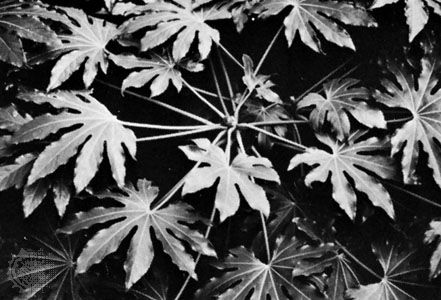
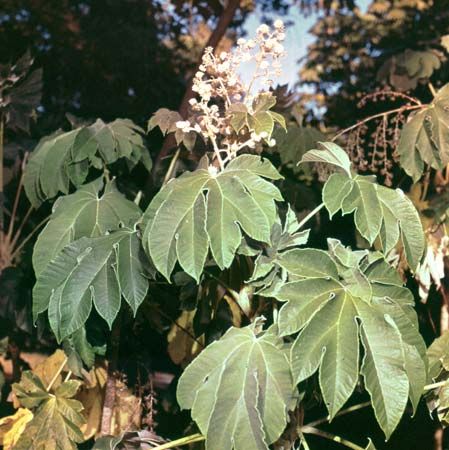
The rice-paper plant (Tetrapanax papyrifer) is a shrub or small tree belonging to the ginseng family. Native to southern China and Taiwan, it is characterized by large, lobed leaves that create a palmlike crown.12
The plant is primarily known for its use in producing rice paper. This is achieved by extracting the soft central tissues (pith) from the stem, which are then split and pressed into thin sheets. These sheets have historically been utilized for watercolor paper and as surgical dressings sheets have historically been utilized for watercolor paper and as surgical dressings.12
How is paper made from the pith of a plant?
The process of creating paper from plant pith differs significantly from modern industrial papermaking, which relies on the suspension of cellulose fibers in water.1
For the rice-paper plant, the material is produced by extracting the soft central tissue, or pith, from the stem. This pith is then carefully split and pressed into thin, uniform sheets. Unlike conventional paper, which requires the complete defibring of raw materials, this method relies on the physical structure of the pith itself to form a usable surface.31
A similar technique was historically used for papyrus. In that process, fibrous layers from the plant stem were arranged in a cross-hatched pattern, dampened, and pressed. As the material dried, the plant’s natural, gluelike sap acted as an adhesive to bond the layers together into a single sheet.1
What are the differences between this plant and edible rice paper?
It is a common misconception that the material derived from the rice-paper plant and the edible rice paper used in cooking are the same substance. They are distinct products with different origins and purposes.1
- Rice-paper plant material: This is a non-edible, papery material created by slicing and pressing the pith from the stem of the Tetrapanax papyrifer shrub. It is historically used for watercolor painting and surgical dressings.51
- Edible rice paper: This is a culinary product made from a thin sheet of dough, typically composed of rice flour and tapioca. It is used as a wrapper for various fillings, such as vegetables or meats.1
The confusion arises primarily from the name, as the edible version was named for its visual resemblance to the traditional paper made from the Tetrapanax pith.1
What other plants have been used to make paper throughout history?
Throughout history, a wide variety of plants have been utilized for papermaking due to the cellulose content found in their stems and fibers.6
- Bast Fibers: Early papermaking, credited to Ts’ai Lun in 105 CE, relied on mulberry bark, hemp, and flax. These plants contain long, flexible fibers that provide exceptional strength and durability.67
- Grasses and Straws: Cereal straws have been used for centuries, particularly in regions lacking forest resources. Esparto grass, a desert plant from the Mediterranean, was historically valued for its dimensional stability and smooth printing surface. Bamboo, while botanically a grass, is also used for pulp in parts of Asia.6
- Agricultural Residues: Bagasse, the fibrous residue left after crushing sugarcane, is a significant source of fiber in many sugar-producing nations.6
- Aquatic Plants: The papyrus plant was the primary writing material in ancient Egypt, created by pressing layers of its central pith.8
Additionally, cotton and linen rags were the standard raw material for high-quality paper in Europe for centuries before wood pulp became dominant.97
Sources
- Rice-paper plant — Encyclopædia Britannica
- rice-paper tree — Merriam-Webster
- papermaking - Wood — Encyclopædia Britannica
- papermaking — Encyclopædia Britannica
- rice paper — Merriam-Webster
- papermaking - Natural fibres other than wood — Encyclopædia Britannica
- papyrus — Encyclopædia Britannica
- papermaking - Rags — Encyclopædia Britannica
- papermaking - Historical development — Encyclopædia Britannica
- Paper mulberry — Encyclopædia Britannica
Published on · 3 min read