Satinwood
Satinwood refers to several species of trees in the rue family (Rutaceae) prized for their hard, lustrous, yellowish-brown wood.
What is satinwood?
Satinwood refers to several species of trees in the rue family (Rutaceae) prized for their hard, lustrous, yellowish-brown wood.12
The primary species, Chloroxylon swietenia, is native to India, Sri Lanka, and Southeast Asia. It is a slow-growing, deciduous tree that typically reaches up to 18 meters (59 feet) in height and features thick, corky bark. Due to its satiny finish, the wood is highly valued for fine cabinetwork and the production of durable tools. In addition to its utility, various parts of the plant are utilized in traditional medicine.12
The term is also applied to other related species that produce similar timber, such as the West Indian satinwood (Zanthoxylum flavum), Murraya paniculata, and Nematolepis squamea.12
What makes a wood considered a hardwood?
The classification of wood as a “hardwood” is primarily botanical rather than a description of the wood’s physical density or hardness. A hardwood is defined as the wood produced by an angiospermous tree, which distinguishes it from the wood of a coniferous tree (softwood).4
At a microscopic level, hardwoods are characterized by a specific cellular composition. While softwoods are composed predominantly of tracheids, hardwoods are made up of vessel members, fibres, and parenchyma. These vessel members, which appear as characteristic pores in a transverse section of the wood, are specialized for water conduction, while the fibres primarily provide mechanical support.56
Because of these structural differences, hardwoods often exhibit distinct growth patterns, such as the presence of pores that vary in size and distribution, leading to classifications like ring-porous or diffuse-porous woods. While the term “hardwood” is a technical botanical classification, it is widely used in forestry and industry to categorize trees and their resulting timber based on these fundamental biological traits.748
How is wood grain related to a tree’s appearance?
Wood grain is fundamentally determined by the cellular structure and arrangement of a tree’s tissues, which vary significantly based on species, environmental conditions, and growth cycles. The appearance of wood is largely defined by these internal variations, which create distinct patterns when the wood is cut.8
Key factors influencing wood grain and appearance include:
- Growth Rings: In many trees, particularly those in temperate regions, the contrast between earlywood (produced early in the season) and latewood creates visible rings. These layers often differ in density, color, and cell size, which define the wood’s texture and visual grain.11129
- Pore Distribution: In broad-leaved species, the size and arrangement of vessels (pores) are major visual features. In ring-porous woods like oak, large earlywood pores create a distinct, coarse grain, whereas diffuse-porous woods like poplar have evenly distributed, smaller pores, resulting in a more uniform appearance.119
- Structural Abnormalities: Features such as knots, spiral grain, and compression or tension wood can significantly alter the grain pattern and overall aesthetic, often serving as indicators of the tree’s growth history and environmental stressors.8
What are some other types of wood used in fine furniture?
Beyond the commonly cited options, many other woods are highly valued in the creation of fine furniture due to their unique aesthetic properties, durability, and workability.
Notable Woods for Fine Furniture
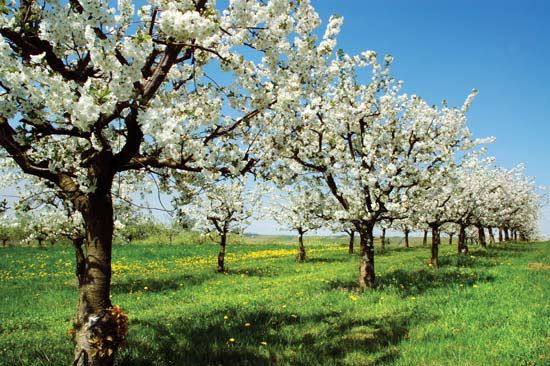
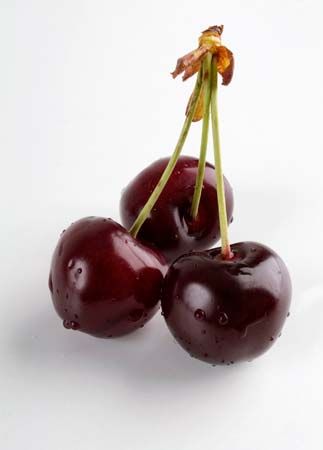
- Cherry: Both black cherry and European wild cherry are prized for high-quality furniture. Black cherry is particularly favored for its reddish-brown color, warm luster, and excellent resistance to shrinkage and warping.13
- Walnut: Both English walnut and black walnut are highly sought after for their dark, fine-grained wood, which is frequently used in furniture, paneling, and decorative applications.1415
- Pearwood: Known for its rich pinkish-red color and very smooth grain, pearwood is a stable, hard wood often utilized in marquetry and fine wooden tableware.13
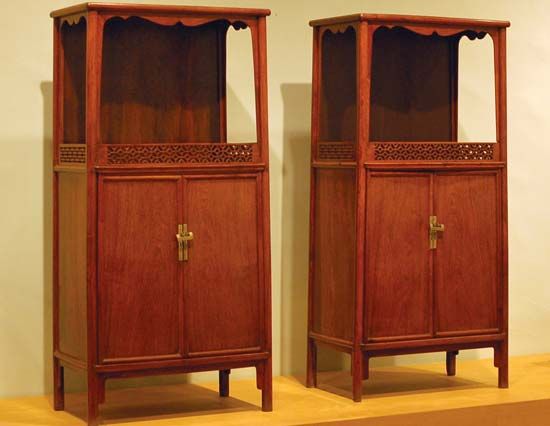
- Rosewood: Historically popular in Chinese furniture, rosewood is valued for its satin-like finish and seeming translucence.16
- Sandalwood: Purple sandalwood is considered one of the most distinguished hardwoods for fine, plain furniture.16
- Mahogany: Renowned for its durability and deep reddish-brown color, mahogany has long been a staple of high-quality cabinetmaking.1718
These woods are often selected not only for their structural integrity but also for the way their grain and color can be showcased through fine polishing or veneer techniques, which allow craftsmen to create intricate, ornamental surfaces.1716
Sources
- satinwood — Encyclopædia Britannica
- satinwood — Merriam-Webster
- West Indian satinwood — Merriam-Webster
- hardwood — Merriam-Webster
- wood - Microstructure — Encyclopædia Britannica
- hardwood — Merriam-Webster
- hard-wooded — Merriam-Webster
- wood - Variation of structure and defects — Encyclopædia Britannica
- wood - Earlywood , latewood , and pores — Encyclopædia Britannica
- Tree - The anatomy and organization of wood — Encyclopædia Britannica
- Tree - Growth ring formation — Encyclopædia Britannica
- Growth ring — Encyclopædia Britannica
- Furniture - Wood — Encyclopædia Britannica
- mahogany — Encyclopædia Britannica
- Furniture - China — Encyclopædia Britannica
- wood - Mechanical properties — Encyclopædia Britannica
- Rosales - Wood — Encyclopædia Britannica
- furniture industry - Natural wood — Encyclopædia Britannica
- English walnut — Encyclopædia Britannica
- Walnut — Encyclopædia Britannica
Published on · 3 min read