Sharpbill
The term "sharpbill" refers to two distinct bird species, though it is most commonly associated with the Oxyruncidae family.
What is Sharpbill?
The term “sharpbill” refers to two distinct bird species, though it is most commonly associated with the Oxyruncidae family.
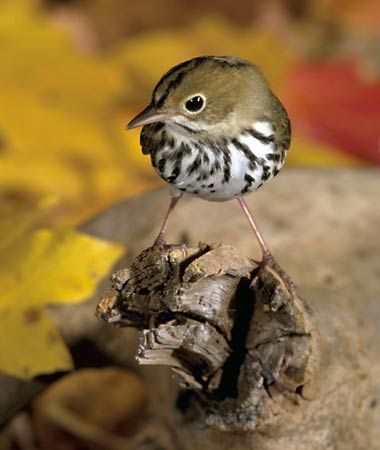
- Sharpbill (Oxyruncus cristatus): This bird is typically considered the sole member of the family Oxyruncidae within the order Passeriformes. It is found in rain forests ranging from Costa Rica to Paraguay. Measuring about 16 centimeters (6.5 inches), it features a greenish-brown back, a pale underside with dark markings, and a distinctive red crest on its midcrown. Its sharply pointed bill is adapted for probing tree bark.1
- Sharp-billed tree hunter (Heliobletus contaminatus): Also referred to as a sharpbill, this bird belongs to the ovenbird family (Furnariidae). It inhabits east-central South America and is known for creeping along tree trunks to forage for insects.1
What are tyrant flycatchers?
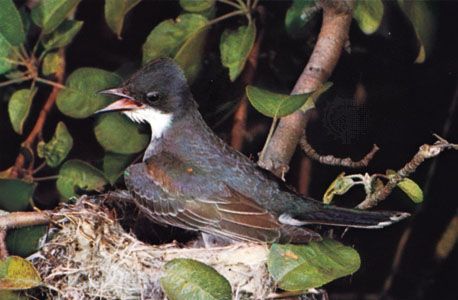
Tyrant flycatchers are a diverse group of approximately 400 species of aggressive, insect-eating birds belonging to the family Tyrannidae (order Passeriformes). Found exclusively in the Americas, they are most numerous in Central and South America, though about 30 species breed in North America.23
Characteristics and Behavior
These birds range from 7.5 to 40.5 cm (3 to 16 inches) in length. While many are plain in color—shades of gray, brown, or olive—some possess striking patterns or concealed, erectile patches of red or yellow on their crowns. Their bills are typically broad, flattened, and slightly hooked, often featuring bristles at the base to assist in capturing insects on the wing.243
Beyond their fly-catching habits, the family is remarkably varied:
- Diet: While most are insectivorous, some species, such as the elaenia, feed extensively on fruit. Larger species like the shrike-tyrant can even prey on mice and frogs.2
- Temperament: They are highly territorial during breeding seasons, often aggressively harassing larger birds like hawks or crows.2
- Diversity: The group includes various forms such as the phoebe, pewee, kingbird, spadebill, and tyrannulet.21
How do birds use their bills to find food in tree bark?
Birds have evolved specialized anatomical features to forage for food within tree bark, utilizing their bills as both tools and sensory probes. While many people associate these birds primarily with heavy drilling, their methods are diverse and often involve more subtle techniques.
Foraging Techniques
- Gleaning and Probing: Many birds, including various woodpeckers and piculets, forage by gleaning insects from the surface of the bark or probing into existing cracks and crevices.6
- Tapping: Birds may tap on bark to locate prey or break through the surface layer. While some species chisel deeply into wood, this is less common than surface foraging.6
- Specialized Anatomy: Woodpeckers possess a “food-gathering apparatus” that includes a sturdy, chisel-tipped bill and a long, distensible tongue. This tongue is often coated in sticky mucus and equipped with tiny barbs, allowing the bird to reach deep into holes to extract insects that are otherwise inaccessible.7
- Cooperative Foraging: In some species, such as the extinct huia, males and females exhibited different bill structures—the male for chiseling into wood and the female for probing crevices—allowing them to feed cooperatively.8
What is the difference between the Oxyruncidae and Furnariidae families?
The Furnariidae family, commonly known as ovenbirds, consists of approximately 240 species of passeriform birds found throughout Central and South America. They are characterized by extreme diversity in body plans and behaviors, with various species resembling other groups such as larks, wrens, and creepers10. While they vary significantly in appearance and habitat, they are united by specific skeletal and muscular traits and are typically brown or rufous in color.10
Regarding the Oxyruncidae family, the provided knowledge base does not contain information about this group. Therefore, I cannot provide a comparison between the two families.
Sources
- Sharpbill — Encyclopædia Britannica
- Tyrant flycatcher — Encyclopædia Britannica
- tyrant flycatcher — Merriam-Webster
- Tyrannidae — Merriam-Webster
- Tyrannulet — Encyclopædia Britannica
- Piciform - Form and function — Encyclopædia Britannica
- Passeriform - Bill — Encyclopædia Britannica
- Piciform - Importance to humans — Encyclopædia Britannica
- Piciform - Distribution and ecology — Encyclopædia Britannica
- Furnariidae — Encyclopædia Britannica
Published on · 3 min read