Spadefish
A spadefish is any of approximately 17 species of marine fish belonging to the family Ephippidae, within the order Perciformes. These fish are primarily…
What is spadefish?
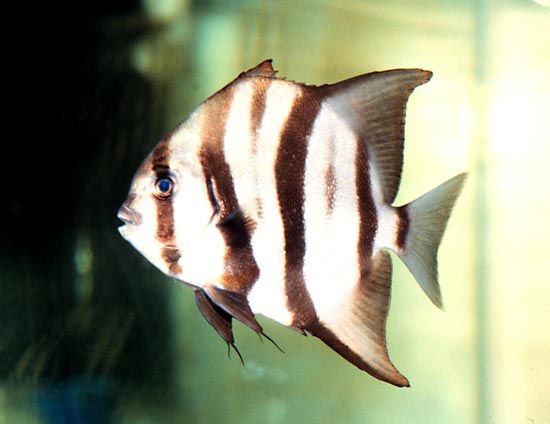
A spadefish is any of approximately 17 species of marine fish belonging to the family Ephippidae, within the order Perciformes. These fish are primarily found in tropical regions, though they also inhabit temperate waters.1
Physically, spadefish are characterized by a deep, laterally compressed body. While juveniles typically display five or six vertical black bands on a silvery body, these markings often fade as the fish matures, leaving adults with a solid white, black, or silver appearance.1
The Atlantic spadefish (Chaetodipterus faber) is a well-known species found in the western Atlantic, ranging from New England to Brazil. These fish are known to feed primarily on marine invertebrates, such as crustaceans and ctenophores. They are often noted for their resemblance to angelfishes.12
What are ctenophores and why do spadefish eat them?
Ctenophores, commonly known as comb jellies, are marine invertebrates belonging to the phylum Ctenophora. They are named for the series of vertical ciliary combs on their bodies, which they use for locomotion. These animals are typically transparent, gelatinous, and carnivorous, feeding on small planktonic organisms. While they are often found in vast swarms in coastal waters, they lack the stinging cells found in cnidarians, relying instead on specialized adhesive cells called colloblasts to capture prey.3
Spadefish, such as the Atlantic spadefish, include ctenophores in their diet as part of their natural feeding behavior. Because ctenophores are abundant in many marine environments and often congregate in large groups, they serve as a readily available food source for various fish species, including the spadefish, which primarily consumes marine invertebrates like crustaceans and comb jellies.13
How do fish use camouflage to survive in the ocean?
Fish utilize various forms of biological coloration to conceal themselves from predators and survive in the ocean. These strategies primarily function to disrupt visual recognition or blend the organism into its surroundings.
Primary Camouflage Strategies
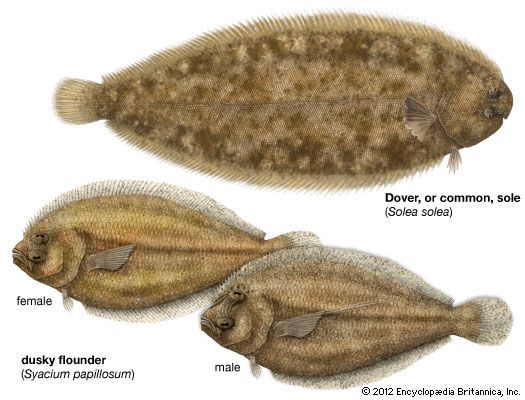
- Background Matching: This is the most common form of concealment. Pelagic fish eggs and larval fish, which live in the open sea, are often transparent to blend into the blue environment. Other species, such as flatfishes, can actively change their coloration and patterns to match the surface upon which they rest.4
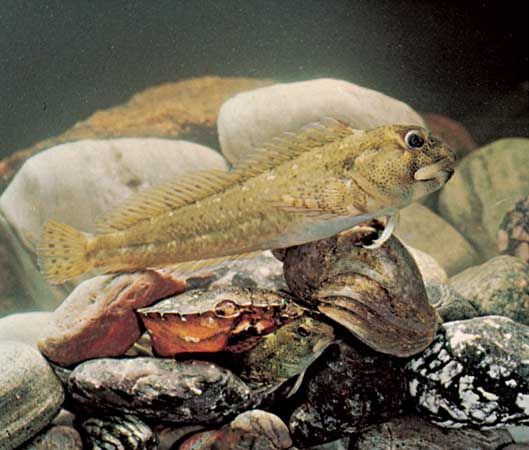
- Disruptive Coloration: This technique uses patterns that do not coincide with the body’s actual outline, making it difficult for a predator to perceive the fish’s true shape. For instance, the blenny uses “saddles” or horizontal stripes depending on its background. In schooling fish, similar disruptive patterns create a confusing spectacle that makes it hard for a predator to target a single individual.5
- Countershading: This method masks an organism’s three-dimensional form by counteracting natural shadows. Darker pigmentation on the upper body and lighter coloring on the lower body create a uniform appearance. Some deepwater fish use photophores to project light downward, effectively obliterating their silhouette against the dim light from above.6
What are some other types of fish in the order Perciformes?
The order Perciformes is the largest group of fishes in the world, encompassing over 6,000 species. These bony fishes are found in diverse habitats, ranging from shallow freshwater ponds to deep ocean waters.
The order includes a vast array of commercially and recreationally significant species:
- Marine Food and Game Fishes: This group features tunas, mackerels, bonitos, and skipjacks. It also includes billfishes, marlins, and swordfish.
- Coastal and Reef Species: Notable families include sea basses and carangids, the latter of which includes pompanos, jacks, and scads. The spadefish also belongs to this order.
- Freshwater Species: Popular food and sport fishes include sunfishes, perches, and walleyes.
Many members of this order are also widely kept as aquarium fish.
Sources
- spadefish — Encyclopædia Britannica
- spadefish — Merriam-Webster
- ctenophore — Encyclopædia Britannica
- coloration - Background matching — Encyclopædia Britannica
- coloration - Disruptive coloration — Encyclopædia Britannica
- coloration - Countershading — Encyclopædia Britannica
- perciform — Encyclopædia Britannica
Published on · 3 min read