Caspian Seal
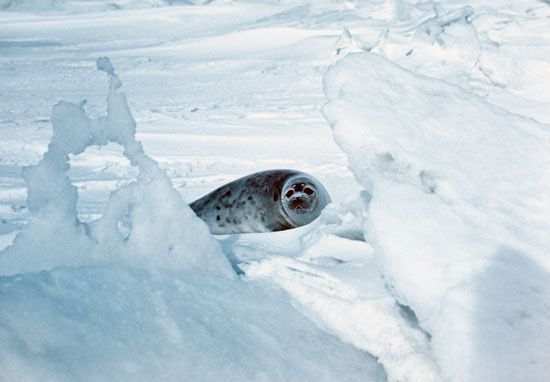
The Caspian seal (Pusa caspica) is a small, earless pinniped and the only mammal native to the Caspian Sea. As one of the smallest seals, adults typically…
What is Caspian seal?
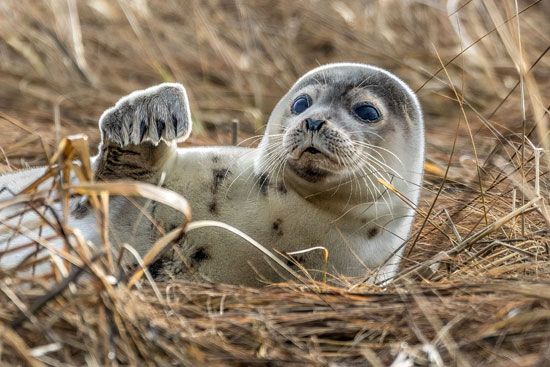
The Caspian seal (Pusa caspica) is a small, earless pinniped and the only mammal native to the Caspian Sea. As one of the smallest seals, adults typically measure 1.4 to 1.8 meters in length and weigh about 55 kg.1
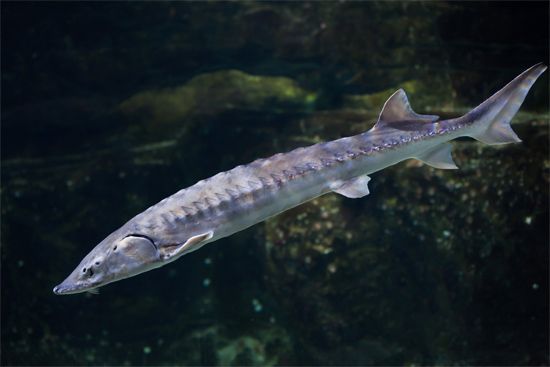
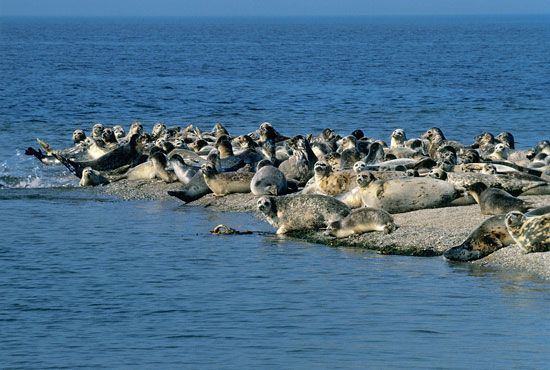
These seals exhibit seasonal migration, spending winters on the ice of the northern Caspian Sea and summers in the southern waters. Their diet is primarily fish, notably the Caspian Sea sprat, though they also consume sturgeon, herring, and mollusks.1
Classified as an endangered species since 2016, the population faces significant threats, including water pollution, bycatch in fishing nets, and outbreaks of canine distemper. While some bordering nations have implemented conservation measures like hunting quotas and rehabilitation programs, these efforts remain inconsistent across the region.12
How does the Caspian Sea differ from other oceans where seals live?
The Caspian Sea differs significantly from the world ocean where most seals live, primarily because it is the world’s largest inland body of water and a salt lake rather than a connected marine environment.13
Key differences include:
- Geographic Isolation: Unlike oceanic seals, the Caspian seal is landlocked. While the Caspian was historically linked to the world ocean, it has been isolated for approximately 11 million years.3
- Water Composition: Caspian waters differ from typical seawater by having a higher content of sulfate, calcium, and magnesium carbonate, along with a lower chloride content due to river inflow.4
- Salinity: The average salinity is about 12.8 parts per thousand, which is significantly lower than the average salinity of the world’s oceans.54
- Hydrology: The sea is situated about 90 feet (27 meters) below sea level and experiences unique fluctuations in water level driven by climatic changes and river influx, such as from the Volga River.34
What are some other types of earless seals found in the world?
Earless seals, also known as true seals, belong to the family Phocidae and include 18 distinct species. Unlike eared seals, they lack external ear flaps and possess short front flippers, forcing them to move on land by wriggling on their bellies.89
Beyond the Caspian seal, other notable types of earless seals include:
- Elephant seal: The largest of all seals, with males reaching up to 6.5 meters in length.8
- Monk seal: Tropical or subtropical seals, including the Mediterranean monk seal and the Hawaiian monk seal, both of which are endangered.810
- Leopard seal: An Antarctic predator known for feeding on penguins and other seals.8
- Weddell seal: An Antarctic species renowned for its exceptional diving abilities, capable of remaining underwater for over an hour.8
- Harp seal: A Northern Hemisphere species recognized by the large black blotch on its silver-gray fur.8
- Ringed seal: A small, abundant seal characterized by blotches covering its body.8
- Baikal seal: A unique freshwater species found in Lake Baikal, Russia.8
Other species include the hooded seal, bearded seal, gray seal, ribbon seal, crabeater seal, and Ross seal.8
How do invasive species like the comb jellyfish affect the Caspian seal’s food supply?
Invasive species like the comb jellyfish negatively impact the Caspian seal’s food supply through indirect competition. These jellyfish consume zooplankton, which serves as a vital food source for the fish species that make up the seal’s diet, such as kilka, herring, and sturgeon.12
By depleting the zooplankton population, the comb jellyfish reduces the availability of prey for these fish, leading to a decline in fish populations. Because kilka alone constitutes nearly 70 percent of the Caspian seal’s summer diet, this disruption to the food web significantly threatens the seals’ nutritional resources and overall survival.12
Sources
- Caspian seal — Encyclopædia Britannica
- Caspian seal: Top Questions — Encyclopædia Britannica
- Caspian Sea: Top Questions — Encyclopædia Britannica
- Caspian Sea — Encyclopædia Britannica
- Caspian Sea - Hydrology — Encyclopædia Britannica
- Caspian Sea — Merriam-Webster
- Baikal seal — Encyclopædia Britannica
- seal — Encyclopædia Britannica
- monk seal — Encyclopædia Britannica
- What’s the Difference Between Seals and Sea Lions? — Encyclopædia Britannica
Published on · 3 min read