Anther
An anther is the male reproductive part of a flowering plant that produces and contains pollen. It is typically located at the tip of a slender stalk known…
What is Anther?
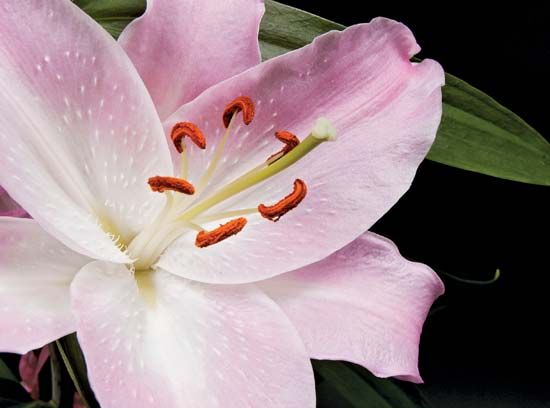
An anther is the male reproductive part of a flowering plant that produces and contains pollen. It is typically located at the tip of a slender stalk known as a filament, and together, these structures form the stamen.123
Structurally, an anther usually consists of two lobes, each containing a pair of microsporangia, or pollen sacs. During maturation, the partition between these adjacent sacs breaks down, leaving two pollen-containing chambers by the time the anther is ready to release its pollen. Most plants release pollen through a longitudinal rupture in the anther wall, though some, such as members of the heath family, release it through small apical poresheath family](https://www.britannica.com/plant/heath-family), release it through small apical pores.1234
The pollen produced within these sacs is essential for pollination, the process by which pollen is transferred to the ovary to facilitate fertilization.45
What is the function of the filament in a flower?
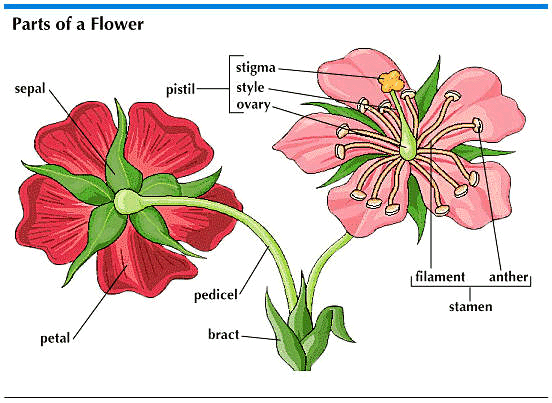
The filament is a slender, stalk-like structure that serves as a critical component of the stamen, the male reproductive organ of a flowering plant.26
Its primary function is to support and position the anther at its apex. By elevating the anther, the filament ensures that the pollen-producing sacs are correctly situated to facilitate pollination, whether by wind, water, or animal pollinators. In many species, the length and placement of the filament are adapted to the specific needs of the plant’s reproductive strategy; for example, wind-pollinated flowers often feature long, slender filaments that allow the anthers to hang freely and release pollen into the air.2361
Additionally, the filament can be involved in the structural organization of the flower. Filaments may be fused to the corolla or united with one another to form a staminal tube that encloses the gynoecium. In some cases, filaments may also be modified into sterile structures, such as staminodes, which can serve to attract pollinators.26
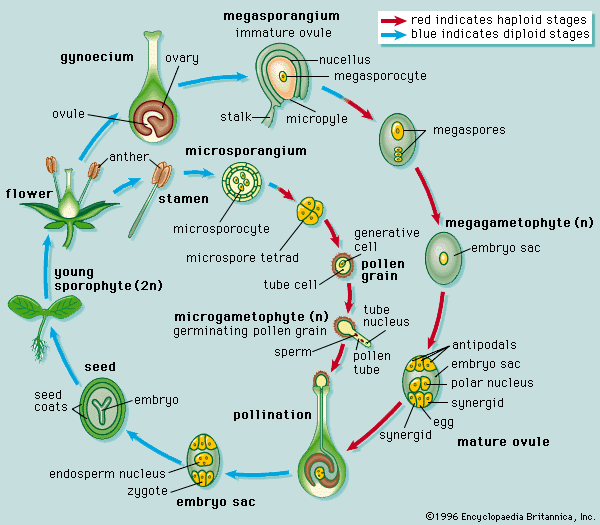
How does pollen travel from the anther to the pistil?
Pollen travels from the anther to the pistil through a process called pollination, which relies on various external agents to transport pollen grains.78
Mechanisms of Pollen Transport
Because plants are sedentary, they must enlist external agents to move pollen from the male stamen to the female stigma, the receptive tip of the pistil. These agents include:789
- Animals: Insects (such as bees, butterflies, and moths), birds, bats, and small mammals often carry pollen while foraging for nectar or food bodies.78
- Wind: Many plants produce small, smooth pollen grains that are easily carried by air currents to reach the stigmas of other flowers.78
- Water: While rare, some aquatic plants utilize water to transport pollen.78
Fertilization Process
Once a compatible pollen grain lands on the sticky or glandular surface of the stigma, it germinates to form a pollen tube. This tube grows down through the style of the pistil, nourished by secretory tissues, until it reaches an ovule within the ovary. The tube then deposits sperm to fertilize the egg, initiating the development of a seed.798
What are the female reproductive parts of a flower called?
The female reproductive part of a flower is called the pistil.1011
The pistil is centrally located and typically consists of three main structures:
- Stigma: The pollen-receptive tip, which is often sticky to capture pollen grains.1011
- Style: A stalk-like structure that connects the stigma to the ovary.101112
- Ovary: The swollen base that houses the ovules, which contain the potential seeds.1011
Collectively, all the pistils in a flower are referred to as the gynoecium. A pistil is composed of one or more leaflike, seed-bearing structures known as carpels. Depending on the species, a flower may contain a single simple pistil (one carpel) or a compound pistil (two or more joined carpels).101113
Sources
- Anther — Encyclopædia Britannica
- Angiosperm - The androecium — Encyclopædia Britannica
- Stamen — Encyclopædia Britannica
- Angiosperm - Anthers — Encyclopædia Britannica
- Angiosperm - General features — Encyclopædia Britannica
- 'Pistil,' 'Stamen,' and Other Flower Part Name Origins | Stamen — Merriam-Webster
- Angiosperm - Pollination — Encyclopædia Britannica
- Pollination - Types: self-pollination and cross-pollination — Encyclopædia Britannica
- Pollination — Encyclopædia Britannica
- Pistil — Encyclopædia Britannica
- Carpel — Encyclopædia Britannica
- 5 Fast Facts About Flower Anatomy — Encyclopædia Britannica
- 'Pistil,' 'Stamen,' and Other Flower Part Name Origins | Pistil — Merriam-Webster
Published on · 3 min read