Welwitschia
Welwitschia mirabilis is a unique, long-lived gymnosperm native to the Namib desert of southwestern Africa. It is the sole living species in the family…
What is welwitschia?
Welwitschia mirabilis is a unique, long-lived gymnosperm native to the Namib desert of southwestern Africa. It is the sole living species in the family Welwitschiaceae and is considered one of the most unusual plants in the world.12
The plant features a deep taproot and a short, woody, cone-shaped trunk1. Its most distinctive characteristic is its pair of broad, straplike leaves that grow continuously from the base throughout the plant’s life, often reaching lengths of several meters. Some specimens are estimated to be 1,500 to 2,000 years old. Because of its rarity and past over-collection, the species is now protected by law and is sometimes listed as an endangered species.213
Scientists are still studying how this plant survives in such an arid environment, with theories suggesting it may utilize moisture from coastal fog.2
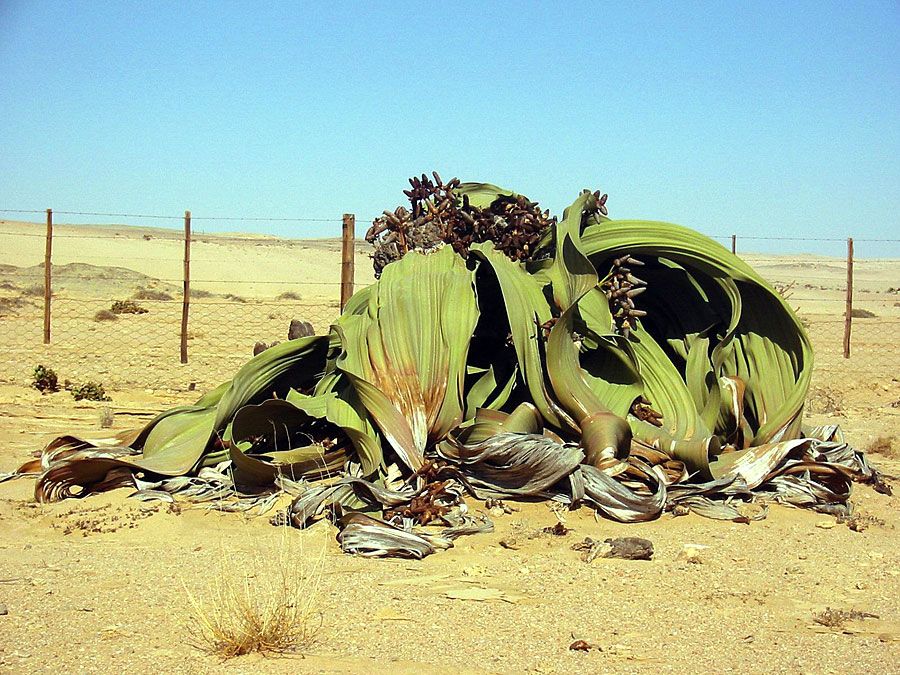
Where does welwitschia grow naturally?
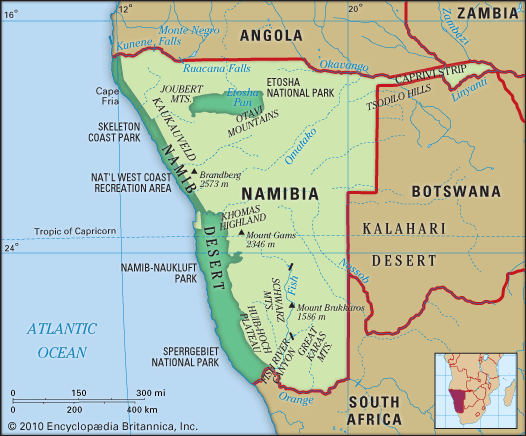
Welwitschia mirabilis grows naturally only in the Namib Desert of southwestern Africa. Its range is geographically restricted to the coastal regions of Angola and Namibia, extending inland for approximately 150 kilometers (more than 90 miles). Specifically, it is found in the northernmost extension of the Namib, known as the Moçâmedes Desert, where it thrives in an environment characterized by gravel plains and rock platforms.214
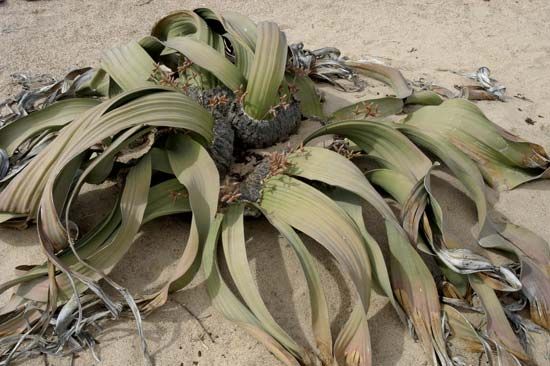
What does a welwitschia plant look like?
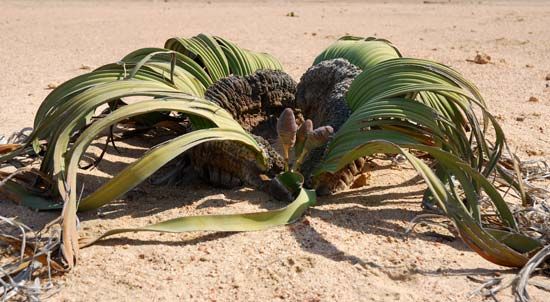
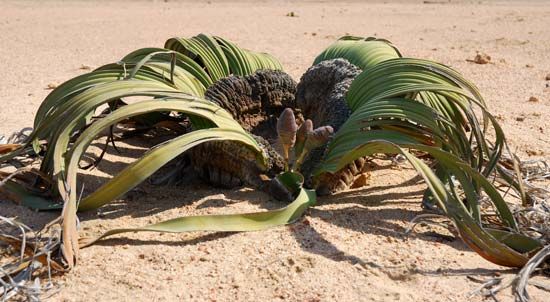
The Welwitschia mirabilis is a highly unusual gymnosperm that is often described as resembling a large turnip or radish. Its physical structure is defined by several distinct features:
- Trunk: The plant has a short, woody, cone-shaped stem that projects about 30 cm (12 inches) above the ground and reaches 60 to 120 cm (25 to 50 inches) in diameter. It is often branched into three growing points and is largely obscured by its leaves.2
- Leaves: The plant produces only two permanent, broad, straplike leaves that grow continuously from the base throughout its life. While they can grow quite long, erosion from desert sand typically keeps them at about 3 meters (nearly 10 feet) in length. Over time, these leaves become frayed and split, often giving the appearance of many separate leaves.21
- Roots: It possesses a deep taproot that can extend 1.5 meters (5 feet) or more into the ground.2
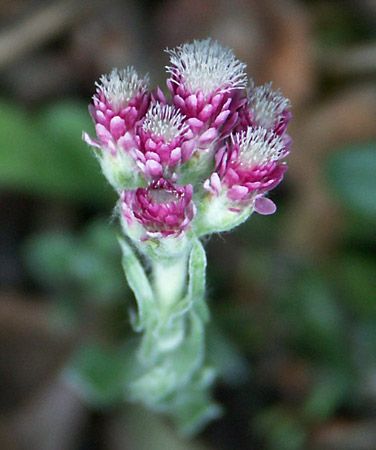
- Reproductive Organs: Instead of flowers, the plant produces cones, which grow in a ring above the leaves.21
How long can a welwitschia plant live?
The Welwitschia mirabilis is a remarkably long-lived plant. Individual specimens are estimated to live for 1,500 to 2,000 years. This extreme longevity is a defining characteristic of the species, which continues to grow its two permanent, straplike leaves throughout its entire life span.321
Sources
- Welwitschiaceae — Encyclopædia Britannica
- welwitschia — Encyclopædia Britannica
- welwitschia — Merriam-Webster
- Moçâmedes Desert — Encyclopædia Britannica
Published on · 2 min read