Therizinosaur
Therizinosaurs are a unique group of theropod dinosaurs from the Late Cretaceous that transitioned from carnivory to a likely herbivorous diet. They are…
What are some of the most well-known species of therizinosaurs, and what makes them unique?
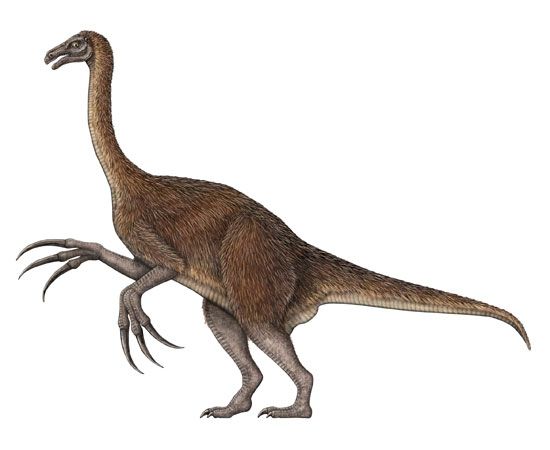
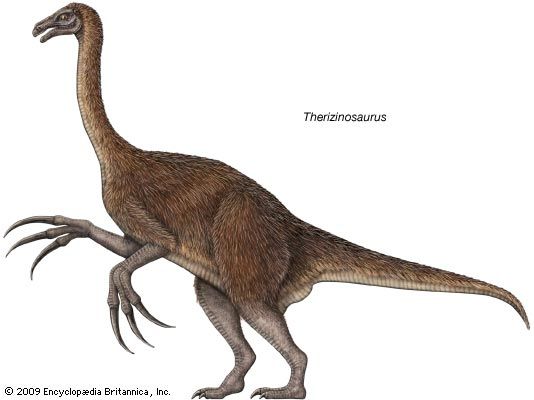
Therizinosaurs are a unique group of theropod dinosaurs from the Late Cretaceous that transitioned from carnivory to a likely herbivorous diet. They are distinguished by small skulls, leaf-shaped teeth, long necks, and extremely long, robust claws on their extended fingers.1
Key species include:
- Falcarius: Considered the most primitive and a transitional species, it possessed herbivorous teeth and wide hips for a larger gut, yet retained the legs and pubis bone of its carnivorous ancestors.1
- Beipiaosaurus: Notable for remarkable fossil preservation, this species displays large patches of featherlike integument on its chest and limbs.1
- Alxasaurus, Erlikosaurus, and Therizinosaurus: These represent the remaining genera within the group, which share specialized skeletal features such as four widely spread toes similar to sauropods and a backward-pointing pubis bone.1
Their unusual anatomy—combining theropod ancestry with herbivorous adaptations—long made their classification contentious until more complete specimens confirmed their lineage.1
What are the distinctive physical characteristics of therizinosaurs?
Therizinosaurs were a distinct group of theropod dinosaurs that lived during the Late Cretaceous. They are defined by a unique combination of skeletal features that reflect their likely transition from carnivory to a herbivorous diet.
Their primary physical characteristics include:
- Skull and Teeth: They possessed relatively small skulls with leaf-shaped teeth, and they lacked teeth in the front half of their upper jaws.1
- Limbs and Claws: A defining feature is their extended fingers, which terminated in extremely long and robust claws.1
- Skeletal Structure: They featured long necks, bird-like wrist bones, and a backward-pointing pubis bone. Their hips were widely spaced, and they had four widely spread toes, a configuration similar to that of sauropod dinosaurs.1
- Integument: Some species, such as Beipiaosaurus, exhibit evidence of featherlike integument on their chests and limbs, indicating that these structures were present in the group.14
These adaptations, particularly the changes to the hips and hind limbs, provided the necessary support and space for the larger gut required to digest plant matter.1
During which geological period did therizinosaurs live, and where have their fossils been found?
Therizinosaurs lived during the Late Cretaceous period, which spanned roughly 100 million to 66 million years ago. Their fossil remains have been discovered in regions across Asia and North America.15
How did the extinction of therizinosaurs relate to the broader extinction event at the end of the Cretaceous period?
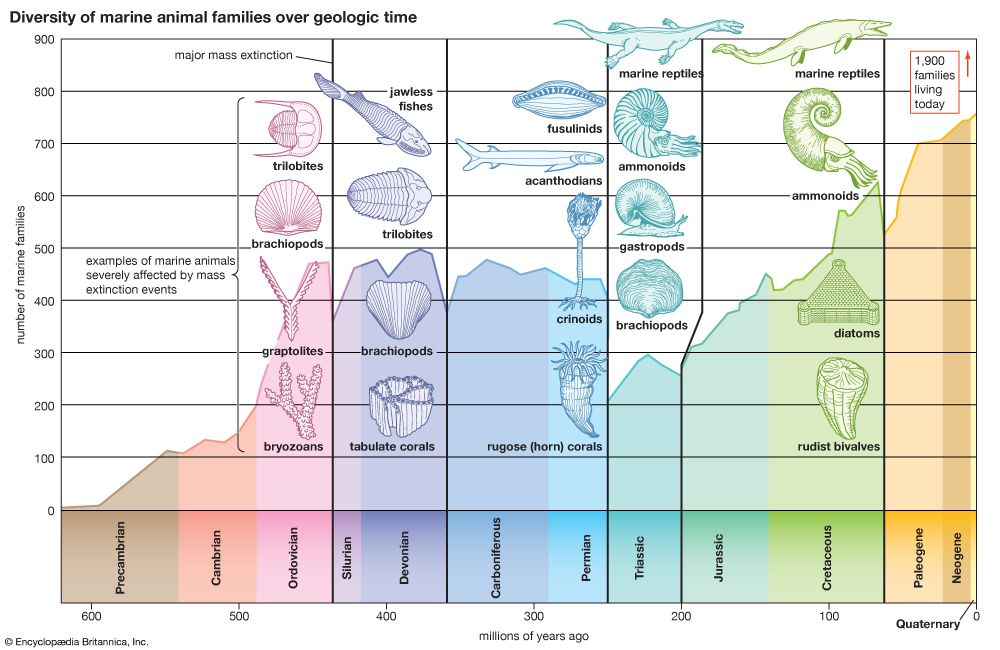
The extinction of therizinosaurs was part of the broader K–T extinction (also known as the K–Pg extinction) that occurred approximately 66 million years ago. This global mass extinction event eliminated roughly 80 percent of all animal species, including nearly all dinosaurs, marking the end of their 165-million-year reign.78910
While the exact mechanisms of the extinction remain a subject of scientific study, the event is widely associated with the asteroid theory. The impact of a massive asteroid near the Yucatán Peninsula triggered catastrophic environmental changes, including the injection of debris into the atmosphere that blocked sunlight, halted photosynthesis, and caused the collapse of food chains.98710
Researchers also suggest that therizinosaurs and other dinosaurs were already struggling due to environmental flux, such as global cooling and competition for dwindling food supplies, which may have made them more vulnerable to the sudden, catastrophic effects of the impact. Additionally, some scientists propose that terrestrial factors, such as massive volcanic activity known as the Deccan Traps and tectonic plate movements, contributed to a gradual deterioration of habitats that preceded the final extinction event.10978
Sources
- therizinosaur — Encyclopædia Britannica
- dinosaur - Theropoda — Encyclopædia Britannica
- dinosaur - Clues to dinosaurian metabolism — Encyclopædia Britannica
- dinosaur - Dinosaur descendants — Encyclopædia Britannica
- A Journey Through Time Since the Precambrian - Cretaceous Period: 145 million to 66 million years ago — Encyclopædia Britannica
- dinosaur - Habitats — Encyclopædia Britannica
- Cretaceous Period - Mass extinction — Encyclopædia Britannica
- K–T extinction — Encyclopædia Britannica
- What Happened to the Dinosaurs? — Encyclopædia Britannica
- dinosaur - The K–T boundary event — Encyclopædia Britannica
- end-Triassic extinction — Encyclopædia Britannica
Published on · 3 min read