What Are the Differences Between Hawks and Falcons?
While hawks and falcons are both birds of prey, they belong to distinct taxonomic families and have evolved different physical and behavioral traits to…
What are the differences between hawks and falcons?
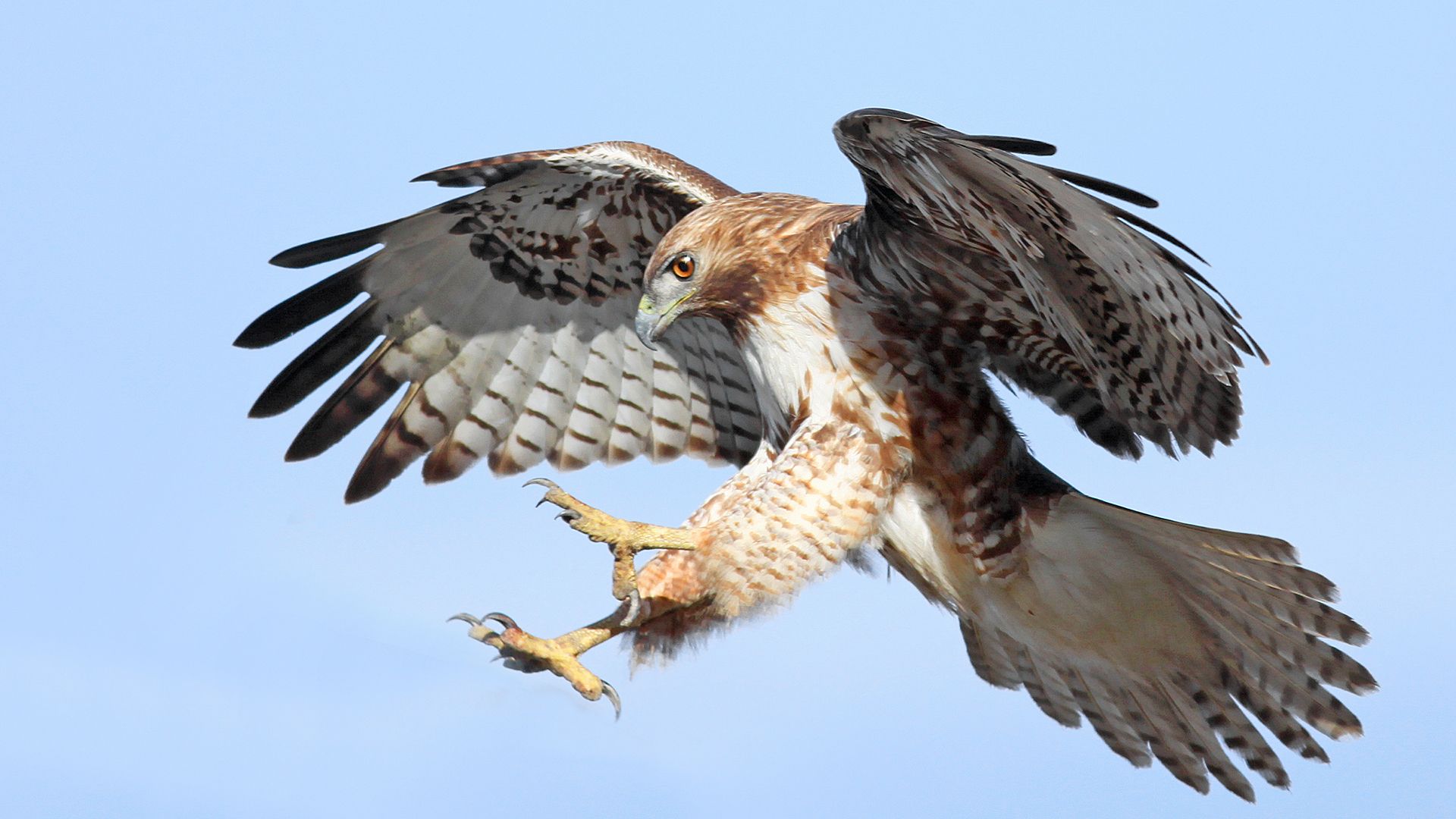
While hawks and falcons are both birds of prey, they belong to distinct taxonomic families and have evolved different physical and behavioral traits to master their environments.1
Taxonomic and Physical Differences
- Classification: Hawks are primarily part of the family Accipitridae, which also includes kites, buzzards, and harriers. Falcons belong to the family Falconidae.12
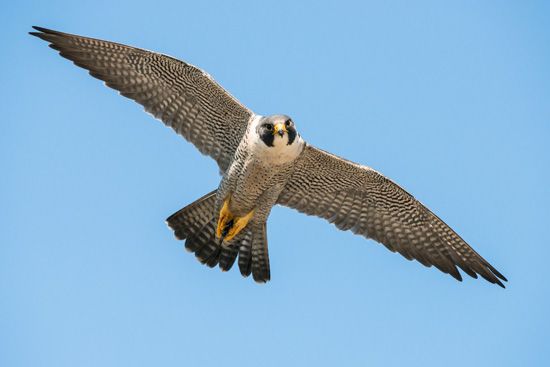
- Body Structure: Hawks generally have broader wings and tails, making them highly maneuverable for hunting in wooded areas. Falcons possess streamlined bodies and long, pointed wings, which allow for exceptional speed and precision in open spaces.1
- Nesting: Hawks typically build their own nests in trees, on the ground, or on cliffs. Many falcons do not build nests, instead opting to lay eggs in tree holes or on cliff ledges.12
Hunting and Falconry
In the sport of falconry, these birds serve different roles based on their natural hunting styles. Falcons are often preferred for hunting birds in flight due to their speed, while true hawks like goshawks are typically used for hunting ground game.13
What is the history and purpose of falconry?
Falconry is the ancient sport of hunting wild game in cooperation with a trained bird of prey, such as a falcon, hawk, eagle, or buzzard.56
History
Falconry has been practiced since preliterate times, with evidence found in prehistoric cave paintings and 13th-century BCE Hittite stelae. It flourished among the privileged classes in Western Europe and the British Isles during the Middle Ages. The sport declined in the 17th century due to the invention of the shotgun and changing land use, but it was preserved by dedicated clubs and enthusiasts. Interest saw a significant revival in the 1970s, and today, organizations like the North American Falconers Association continue to promote the practice.7
Purpose and Technique
Originally, the primary purpose of falconry was to secure food for the table. While this remains a component of the sport, the modern practice is largely driven by the pleasure of training and bonding with the birds. Training relies on conditioning, where the falconer manages the bird’s weight and uses positive reinforcement to foster cooperation. Through techniques like “manning” (taming) and “centering” (introducing the bird to wild game), the falconer and bird develop a partnership, often aided by modern tools like radio transmitters to track the bird during hunts.8
How do birds of prey use thermals to soar?
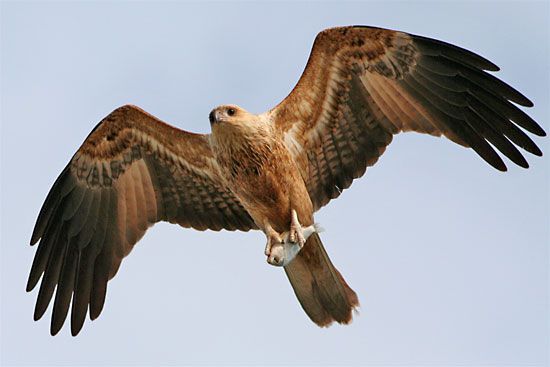
Birds of prey utilize thermals—vertical updrafts of hot air—to gain altitude through a process known as static soaring. As the ground heats up, it creates a column of rising air that eventually forms a “thermal bubble” at the top, which is then pinched off and floats upward. These bubbles are doughnut-shaped, with air rising in the center and cycling outward and downward.3
To gain height, a bird spirals within the updraft of the thermal. Because the thermal bubble rises faster than the bird descends, the bird is carried upward. When the bird reaches the bottom of the bubble, it transitions into a straight gravitational glide to travel toward the next thermal, resulting in an alternating flight pattern of circling and gliding.3
The ability to effectively use these thermals is largely controlled by wing loading, which is the ratio of a bird’s weight to its wing area. Species with lower wing loading can utilize smaller thermal bubbles, while heavier species require larger ones to gain height.9
What are some other types of birds of prey, like eagles or ospreys?
Beyond eagles and ospreys, there are many other fascinating birds of prey, often referred to as raptors. These birds are generally classified into two main groups: diurnal (active during the day) and nocturnal (active at night).
Diurnal Raptors
Most diurnal birds of prey belong to the order Accipitriformes or Falconiformes. These include:
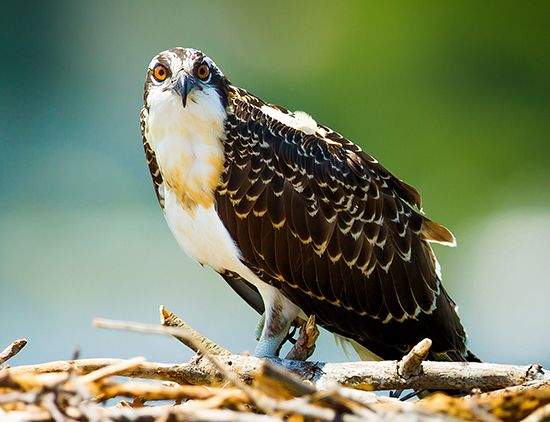
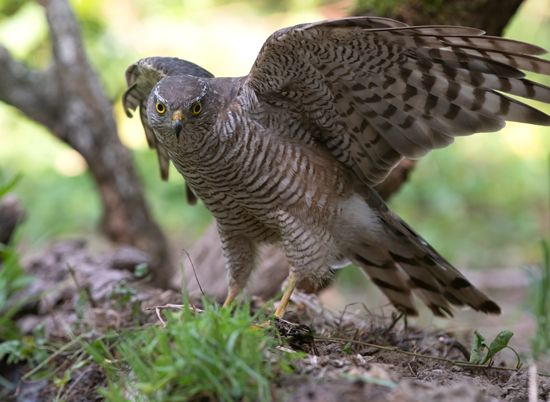
- Hawks: Known for their broad wings and maneuverability, these birds are adept at hunting in wooded areas. This group includes the accipiters, or “true hawks,” such as the goshawk and sparrowhawk.1011
- Falcons: Distinguished by their long, pointed wings and streamlined bodies, falcons are built for speed and are exceptional hunters in open spaces.11
- Vultures: These birds are specialized scavengers. The group includes condors, which are among the largest and strongest of all living birds.12
- Kites: Often characterized by their graceful, buoyant flight, these birds are closely related to hawks.11
- Secretary birds: A unique, long-legged raptor that primarily hunts on the ground.10
Nocturnal Raptors
Sources
- What are the differences between hawks and falcons? — Encyclopædia Britannica
- Falconiform - Annotated classification — Encyclopædia Britannica
- Falconiform - Flapping, soaring , and diving — Encyclopædia Britannica
- falconry - Types of birds used in falconry — Encyclopædia Britannica
- falconry — Encyclopædia Britannica
- falconry - History — Encyclopædia Britannica
- falconry - Hunting and training techniques — Encyclopædia Britannica
- falconry — Merriam-Webster
- Locomotion - Soaring — Encyclopædia Britannica
- Bird of prey — Encyclopædia Britannica
- Eagle — Encyclopædia Britannica
- Osprey — Encyclopædia Britannica
- Accipiter — Encyclopædia Britannica
- osprey — Merriam-Webster
Published on · 4 min read