What Is the Largest Spider in the World?
The title of "largest spider" depends on whether you measure by mass or by leg span, as two different species hold these respective records.
What is the largest spider in the world?
The title of “largest spider” depends on whether you measure by mass or by leg span, as two different species hold these respective records.1
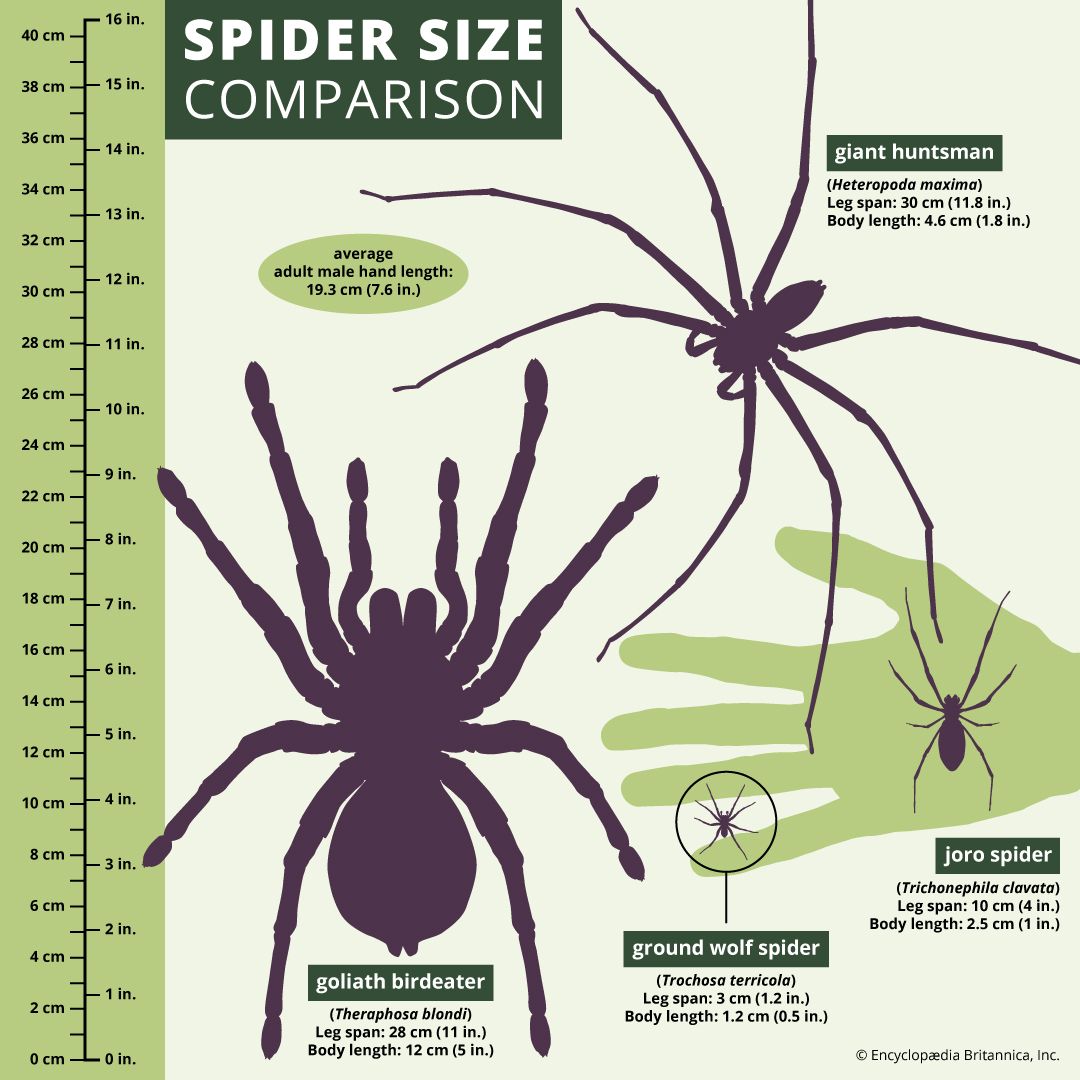
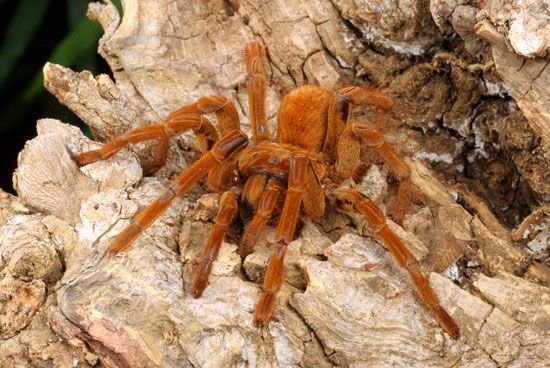
- Largest by Mass: The goliath birdeater (Theraphosa blondi) is the heaviest known spider. Found in the Amazon Rainforest, this tarantula can weigh up to 170 grams (6 ounces) and has a body length of up to 12 cm (5 inches).213
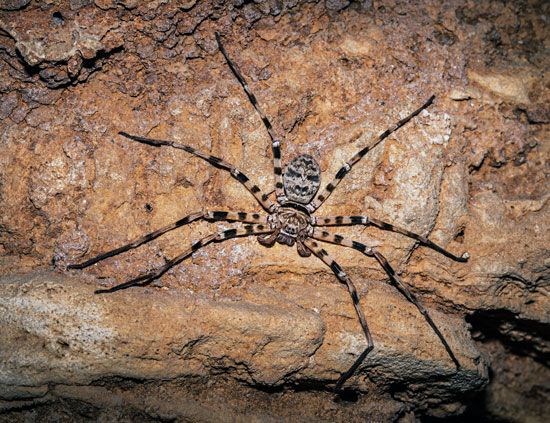
- Largest by Leg Span: The giant huntsman spider (Heteropoda maxima), discovered in caves in Laos, possesses the longest leg span of any known spider. It can reach a span of 25–30 cm (9.8–11.8 inches), though its body is significantly smaller than that of the goliath birdeater, measuring only about 4.6 cm (1.8 inches) in length.413
While both are impressive, the goliath birdeater is the most massive, whereas the giant huntsman holds the record for the greatest tip-to-tip width.13
What is the difference between an ambush predator and an active hunter?
The primary difference between an ambush predator and an active hunter lies in their strategy for encountering and capturing prey.
Ambush Predators
Ambush predators rely on concealment and patience to capture their victims. Rather than searching for food, they wait in a strategic location—often camouflaged to blend into their surroundings—until prey wanders within striking distance.56
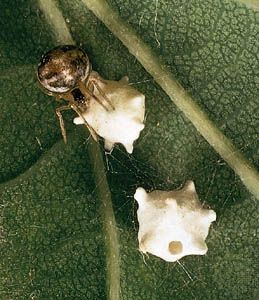
- Techniques: Many ambushers use specialized structures or behaviors to lure or trap prey. For example, ambush bugs hide on flowers to grasp insects, while bolas spiders use sticky silk threads to capture moths.56
- Efficiency: This method allows predators to conserve energy by remaining stationary, relying on the movement of the prey to initiate the hunt.5
Active Hunters
Active hunters, or “stalking” predators, take a more dynamic approach by searching for, pursuing, or tracking their prey.57
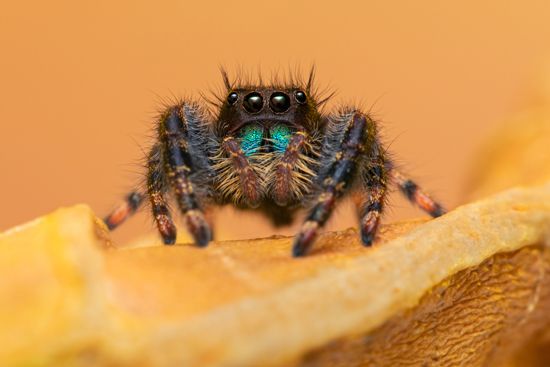
- Techniques: These predators often use keen senses, such as sharp eyesight or hearing, to locate and follow targets. Some, like jumping spiders, actively stalk their prey until they are close enough to pounce, while others may use cooperative group tactics to drive prey into a position where they can be easily captured.57
- Engagement: Unlike ambushers, active hunters are characterized by their movement through the environment to find and secure food sources.57
Why are some people afraid of spiders?
Fear of spiders is a complex response rooted in a combination of evolutionary, genetic, psychological, and social factors.
Evolutionary and Psychological Roots
It is suggested that a fear of spiders may have originated as an evolutionary survival mechanism, helping our ancestors avoid potentially dangerous encounters with venomous species. While only a tiny fraction of the world’s 46,000+ spider species are harmful to humans, their unpredictable movements and physical appearance can trigger an instinctive caution.1314
Arachnophobia
When this fear becomes irrational, persistent, and interferes with daily life, it is classified as arachnophobia—a specific phobia within the category of anxiety disorders. Triggers can include seeing a spider, a web, or even just thinking about them. This reaction activates the amygdala, the brain region associated with emotional responses, leading to physical symptoms like rapid heartbeat, sweating, and dizziness.14
Development and Treatment
Arachnophobia often develops during childhood or adolescence. Contributing factors include traumatic past experiences, observing a family member’s fear, or an underlying genetic predisposition to anxiety. Fortunately, it is treatable through methods like cognitive behavior therapy and exposure therapy.1314
How do spiders use their silk to build different types of webs?
Spiders are remarkable architects that utilize silk—a protein-based substance produced in abdominal glands—to construct diverse structures for trapping prey, protection, and reproduction. While all spiders produce silk, only about half of the known species build webs.15161718
Common Web Architectures
Web-weaving spiders typically construct one of four primary types of webs, each serving a distinct predatory strategy:
- Orb Webs: These iconic circular nets are designed to maximize surface area while using minimal silk. The spider creates a framework of radial spokes, then adds a temporary spiral of dry silk to maintain shape before replacing it with a dense, sticky spiral designed to ensnare flying insects.151817
- Sheet Webs: These form flat, dense mats of silk, often layered in vegetation, which serve as a platform to trap insects.1817
- Tangle Webs (Cobwebs): Built by spiders such as the family Theridiidae, these are irregular, three-dimensional structures featuring sticky anchor threads that entangle prey.1817
- Funnel Webs: These structures serve a dual purpose, acting as a retreat for the spider and a snare at the entrance of a tunnel.17
Specialized Techniques
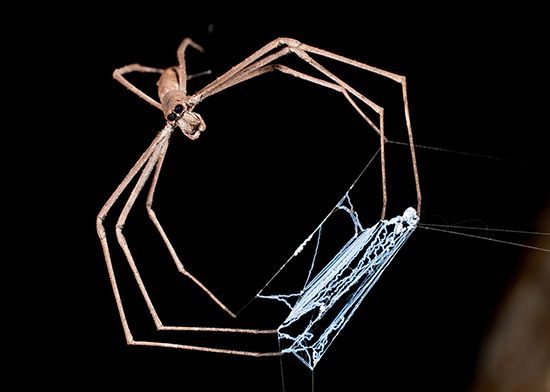
Beyond these standard forms, some spiders employ unique methods. For instance, ogre-faced spiders construct small, flat webs that they hold with their legs and throw over passing prey. Others, like the genus Hyptiotes, use woolly (cribellate) silk and actively manipulate the tension of their webs to capture victims. Many spiders also incorporate signal threads that connect the web to a retreat, allowing them to sense vibrations when prey is caught.1815
Sources
- giant huntsman spider: Top Questions — Encyclopædia Britannica
- Goliath birdeater: Top Questions — Encyclopædia Britannica
- What is the largest spider in the world? — Encyclopædia Britannica
- giant huntsman spider — Encyclopædia Britannica
- spider - Stalking prey — Encyclopædia Britannica
- deer - Morphology and behaviour — Encyclopædia Britannica
- ambush bug — Encyclopædia Britannica
- hunting - Hunting methods — Encyclopædia Britannica
- Predation — Encyclopædia Britannica
- hunters — Merriam-Webster
- hunter — Merriam-Webster
- ambuscade — Merriam-Webster
- Why are people afraid of spiders? — Encyclopædia Britannica
- arachnophobia — Encyclopædia Britannica
- How do spiders make circular webs? — Encyclopædia Britannica
- spider - Silk — Encyclopædia Britannica
- spider - Spiderwebs — Encyclopædia Britannica
- Types of Spiderwebs — Encyclopædia Britannica
Published on · 4 min read