Where Do the Great Smoky Mountains Get Their Name?
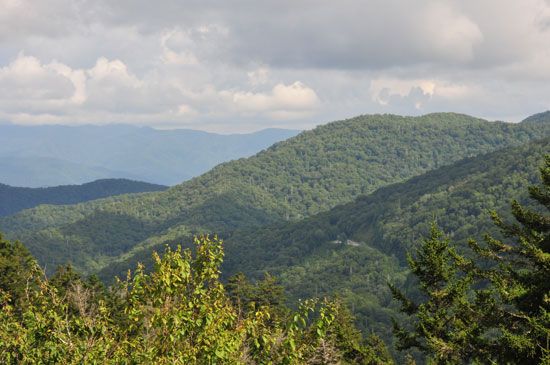
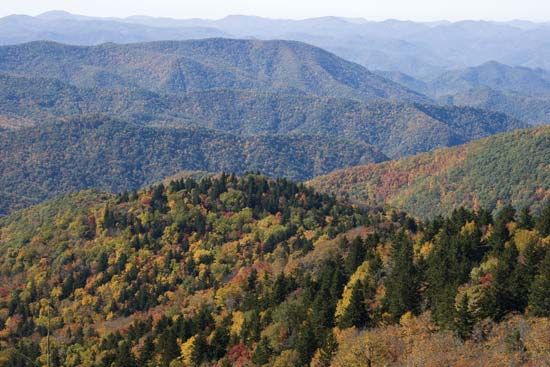
The Great Smoky Mountains derive their name from the characteristic bluish haze that frequently blankets the region.
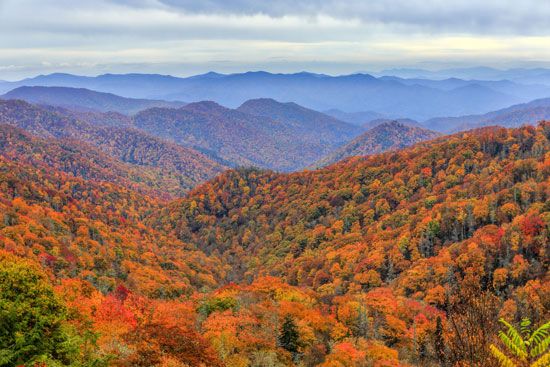
Where do the Great Smoky Mountains get their name?
The Great Smoky Mountains derive their name from the characteristic bluish haze that frequently blankets the region.12
The original inhabitants, the Cherokee people, referred to the area as Shaconage, which translates to “place of the blue smoke”. Contrary to the name, this phenomenon is not actual smoke but a natural occurrence caused by local vegetation. Trees and plants in the Appalachian Mountains release volatile organic compounds that react with substances in the atmosphere to create aerosols. These fine particles scatter blue and violet light from the Sun, resulting in the distinctive blue-tinted mist that gives the mountains their smoky appearance.1
What are volatile organic compounds?
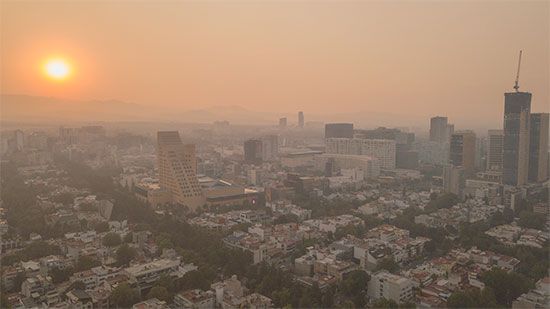
Volatile organic compounds (VOCs) are low-molecular-weight substances that are released into the atmosphere as gases. These compounds are often classified as primary air pollutants, meaning they are emitted directly from identifiable sources such as factories, power plants, automobiles, and wildfires.45
In industrial applications, such as the production of polymer-based coatings, organic solvents are frequently used to dissolve materials. When these coatings are applied and cured, the solvents evaporate and enter the atmosphere as VOCs. Because these substances contribute to the formation of ground-level ozone—a major component of urban air pollution—their use is subject to strict environmental regulations in many regions.4
While some VOCs are human-made, they are also part of the broader “inventory of volatiles” that interact between the Earth’s crust, the biosphere, and the atmosphere. Managing these emissions is essential for maintaining air quality and protecting public health.645
How did the Cherokee people live in these mountains?
Traditional Cherokee life in the Appalachian Mountains was deeply rooted in a sophisticated social and agricultural structure. The nation was organized into a confederacy of “red” (war) and “white” (peace) towns, where white towns served as sanctuaries and red towns hosted war ceremonies.8
Daily life centered on well-developed agricultural practices. The Cherokee cultivated corn, beans, and squash, and they relied on deer, bear, and elk for meat and clothing. Their settlements typically consisted of 30 to 60 bark-roofed log cabins surrounding a council house, where community meetings were held and a sacred fire was maintained. They were also skilled artisans, producing pottery and baskets, and utilizing stone tools such as knives and axes.8
Religious and cultural life was marked by significant observances like the Busk, or Green Corn, festival, which celebrated the firstfruits and the lighting of new fires. This way of life was severely disrupted by colonial expansion and eventually the forced removal known as the Trail of Tears, though a small group of Cherokee successfully remained in the mountains, forming the nucleus of the community that resides in western North Carolina today.8910
What animals are found in the Great Smoky Mountains?
The Great Smoky Mountains National Park is home to a diverse array of wildlife, supported by its extensive forest ecosystems. Notable animal species found within the park include:
- Mammals: Black bears are a prominent species in the region, alongside white-tailed deer, foxes, raccoons, and wild boars. Red wolves are also noted as an important species in the park.1213
- Birds: The park supports a rich variety of avian life, with approximately 200 recorded varieties of game birds and songbirds, including ruffed grouse and wild turkeys.1213
- Amphibians: The region is particularly significant for its biodiversity in amphibians, hosting at least 25 species of salamanders.12
While animals like bison and elk were once common throughout the broader Appalachian region, they disappeared from this area long ago.13
Sources
- Where do the Great Smoky Mountains get their name? — Encyclopædia Britannica
- Great Smoky Mountains — Encyclopædia Britannica
- Great Smoky Mountains — Merriam-Webster
- surface coating - Solvents and carrier liquids — Encyclopædia Britannica
- VOC — Merriam-Webster
- air pollution - Major air pollutants — Encyclopædia Britannica
- evolution of the atmosphere - Materials — Encyclopædia Britannica
- Cherokee - Early colonial period — Encyclopædia Britannica
- Cherokee - 21st century — Encyclopædia Britannica
- Cherokee: Top Questions — Encyclopædia Britannica
- Trail of Tears — Encyclopædia Britannica
- Great Smoky Mountains National Park — Encyclopædia Britannica
- Appalachian Mountains - Plant and animal life — Encyclopædia Britannica
Published on · 3 min read