Why Do Whales Sing?
Whales produce vocalizations for several essential survival and social purposes. Primarily, these sounds facilitate communication within groups, allowing…
Why do whales sing?
Whales produce vocalizations for several essential survival and social purposes. Primarily, these sounds facilitate communication within groups, allowing individuals to share information regarding their identity, location, and emotional states.12
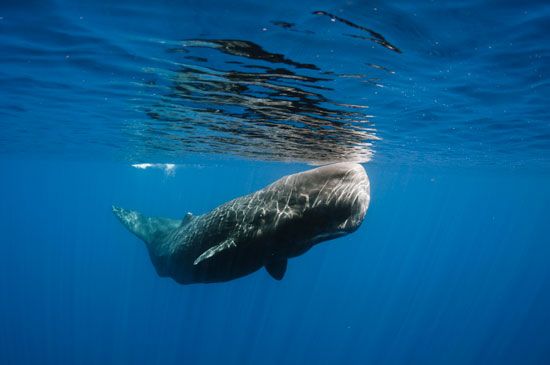
For toothed whales, such as sperm whales, vocalizations are vital for echolocation. By emitting high-pitched clicks that bounce off objects, they can navigate featureless environments, hunt prey, and determine the size and distance of obstacles.12
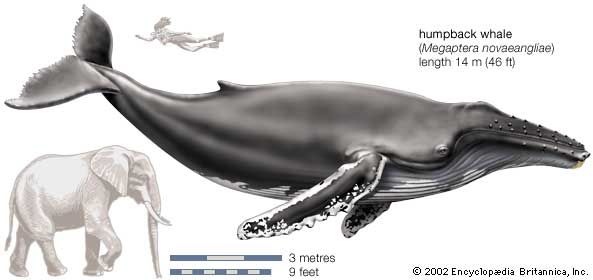
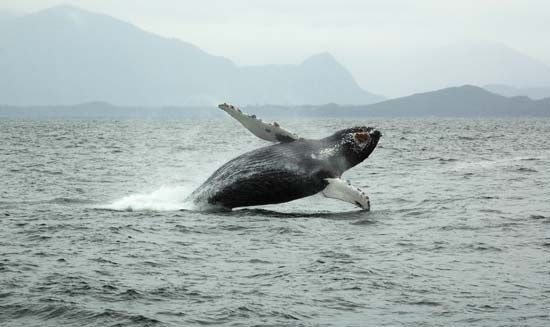
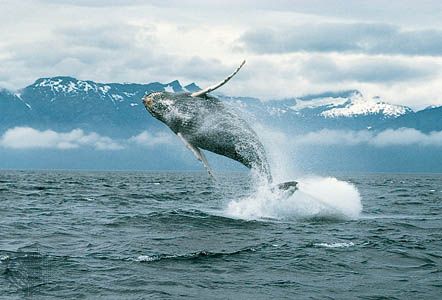
Baleen whales, including humpbacks, produce complex, repeating songs that serve multiple functions:
- Courtship: Males sing elaborate songs to attract females and compete with rivals, often using these displays to assert dominance and signal their fitness.1
- Social Identity: Songs help identify members of specific pods, and these vocal patterns can evolve over time as whales incorporate sounds from other groups.12
- Navigation: Because these low-frequency sounds can travel thousands of kilometers, they assist whales in maintaining contact and mapping their surroundings in the vast ocean.12
How does echolocation help toothed whales hunt?
Toothed whales use echolocation—a biological form of sonar—to hunt by emitting high-frequency clicking sounds that reflect off potential prey.34
The process functions through several specialized anatomical structures:
- Sound Production: Toothed whales generate clicking pulses by blowing air through tissues called phonic lips, located in their nasal passages beneath the blowhole.3
- Projection: These sounds pass through the melon, a fatty organ in the forehead that focuses and projects the sound waves into the water.32
- Detection: When these sound waves strike an object, they bounce back as echoes. The whale receives these vibrations through an acoustic window in its lower jaw, which conveys the energy to the inner ear.3
By analyzing these returning echoes, toothed whales can determine the size, shape, and distance of prey, even in dark or featureless environments. This high-frequency system, which can reach up to 150 kilohertz, allows them to achieve precise spatial resolution, effectively “seeing” their surroundings to procure food.345
What are the differences between baleen and toothed whales?
The primary differences between toothed whales (suborder Odontoceti) and baleen whales (suborder Mysticeti) involve their feeding mechanisms and vocalization methods.62
Feeding Adaptations
- Toothed Whales: These whales possess simple, conical teeth used to grasp prey, such as fish or squid, which they swallow whole. The number of teeth varies significantly by species, ranging from a single tooth in the narwhal to over 240 in some dolphins.67
- Baleen Whales: These whales lack teeth entirely. Instead, they have baleen plates made of keratin hanging from their upper jaws. They use these plates to filter small prey, such as plankton and krill, from large volumes of water.67
Vocalization and Communication
- Toothed Whales: They communicate and navigate using high-frequency clicks (5–150 kHz) produced by passing air through phonic lips in their nasal passages. These sounds are projected through a fatty organ called the melon for echolocation.2
- Baleen Whales: They use their larynx to produce low-frequency, complex songs (0–5 kHz) by recycling air. These songs can travel thousands of kilometers and are used for social identification and navigation.2
How does human noise pollution affect whale communication?
Human-generated noise pollution poses a significant threat to whales by interfering with their ability to navigate, find food, and communicate with one another. Much of the world’s oceans are now filled with chaotic sounds from shipping vessels, seismic testing, and oil drilling, which can disrupt the natural acoustic environment essential for cetacean survival.83
The impact varies by species and communication method:
- Baleen Whales: These whales produce low-frequency songs that can travel thousands of kilometers to facilitate long-range communication. Unfortunately, the noise produced by shipping vessels often occurs in the same narrow frequency bands, effectively “masking” these calls and making it difficult for whales to communicate across ocean basins.23
- Toothed Whales: These animals rely on high-frequency echolocation to “see” their environment and hunt. Intense, loud sounds—particularly from naval sonar devices—can travel hundreds of miles and are associated with severe consequences, including mass strandings.82
Because sound is vital for attracting mates and avoiding predators, this pollution represents an existential threat to vulnerable populations.8
Sources
- Why do whales sing? — Encyclopædia Britannica
- whale vocalization — Encyclopædia Britannica
- cetacean - Sound production and communication — Encyclopædia Britannica
- Echolocation — Encyclopædia Britannica
- Simocetus — Encyclopædia Britannica
- Do whales have teeth? — Encyclopædia Britannica
- cetacean - Feeding adaptations — Encyclopædia Britannica
- noise pollution - Effects on humans and wildlife — Encyclopædia Britannica
Published on · 3 min read