Why Are Bugs Attracted to Light?
It is a common misconception that insects are actively attracted to artificial light. Research from 2024 indicates that this behavior is actually a result of…
Why are bugs attracted to light?
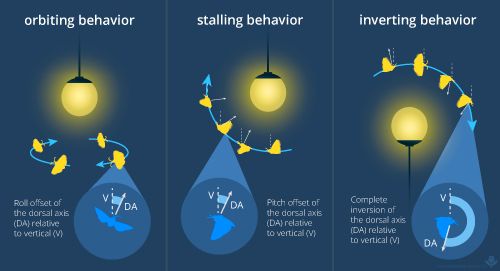
It is a common misconception that insects are actively attracted to artificial light. Research from 2024 indicates that this behavior is actually a result of disorientation caused by the dorsal light response.
Many flying insects rely on the brightness of the sky to maintain stability and determine which way is up. By reflexively keeping their backs toward the brightest light source, they can maintain a steady flight path. Under natural conditions, the Moon and stars provide a distant, fixed reference point. However, when an insect encounters a nearby artificial light, this reflex causes it to constantly reorient itself to keep the light overhead. This leads to the erratic, swarming flight patterns often observed, as the insect becomes trapped in a loop of trying to stabilize its position against a source that is not a reliable celestial cue.
Older theories, such as those suggesting insects seek heat or mistake lights for escape routes, have largely been challenged by evidence showing that insects often fly at right angles to light sources or ignore them entirely.

What is the dorsal light response in other animals?
The dorsal light response is a behavioral mechanism used by various animals to maintain stability and orientation by keeping their backs toward the brightest light source. While this response is often associated with the disorientation of insects near artificial lights, it is also observed in other aquatic organisms.
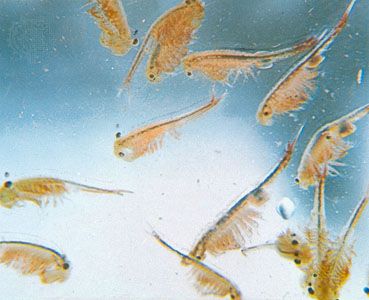
For example, certain branchiopods exhibit distinct light-based behaviors. The Anostraca (fairy shrimp) demonstrate a ventral light response, where they orient their ventral surface toward a light source. If the light is shifted to come from below, they will turn over to maintain this orientation. In other branchiopods like Daphnia, responses to light are more complex and are often tied to environmental factors such as the presence of food. In the presence of green algae, which absorbs blue light, Daphnia respond to red light by maintaining a stationary position, whereas the presence of blue light stimulates them to swim horizontally to search for food.
While many animals, including birds, fishes, and crustaceans, use celestial bearings like the Sun or stars for navigation, these behaviors are distinct from the reflexive dorsal light response used for postural stability.
How does light pollution affect nocturnal ecosystems?
Light pollution acts as a significant environmental stressor, disrupting the natural behaviors and biological rhythms of nocturnal ecosystems. Because many species rely on the natural cycle of light and darkness to regulate essential life processes, the introduction of excessive artificial light can have severe consequences.78910
Impact on Wildlife
- Navigation and Migration: Many migratory birds navigate using the stars and the Moon. Artificial skyglow disorients these birds, often leading them to collide with illuminated buildings and towers, resulting in millions of deaths annually.78
- Reproduction and Development: Artificial light interferes with photoperiodism, the process by which animals use light cycles to time reproduction and migration. For example, sea turtle hatchlings, which rely on natural light cues to find the ocean, are frequently disoriented by coastal lighting and head inland, where they often perish.98
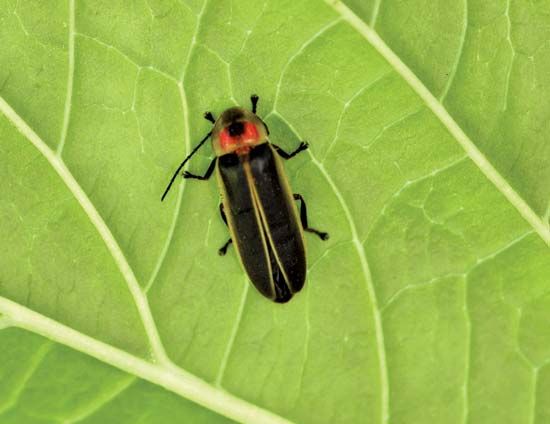
- Mating and Foraging: Light pollution can disrupt bioluminescent mating signals, such as those used by fireflies. Additionally, studies show that street lighting can reduce the abundance and slow the development of moth caterpillars.8
- Circadian Rhythms: Like humans, many animals rely on circadian rhythms regulated by light intensity to manage hormone secretion and sleep cycles. Artificial illumination can disrupt these internal clocks, affecting endocrine function and breeding cycles.710
What other methods do insects use to navigate at night?
Insects utilize a variety of sophisticated sensory mechanisms to navigate at night beyond the use of celestial cues. Because odor molecules in the air do not form simple, continuous gradients, insects often employ odor-modulated anemotaxis to locate sources like food or mates. In this process, the detection of a specific scent triggers a behavioral program that uses wind direction as a primary navigational signal, allowing the insect to move upwind toward the source.2
Key methods include:
- Anemotaxis: Insects determine wind direction using mechanosensory hairs on the head and structures at the base of their antennae. They may walk directly upwind or perform a zigzagging flight, similar to a sailboat tacking into the wind, to reach an odor source.2
- Chemoreception: Many insects are highly specialized to detect specific chemical signals, such as sex-attractant pheromones. Male moths, for instance, use feathery antennae to detect minute concentrations of pheromones released by females, which then initiates their upwind flight.1112
- Acoustic Sensing: Some insects, particularly moths, possess specialized audio receptors that respond to the high-frequency sounds emitted by bats. This allows them to navigate away from predators by taking evasive action when they detect these frequencies.1
- Magnetosensitivity: While still under investigation, researchers are exploring whether some insects use the Earth’s magnetic field to assist in orientation, a mechanism already confirmed in certain magnetotactic bacteria.1
Sources
- Why are bugs attracted to light? — Encyclopædia Britannica
- Migration - Other animals — Encyclopædia Britannica
- branchiopod - Responses to light — Encyclopædia Britannica
- Bioluminescence - The role of bioluminescence in behavior — Encyclopædia Britannica
- Photoreception - Neural transmission — Encyclopædia Britannica
- Migration - Birds — Encyclopædia Britannica
- Is Light Pollution Really Pollution? — Encyclopædia Britannica
- light pollution — Encyclopædia Britannica
- Photoperiodism — Encyclopædia Britannica
- radiation - Effects on development and biologic rhythms — Encyclopædia Britannica
- Chemoreception - Sex-attractant pheromones — Encyclopædia Britannica
- life - Photosensitivity , audiosensitivity, thermosensitivity, chemosensitivity, and magnetosensitivity — Encyclopædia Britannica
- Chemoreception - Movement toward an odor source — Encyclopædia Britannica
Published on · 4 min read