Bog
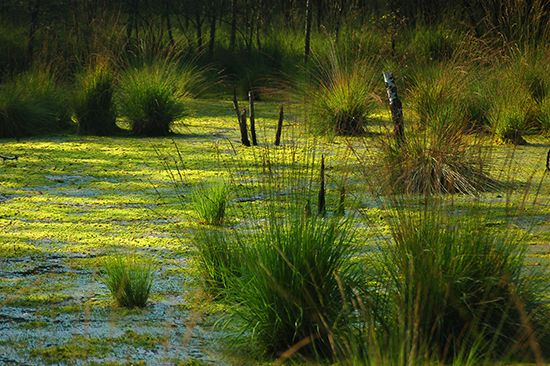
Bogs are wetland ecosystems characterized by acidic, nutrient-poor, and waterlogged peat soils. While they share the fundamental trait of being fed primarily…
How do bogs differ in various parts of the world, such as tropical vs. temperate regions?
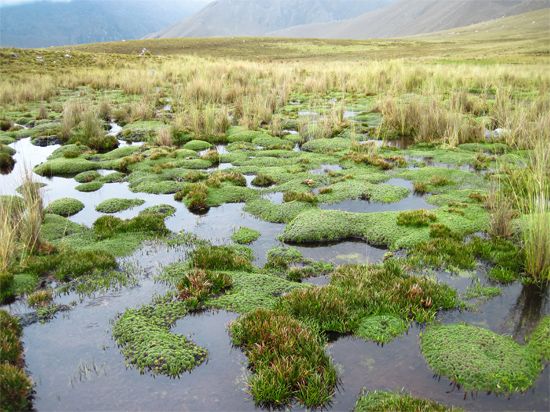
Bogs are wetland ecosystems characterized by acidic, nutrient-poor, and waterlogged peat soils. While they share the fundamental trait of being fed primarily by rainfall rather than mineral-rich groundwater, their composition varies significantly by climate.12
Temperate and Boreal Bogs
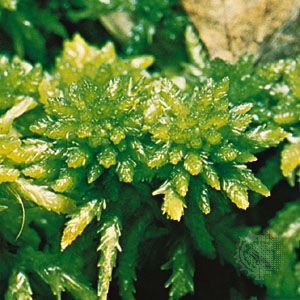
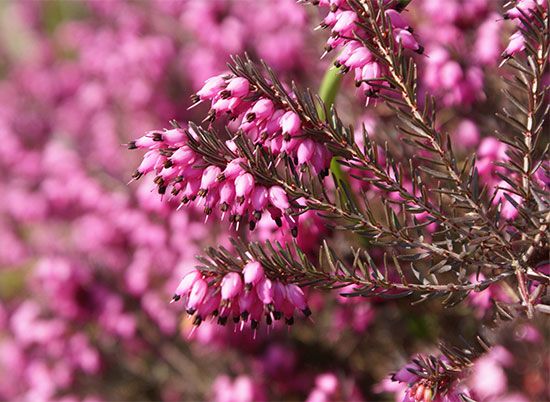
In cool, high-latitude regions, bogs are typically dominated by sphagnum moss and heaths, such as leatherleaf. These bogs are often found in basins scoured by glaciers during the Pleistocene Epoch. Low temperatures and high moisture levels in these regions slow organic decomposition, allowing thick layers of peat to accumulate.213
Tropical Bogs
In tropical regions, high temperatures usually accelerate decay, preventing peat accumulation. However, in areas with extremely high rainfall and low-mineral groundwater, tropical bogs can form. Unlike their temperate counterparts, these bogs are dominated by broad-leaved evergreen trees rather than sphagnum moss. These trees often feature specialized adaptations, such as stilt roots or pneumatophores, to survive in anoxic, saturated soils.421
What unique plant and animal species are typically found in bog ecosystems?
Bog ecosystems are defined by their acidic, nutrient-poor, and waterlogged environments, which dictate the unique species capable of surviving there. Because these habitats are challenging for many plants, they host specialized flora and fauna adapted to low-nutrient conditions.
Flora
The vegetation in bogs is highly specialized to thrive in acidic, saturated soils:
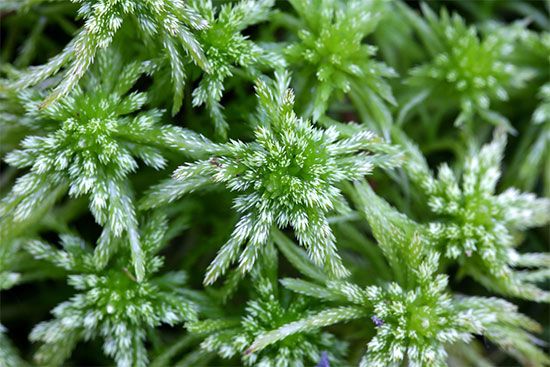
- Peat Mosses: Sphagnum mosses are the hallmark of typical bogs. They create acidic conditions by absorbing minerals and releasing hydrogen ions, and their spongelike cells retain vast amounts of water.62
- Carnivorous Plants: To compensate for the lack of nitrogen and other nutrients in the soil, many bog plants have evolved to be insectivorous. This includes sundews, pitcher plants, butterworts, and bladderworts, which trap and digest insects and occasionally small vertebrates.67
- Other Characteristic Plants: Bogs often feature heaths (family Ericaceae), sedges, cotton grass, and various orchids. In tropical bogs, the flora shifts toward woody trees like Calophyllum and Shorea, which often utilize stilt roots or pneumatophores to access oxygen.621
- Microscopic Life: Desmids, a group of unicellular green algae, are also characteristic of these environments.6
Fauna
Animals are generally not common in typical bogs due to the harsh, acidic conditions. However, some tropical peatlands, such as those in Borneo, provide critical habitat for endangered species like orangutans.1
What is a bog and how does it differ from other types of wetlands?
A bog is a type of wetland ecosystem characterized by wet, spongy, and poorly drained soil that is rich in peat. These environments are typically acidic, often with a pH of less than 5, and are primarily fed by rainwater, which provides very few minerals.926
Bogs differ from other wetlands, such as swamps, primarily in their water source, soil composition, and vegetation:
- Water and Soil: Unlike swamps, which are often associated with mineral-rich water from rivers or groundwater that promotes the decay of organic matter, bogs rely on nutrient-poor water. This lack of minerals and the presence of high acidity inhibit the decomposition of plant material, leading to the accumulation of peat.2106
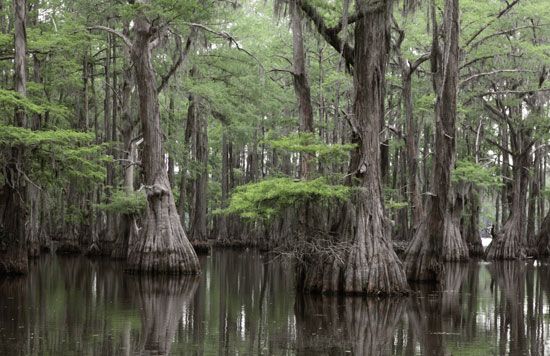
- Vegetation: Bogs are characterized by specific flora, such as sphagnum mosses, heaths, and insectivorous plants, which are adapted to the acidic, low-nutrient conditions. In contrast, swamps are dominated by trees and woody vegetation that thrive in mineral-rich, waterlogged soils.261011
- Oxygen Levels: While both systems experience low oxygen levels due to waterlogging, the specific chemical environment of a bog—driven by sphagnum moss—creates a unique, highly acidic habitat that is distinct from the mineral-heavy, often nutrient-rich environment of a swamp.61012
What are some of the adaptations that plants have developed to survive in the nutrient-poor conditions of bogs?
Plants in bog ecosystems have evolved specialized adaptations to survive in environments characterized by high acidity, waterlogging, and a severe lack of essential nutrients like nitrogen.6138
Carnivory
To overcome the scarcity of nutrients in the soil, many bog plants have evolved to be insectivorous. Rather than relying on their roots to extract nitrogen, these plants use specialized traps to capture and digest insects and other small animals. Examples include:13
- Pitcher plants: Utilize passive pitfall traps filled with digestive fluids.13
- Sundews and butterworts: Ensnare prey using adhesive leaves.13
- Bladderworts and Venus flytraps: Employ rapid “snap traps” to capture victims.13
Structural and Physiological Adaptations
- Specialized Root Systems: In tropical bogs, trees such as Calophyllum and Shorea often grow on hummocks to provide drier conditions for seed germination. Many of these trees possess stilt roots for support or pneumatophores—upward-growing root structures that transport atmospheric oxygen to roots submerged in anoxic zones.8
- Symbiotic Relationships: Many bog-dwelling plants, such as orchids, rely on mycorrhiza—a symbiotic association with fungi—to enhance their nutritional uptake.63
- Water Retention: Sphagnum mosses feature large, empty cells that act like sponges to retain water, while simultaneously acidifying their environment by releasing hydrogen ions, which helps limit competition from other plants.6
Sources
- Wetland - Peatlands — Encyclopædia Britannica
- Bog — Encyclopædia Britannica
- Bog - Tropical bogs — Encyclopædia Britannica
- Wetland - Climate — Encyclopædia Britannica
- Bog - Distribution — Encyclopædia Britannica
- Bog - Flora — Encyclopædia Britannica
- sphagnum bog — Merriam-Webster
- Do Carnivorous Plants Eat Their Prey? — Encyclopædia Britannica
- bog — Merriam-Webster
- peat bog — Merriam-Webster
- Swamp — Encyclopædia Britannica
- Wetland - Freshwater forested swamps — Encyclopædia Britannica
- Bog - Formation and structure — Encyclopædia Britannica
- mycorrhiza — Encyclopædia Britannica
Published on · 4 min read