Carnosaur
A carnosaur is a member of the taxonomic group Carnosauria, which consists of bipedal, flesh-eating theropod dinosaurs that evolved to prey on large…
What is carnosaur?
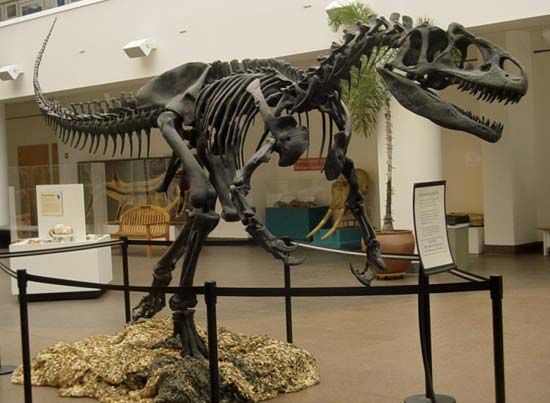
A carnosaur is a member of the taxonomic group Carnosauria, which consists of bipedal, flesh-eating theropod dinosaurs that evolved to prey on large herbivores. While some general dictionaries may incorrectly categorize tyrannosaurs as carnosaurs, scientific classification places tyrannosaurs within the group Coelurosauria.1
Carnosaurs are defined by their large size, high skulls, and laterally compressed, serrated teeth designed for slicing flesh. This group includes Allosaurus and its close relatives, which are distinct from coelurosaurs—a group that includes birds and theropods more closely related to birds than to allosaurs. Carnosaurs lived during the late Jurassic Period and persisted into the Cretaceous Period.1
What are the main differences between carnosaurs and coelurosaurs?
The primary distinction between carnosaurs and coelurosaurs lies in their evolutionary relationships: carnosaurs are theropods more closely related to Allosaurus than to birds, while coelurosaurs include birds and all theropods more closely related to birds than to allosaurs.14
Key Differences
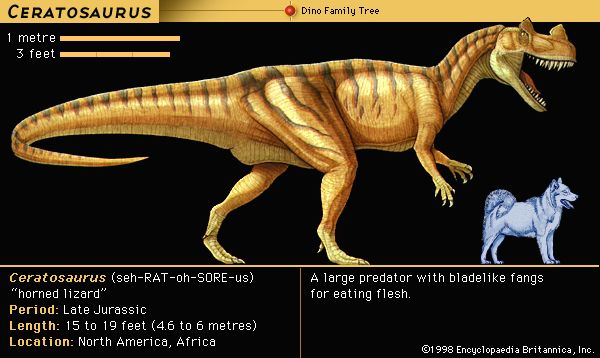
- Evolutionary Classification: Carnosauria is a specific group of large predators, such as Allosaurus, Acrocanthosaurus, and Giganotosaurus. Coelurosauria is a broader, more diverse group that includes birds, dromaeosaurs, and—contrary to older classifications—tyrannosaurs.14
- Anatomical Features:
- Carnosaurs: Typically possess high skulls and dagger-shaped, laterally compressed teeth with serrated edges for slicing flesh. Their limbs are generally proportional to those of basal theropods.14
- Coelurosaurs: Defined by specific skeletal modifications, such as a pelvis where the ischium is reduced to two-thirds or less the size of the pubis, larger eyes, and a limit of 15 tail vertebrae with transverse projections.4
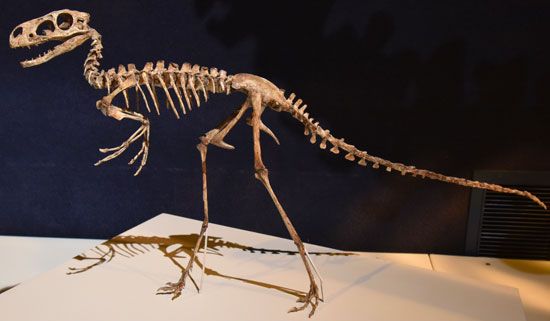
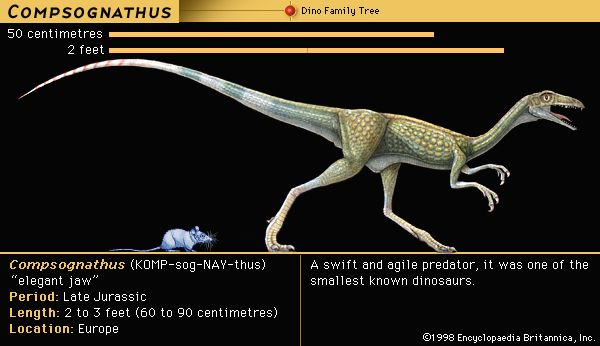
- Size and Diversity: While carnosaurs were historically defined by their large size, this is no longer the unifying trait. Coelurosaurs range from small, chicken-sized forms like Compsognathus to massive predators like Tyrannosaurus.4
How did the teeth of carnosaurs help them hunt large prey?
Carnosaurs were highly specialized predators whose dental anatomy was perfectly adapted for hunting large herbivorous dinosaurs. Their teeth were dagger-shaped, recurved, and laterally compressed, featuring serrated keels on both the front and back edges.1
These serrations functioned like a saw, allowing the carnosaurs to slice efficiently through the flesh of their prey. By combining this slicing capability with their high skulls, carnosaurs could deliver devastating bites to large herbivores, enabling them to effectively process and consume their catch. This specialized dentition was a hallmark of the group, distinguishing them from other theropods and facilitating their role as apex predators during the late Jurassic Period and into the Cretaceous Period.1
Why are tyrannosaurs classified as coelurosaurs instead of carnosaurs?
Tyrannosaurs were historically classified as carnosaurs because of their large size and predatory nature, which led paleontologists to group them with other massive theropods like Allosaurus. However, these resemblances have proven to be superficial, as they were based on size rather than evolutionary relationships.114
Modern scientific consensus classifies tyrannosaurs as gigantic members of the coelurosaurs. This reclassification is supported by several key factors:114
- Evolutionary Lineage: Coelurosauria is defined as the group containing birds and all theropods more closely related to birds than to carnosaurs. Tyrannosaurs share a closer evolutionary affinity with this group than with the true carnosaurs.411
- Anatomical Evidence: While carnosaurs are characterized by specific features like dagger-shaped, laterally compressed teeth, tyrannosaurs possess distinct dental and skeletal traits, such as teeth with a more rounded cross-section and a pelvis modified in a manner consistent with other coelurosaurs.412
- Shared Characteristics: Tyrannosaurs share specific skeletal features with other coelurosaurs, such as the “pinched” foot bones also seen in ornithomimids. Additionally, early tyrannosaur fossils, such as Dilong, have been discovered with simple filamentous “protofeathers,” a trait commonly associated with coelurosaurian theropods.11
Sources
- carnosaur — Encyclopædia Britannica
- carnosaur — Merriam-Webster
- crurotarsan — Encyclopædia Britannica
- dinosaur - Tetanurae — Encyclopædia Britannica
- dinosaur - The plant eaters — Encyclopædia Britannica
- dinosaur - The flesh eaters — Encyclopædia Britannica
- tyrannosaur - Skull and dentition — Encyclopædia Britannica
- lizard - Skull and jaws — Encyclopædia Britannica
- lizard - Dentition — Encyclopædia Britannica
- carnivore - Form and function — Encyclopædia Britannica
- tyrannosaur - Classification — Encyclopædia Britannica
- dinosaur - Theropoda — Encyclopædia Britannica
- dinosaur - Classification — Encyclopædia Britannica
- tyrannosaur - Other skeletal features — Encyclopædia Britannica
Published on · 3 min read