Chambal River
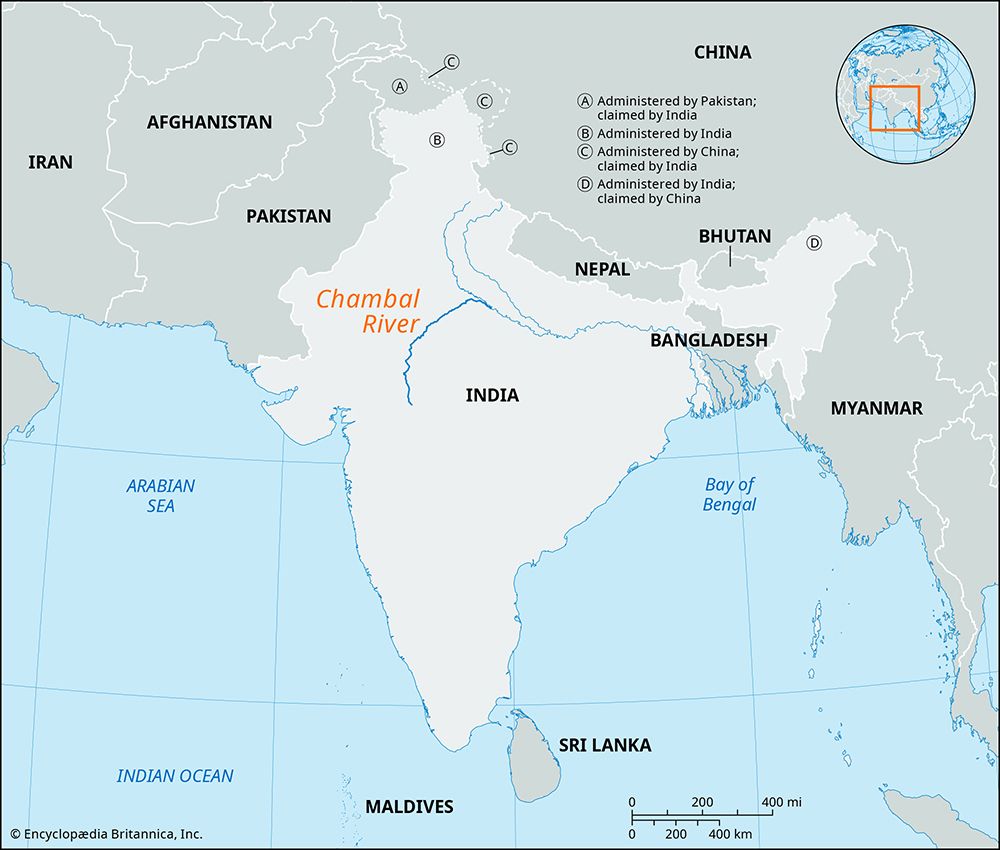
The Chambal River is a significant river in northern India and serves as the primary tributary of the Yamuna River.
What is Chambal River?
The Chambal River is a significant river in northern India and serves as the primary tributary of the Yamuna River.1
Rising in the Vindhya Range near Mhow in western Madhya Pradesh, the river flows north into Rajasthan, passes Kota, and eventually flows through Uttar Pradesh to join the Yamuna. Its total course spans approximately 550 miles (900 km), with major tributaries including the Banas, Kali Sindh, Sipra, and Parbati rivers.1
The river’s lower course is notable for a 10-mile (16-km) wide belt of badland gullies, which were formed by accelerated soil erosion. This area is currently the focus of a significant soil conservation project.1
What animals live in the Chambal River sanctuary?
The National Chambal Sanctuary, administered jointly by the states of Madhya Pradesh, Rajasthan, and Uttar Pradesh, is a vital protected area established for the conservation of several unique and endangered species.
The sanctuary is home to a diverse array of wildlife, including:
- Ganges river dolphins: These nearly sightless, freshwater cetaceans rely on highly developed sonar to navigate the river’s waters.23
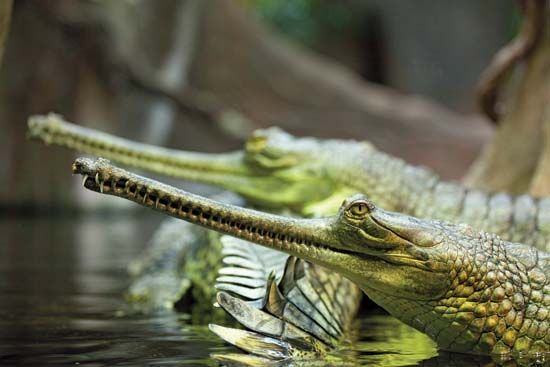
- Gharials: The sanctuary hosts the largest population of these critically endangered, long-snouted crocodiles.4
- Red-crowned roofed turtles: This freshwater reptile is known for its distinct, roof-shaped shell and inhabits the river’s swift-flowing sections with sandy bottoms.5
- Other Wildlife: The sanctuary also supports various other crocodiles and a variety of large terrestrial animals.2
These species face significant threats from habitat loss, water pollution, and changes to river flow caused by human activity, such as the construction of dams and barrages.45
How does the Chambal Valley project help with soil erosion?
The Chambal Valley project addresses the severe environmental degradation caused by accelerated soil erosion along the river’s lower course. This region is characterized by a 10-mile (16-km) wide belt of badland gullies, which are deep, V-shaped channels carved into the earth by the erosive force of water over time.1
While the provided information identifies the area as the site of a major soil conservation project, it is essential to recognize that protecting such landscapes is a moral imperative to preserve biodiversity and sustain the livelihoods of local communities. By implementing targeted conservation strategies, the project aims to stabilize the terrain, mitigate further gully formation, and restore the ecological integrity of the river basin.1
What is the Yamuna River’s role in India’s geography?
The Yamuna River is a major waterway in northern India, serving as a critical geographical and economic feature. Rising in the Great Himalayas near Yamnotri, it flows through the Indo-Gangetic Plain before joining the Ganges River at Prayagraj.7
Its geographical significance includes:
- Agricultural Support: The river feeds extensive canal systems, such as the Eastern and Western Yamuna canals and the Agra Canal, which are vital for irrigation. It also defines the Ganges-Yamuna Doab, a highly fertile and densely populated alluvial region essential to India’s agricultural output.78
- Hydroelectric Potential: The upper reaches of the Yamuna and its tributaries, including the Chambal River, contribute to India’s hydroelectric power generation.9
- Cultural Importance: As one of India’s most sacred rivers, its confluence with the Ganges is a site of immense religious significance, hosting the Kumbh Mela.7
While the river is vital, it faces severe challenges from pollution due to its course through densely populated urban areas, prompting ongoing restoration efforts like the Yamuna Action Plan.7
Sources
- Chambal River — Encyclopædia Britannica
- Ganges River - Plant and animal life — Encyclopædia Britannica
- Madhya Pradesh - Plant and animal life — Encyclopædia Britannica
- 10 Critically Endangered Animals of India - Gharial ( Gavialis gangeticus ) — Encyclopædia Britannica
- river dolphin — Encyclopædia Britannica
- 10 Critically Endangered Animals of India - Red-crowned roofed turtle ( Batagur kachuga ) — Encyclopædia Britannica
- Yamuna River — Encyclopædia Britannica
- Ganges River - Hydroelectric power — Encyclopædia Britannica
- Ganges-Yamuna Doab — Encyclopædia Britannica
Published on · 3 min read