Evening Primrose
The term evening primrose refers to various herbaceous plants within the genus Oenothera, which belongs to the Onagraceae family. These plants are widely…
What is evening primrose?
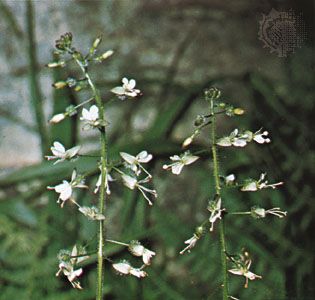
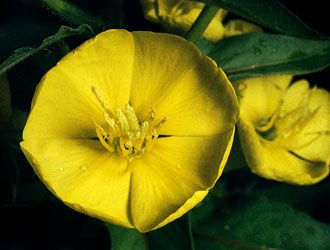
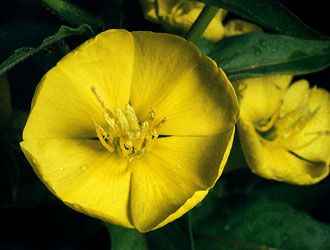
The term evening primrose refers to various herbaceous plants within the genus Oenothera, which belongs to the Onagraceae family. These plants are widely recognized for their showy, often nocturnal, yellow flowers.123
The most prominent species is Oenothera biennis, a biennial herb native to North America that has also been introduced to Europe. This plant typically grows between 90 and 150 cm (3 to 5 feet) tall and features alternate leaves. Beyond its botanical interest, O. biennis has historically been utilized by geneticists to study and establish key principles of heredity. It is important to note that despite the name, the true primrose is a member of a different family, the Primulaceae.12
Why do evening primrose flowers open at night?
Evening primrose flowers open at night primarily to facilitate pollination by nocturnal insects, particularly moths.1
These plants have evolved specific characteristics to attract these pollinators, a process known as phalaenophily. Because moths are active at night, evening primrose flowers are adapted to be visible and accessible in low-light conditions. They typically feature light or white-colored petals that stand out in the dark and are often highly fragrant to guide moths to their nectar. Unlike butterfly-pollinated flowers, which often provide a landing platform, the flowers of the evening primrose are frequently shaped to accommodate the hovering feeding style of pollinators like hawk moths.1
This relationship highlights the fascinating coevolution between plants and their pollinators, where the timing of floral opening is synchronized with the activity patterns of the insects that ensure the plant’s reproductive success.1
What is the difference between evening primrose and true primrose?
Although they share a similar name, the evening primrose and the true primrose are distinct plants belonging to entirely different botanical families.
The primary differences are as follows:
- Family Classification: The evening primrose belongs to the Onagraceae family, which is part of the myrtle order (Myrtales). In contrast, the true primrose belongs to the Primulaceae family, which is part of the order Ericales.125
- Genus and Characteristics: Evening primrose refers to various species within the genus Oenothera, often noted for their showy, yellow flowers that open in the evening. The true primrose belongs to the genus Primula, which includes hundreds of species often cultivated as garden ornamentals.615
- Scientific Utility: The evening primrose, particularly O. biennis, has been historically significant in scientific research, having been used by geneticists to study and establish key principles of heredity and evolution.12
How have geneticists used evening primrose in their research?
Geneticists, most notably the Dutch botanist Hugo de Vries, used the evening primrose (Oenothera lamarckiana) to pioneer the experimental study of evolution.7
In 1886, de Vries observed that wild varieties of the evening primrose differed significantly from cultivated specimens. By cultivating these plants, he discovered that new forms appeared randomly and suddenly among the population. He termed these abrupt, distinct changes mutations, proposing that evolution could occur through sudden leaps rather than solely through the gradual process of natural selection.7
This research, detailed in his work The Mutation Theory, shifted the study of biology from observation and inference to an experimental method. Furthermore, his breeding programs with the evening primrose led him to independently derive the same laws of heredity that had been established by Gregor Mendel.7
Sources
- evening primrose — Merriam-Webster
- evening primrose — Encyclopædia Britannica
- Oenothera — Merriam-Webster
- Major types of pollinators - Butterflies and moths — Encyclopædia Britannica
- Primulaceae — Encyclopædia Britannica
- Onagraceae — Encyclopædia Britannica
- Hugo de Vries — Encyclopædia Britannica
Published on · 2 min read