How Do We Know That Dinosaurs May Have Had Feathers?
We know that many dinosaurs possessed feathers primarily through the discovery of remarkably well-preserved fossil specimens, particularly those unearthed in…
How Do We Know That Dinosaurs May Have Had Feathers?
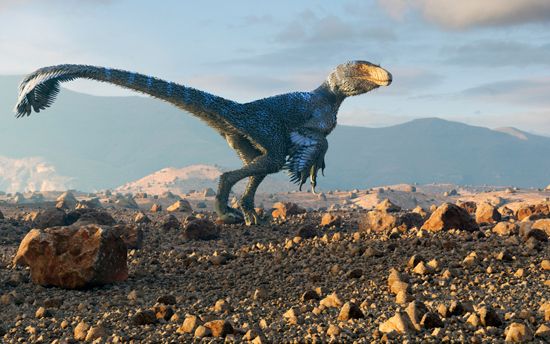
We know that many dinosaurs possessed feathers primarily through the discovery of remarkably well-preserved fossil specimens, particularly those unearthed in China since the 1990s. These fossils provide direct evidence of filamentous, featherlike structures preserved as impressions on the skin of various theropod dinosaurs, such as Sinosauropteryx1.123
The evidence for feathered dinosaurs includes:
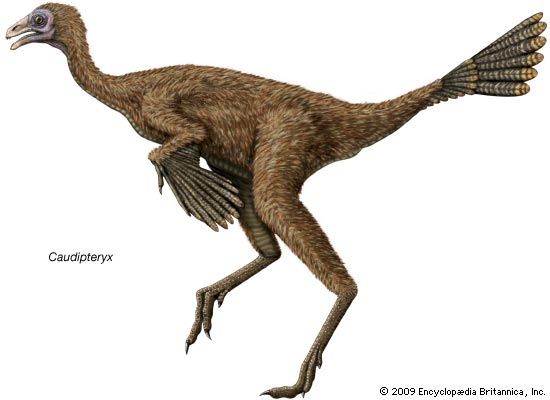
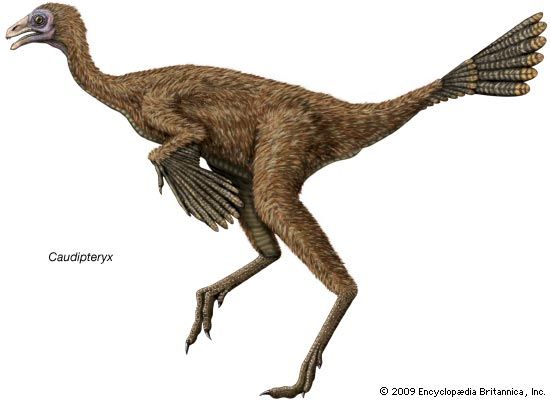
- Direct Fossil Impressions: Specimens like Sinosauropteryx and Caudipteryx show clear evidence of epidermal filaments, ranging from simple, hair-like structures to complex, branched feathers.12
- Evolutionary Links: Because birds are living descendants of theropod dinosaurs, it is scientifically consistent that they share ancestral traits like feathers.142
- Microstructure Analysis: Studies of melanosomes in the feathers of fossils like Archaeopteryx have revealed details about their pigmentation and structural support, confirming their biological nature.5
- Widespread Presence: The discovery of featherlike structures in diverse groups, including early ornithischian dinosaurs like Kulindadromeus, suggests that feathers may have been widespread among dinosaurs rather than limited to a few species.3
If feathers did not evolve for flight, what were their original purposes?
Scientific consensus indicates that feathers evolved long before the advent of flight, serving several critical biological functions for early dinosaurs and their ancestors. Because these structures were present in non-flying species, researchers have concluded that their initial development was driven by needs other than aerodynamics.27
The primary purposes of early feathers included:
- Thermal Insulation: Simple, filamentous structures likely acted as a “pelage” to trap heat, helping dinosaurs maintain a stable body temperature and suggesting they were warm-blooded.87
- Brooding and Protection: Evidence from fossils like Caudipteryx shows these animals sitting on nests, indicating that feathers were used to keep eggs warm and protected from the environment.87
- Communication and Display: Feathers likely served as visual signals for species recognition, attracting mates, or intimidating rivals.27
- Camouflage: Coloration patterns in ancient feathers suggest they were used to blend into the environment, providing a survival advantage through concealment.97
- Physical Utility: Some researchers speculate that early, simpler feather structures may have assisted with balance while running or provided water repellency.92
Over time, these versatile structures were co-opted and further refined through natural selection, eventually acquiring the aerodynamic properties necessary for flight in the lineage that led to modern birds.87
What are pycnofibres and how do they differ from modern bird feathers?
Pycnofibres are branching, featherlike structures found on the bodies of pterosaurs, a group of flying reptiles that lived during the Mesozoic Era. While they share a common evolutionary origin with the feathers of modern birds—likely dating back to a common ancestor over 250 million years ago—they differ significantly in their structure and function.210
Key Differences
- Structure: Modern bird feathers are highly complex, consisting of a central shaft (rachis) with paired branches (barbs) and barbules that often interlock with hooks to create a stiff, aerodynamic vane. In contrast, pycnofibres appear as tufted, branching filaments.2
- Function: While bird feathers are essential for flight and insulation, pycnofibres were primarily associated with the body, not the wing surface. Pterosaurs utilized a membrane of skin, similar to that of bats, to form their wings.210
- Composition: Both structures are composed of keratin, but their physical arrangement reflects different evolutionary paths. Pterosaur wings were reinforced by a separate system of fine, long, keratinous fibers embedded within the wing membrane to enhance strength and maneuverability, which are distinct from the plumage found on their bodies.210
How do scientists determine the colors of dinosaur feathers from fossils?
While historical scientific consensus once held that the original colors and patterns of dinosaurs could not be known, modern research has begun to challenge this limitation through the study of microscopic structures preserved in fossils.
Scientists determine these colors by analyzing fossilized melanosomes—the organelles within cells that contain melanin. These pigments are responsible for producing various shades, including buff, red-brown, brown, and black colors. By examining the shape, size, and distribution of these preserved granules under high-powered microscopes, researchers can compare them to the melanosomes found in modern birds and reptiles. Because specific shapes of melanosomes correspond to specific pigment colors in living animals, scientists can infer the likely coloration of the dinosaur’s feathers or skin.
Although the soft tissues of dinosaurs are generally imperfectly preserved, the increasing discovery of filaments and feathers on specimens like Kulindadromeus zabaikalicus has provided the necessary material to apply these analytical techniques, offering a rare glimpse into the appearance of these extinct creatures.115
Sources
- How Do We Know That Dinosaurs May Have Had Feathers? — Encyclopædia Britannica
- Did Dinosaurs Really Have Feathers? — Encyclopædia Britannica
- dinosaur - Dinosaur descendants — Encyclopædia Britannica
- Archaeopteryx — Encyclopædia Britannica
- dinosaur - Modern studies — Encyclopædia Britannica
- Integument - Dermal derivatives — Encyclopædia Britannica
- feathered dinosaur — Encyclopædia Britannica
- dinosaur: Top Questions — Encyclopædia Britannica
- Bird - The origin of feathers — Encyclopædia Britannica
- pterosaur — Encyclopædia Britannica
- coloration - Melanins — Encyclopædia Britannica
Published on · 3 min read