Lake Lauricocha
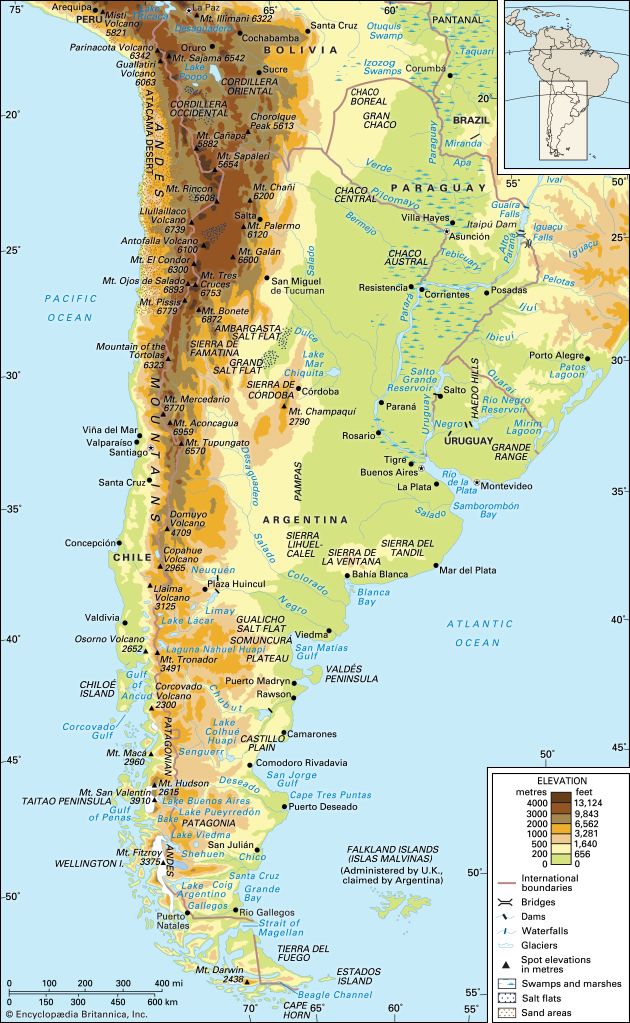
Lake Lauricocha is a glacier-fed lake located in the Andes Mountains of central Peru, situated at an elevation of 12,615 feet (3,845 m). It is the…
What is Lake Lauricocha?
Lake Lauricocha is a glacier-fed lake located in the Andes Mountains of central Peru, situated at an elevation of 12,615 feet (3,845 m). It is the northernmost lake in a chain of similar bodies of water and is notable for being the source of the Marañón River, which is the main stream of the Amazon River. Because of this connection, the lake was historically considered the source of the Amazon.1
The region is also significant for its archaeological history. The caves at Lauricocha, located at approximately 13,000 feet, have been occupied by hunters since nearly 8000 BCE. These sites served as long-term camps for people who hunted deer and camelids and utilized small leaf-shaped stone points.2
What animals were commonly hunted by early people in the Andes?
Early people in the Andes Mountains relied on a variety of animals for subsistence, with hunting serving as a primary activity alongside gathering and, eventually, agriculture.
The most significant animals hunted in the Andean highlands were camelids, particularly the guanaco, and deer. Archaeological evidence from sites like the caves at Lauricocha, occupied as early as 8000 BCE, confirms that these groups were specialized hunters of these species.32
In addition to these primary game animals, early inhabitants also hunted or trapped smaller animals and birds to supplement their diets. Common prey included:
- Small mammals: Such as guinea pigs, viscachas, and chinchillas.2
- Predators: Including foxes and, in some regions, the puma.32
- Birds: Various game birds and birds of prey, such as the Andean condor.2
While hunting was essential, it was often integrated into a broader subsistence strategy that included fishing and the gathering of wild plant foods, such as tubers and seeds.34
How do archaeologists determine the age of ancient cave sites?
Archaeologists employ a variety of scientific and analytical methods to determine the age of ancient cave sites, categorized primarily into relative and absolute dating techniques.
Relative Dating
Relative dating establishes the chronological order of artifacts or layers without providing a specific calendar date.
- Stratigraphy: Based on the law of superposition, this principle holds that in undisturbed deposits, older layers are found at the lowest levels, while newer remains accumulate on top.89
- Cross Dating: Archaeologists compare undated artifacts with objects from known cultures. If an item of a known date is found in an undated site, the surrounding material is assumed to be contemporary.8
- Fluorine Analysis: This technique helps determine if bones found in the same stratigraphic level are truly contemporary or if they were introduced later due to disturbances like burials or hoaxes.8
Absolute Dating
Absolute dating provides specific chronological ages for materials.
- Radiocarbon Dating: This is the most revolutionary method for prehistoric sites. By measuring the decay of carbon-14 in organic materials like charcoal, bone, or ash, scientists can date remains up to 50,000 years old.810
- Thermoluminescence: This method measures light energy released from minerals when heated, which correlates to the time elapsed since the material was last exposed to high heat or radiation.811
- Dendrochronology: By counting the growth rings in wood found at a site, archaeologists can establish precise dates for structures.8
- Potassium–Argon Dating: Used for much older sites, this technique has helped date human remains and artifacts back millions of years.8
What are some other major rivers that originate in the Andes Mountains?
The Andes Mountains serve as a critical drainage divide for South America, acting as the source for many of the continent’s most significant river systems.
Atlantic-Flowing Rivers
The majority of the continent’s major drainage systems originate in the Andes and flow eastward toward the Atlantic Ocean.14
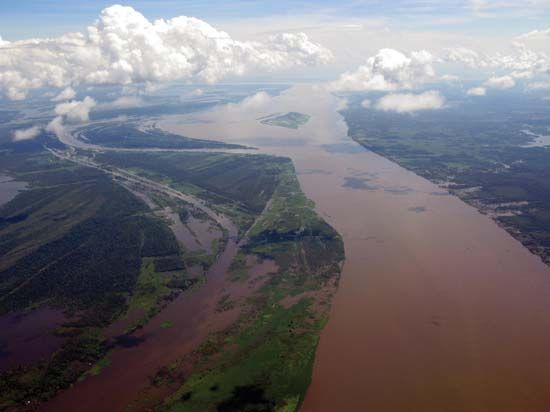
- Amazon River: Rising in the central Peruvian Andes, the Amazon is the world’s largest river system by volume. Its upper course is known as the Marañón River, which is joined by the Ucayali River before the river winds across the continent.14
- Orinoco River: This major system flows from the Andes, initially moving west and north before turning northeast toward the Atlantic.14
- Colorado and Negro Rivers: Located in Argentina, these rivers are fed by seasonal snow and ice melt from the Andes.15
- Santa Cruz River: This river flows eastward out of the Andean foothills in southern Argentina.15
Pacific-Flowing Rivers
Because the Andes lie in close proximity to the Pacific coast, rivers flowing westward are generally shorter and steeper.1416
- Loa River: The longest river in Chile, it originates in the Andes and empties into the Pacific Ocean.16
- Guayas River: A major river in Ecuador that flows toward the Pacific.14
- Santa River: A significant river in Peru.14
- Aconcagua, Maule, and Bío-Bío rivers: These rivers in central Chile are vital for the region’s fertile agricultural valleys.14
Sources
- Lake Lauricocha — Encyclopædia Britannica
- Pre-Columbian civilizations - The Late Preceramic — Encyclopædia Britannica
- Pre-Columbian civilizations - Agricultural adaptation — Encyclopædia Britannica
- hunting - South America — Encyclopædia Britannica
- South America - The high Andes — Encyclopædia Britannica
- Hunter-gatherer — Encyclopædia Britannica
- South American Indian - Hunters and gatherers — Encyclopædia Britannica
- Archaeology - Dating — Encyclopædia Britannica
- stratigraphy — Encyclopædia Britannica
- carbon-14 dating — Encyclopædia Britannica
- Chauvet–Pont d’Arc — Encyclopædia Britannica
- thermoluminescence — Encyclopædia Britannica
- history of Europe - Prehistory — Encyclopædia Britannica
- South America - Rivers of South America — Encyclopædia Britannica
- South America - The Andes Mountains — Encyclopædia Britannica
- Argentina - Drainage — Encyclopædia Britannica
- Chile - Drainage — Encyclopædia Britannica
Published on · 4 min read