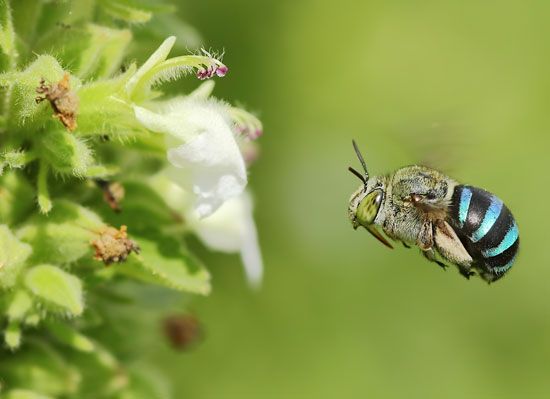
Mining Bee
A mining bee is any member of the family Andrenidae, a group of bees found throughout the world, particularly within the genus Andrena.
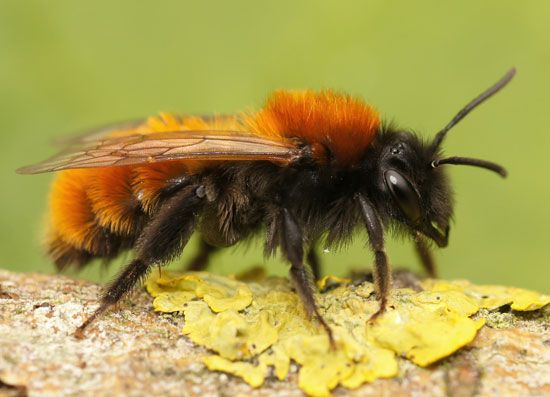
What is mining bee?
A mining bee is any member of the family Andrenidae, a group of bees found throughout the world, particularly within the genus Andrena.12
These insects are typically solitary and are characterized by their reddish-golden hair and long, prominent abdomens. As their name suggests, they are ground-nesting bees; females excavate elaborate, branching tunnels in the soil to create individual brood cells. Each cell is stocked with pollen balls and nectar to serve as food for their developing young.12
Adult mining bees possess a relatively short, pointed “tongue” that is specialized for gathering nectar from specific types of flowers rather than general foraging. Like many other wild bees, they play a vital role in pollination, which is essential for the reproduction of flowering plants and the health of global ecosystems.132
How do solitary bees differ from social bees like honeybees?
The primary distinction between solitary and social bees lies in their colony structure, reproductive roles, and brood care. While social bees like honeybees and bumblebees live in complex, cooperative communities, most bee species are solitary.56
Key Differences
- Colony and Castes: Social bees live in colonies with a clear division of labor, featuring a queen responsible for egg-laying and female workers who handle nest maintenance, defense, and foraging. Solitary bees do not have castes; each female is fertile and independently constructs and provisions her own nest.735
- Brood Care: Social bees feed their larvae progressively, meaning workers continuously tend to and feed the developing young. In contrast, solitary bees provide all the necessary food (pollen and nectar) for a larva at once, sealing the cell before the egg hatches.35
- Lifespan and Nesting: Social colonies can be long-lived, with queens often living for years and workers being replaced throughout the season. Solitary bees are typically short-lived as adults, often active for only a few weeks to complete their nesting cycle in soil, wood, or plant stalks.735
What are some other types of ground-nesting bees?
Beyond mining bees, there are several other types of bees that nest in the ground. Here are some notable examples:
- Sweat bees (family Halictidae): These are a large, diverse family of small bees that are widespread globally. While they exhibit a range of social behaviors, most species nest underground. They are well-known for being attracted to human perspiration and are important pollinators for various agricultural crops and wild plants.18
- Plasterer bees (family Colletidae): Also known as cellophane or polyester bees, these solitary insects get their name from the female’s habit of lining her brood cells with a waterproof, polyester-like secretion. This lining protects the developing young from moisture and fungal pathogens.8
- Leaf-cutter bees (family Megachilidae): While some species nest in hollow plant stalks or wood cavities, many leaf-cutter bees also nest in the soil. They are distinct for their habit of cutting circular pieces of leaves to line their nests and for carrying pollen on their abdomens rather than their legs.8
Most solitary bees, including these groups, follow a similar life cycle where the female independently excavates a burrow, provisions it with pollen and nectar, and seals the cells to protect her offspring.3
Why is it important to protect wild bee habitats?
Protecting wild bee habitats is essential for maintaining global biodiversity and supporting stable ecosystems2. As the world’s most important insect pollinators, bees are responsible for the reproduction of countless flowering plants, which in turn provide food and shelter for a vast array of wildlife.2
The importance of these habitats includes:
- Agricultural Stability: Many fruits, vegetables, and nuts—such as almonds, blueberries, and cucumbers—rely heavily on bee pollination. Protecting wild bee populations ensures the availability and affordability of these essential foods.210
- Ecosystem Integrity: Many plants have coevolved with specific bee species; without these bees, those plants would struggle to reproduce, potentially triggering a ripple effect that leads to further extinctions of dependent organisms.210
- Food Web Support: Bees themselves serve as a vital food source for other animals, such as bee-eater birds.210
Currently, wild bees face severe threats from habitat loss, pesticide use, and climate change. Preserving their natural environments is a critical ethical responsibility to prevent the collapse of these intricate biological networks.1011212
Sources
- mining bee — Encyclopædia Britannica
- Why are bees important? — Encyclopædia Britannica
- 8 Buzzworthy Types of Bees — Encyclopædia Britannica
- Beekeeping - Honeybees — Encyclopædia Britannica
- How long do queen bees live? — Encyclopædia Britannica
- Hymenoptera - Social forms — Encyclopædia Britannica
- bee — Encyclopædia Britannica
- sweat bee — Encyclopædia Britannica
- Hymenoptera - Solitary forms — Encyclopædia Britannica
- What Would Happen If All the Bees Died? — Encyclopædia Britannica
- mason bee — Encyclopædia Britannica
- stingless bee — Encyclopædia Britannica
- western honeybee - Importance — Encyclopædia Britannica
- Beekeeping - Predators — Encyclopædia Britannica
- conservation - Habitat management — Encyclopædia Britannica
Published on · 3 min read