Niedere Tauern
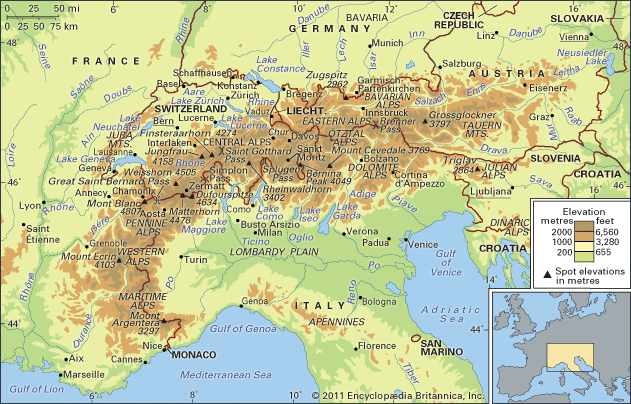
The Niedere Tauern is a mountain range of the Eastern Alps located in central Austria. Situated between the Enns and Mur rivers, the range stretches 75 miles…
What is Niedere Tauern?
The Niedere Tauern is a mountain range of the Eastern Alps located in central Austria. Situated between the Enns and Mur rivers, the range stretches 75 miles (120 km) and reaches its highest elevation at Hochgolling, which stands at 9,393 feet (2,863 meters).1
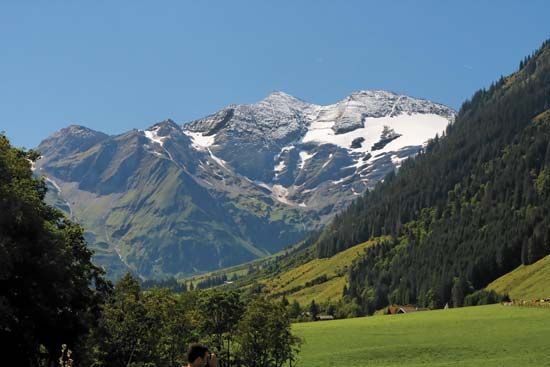
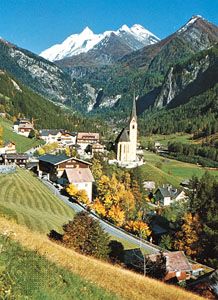
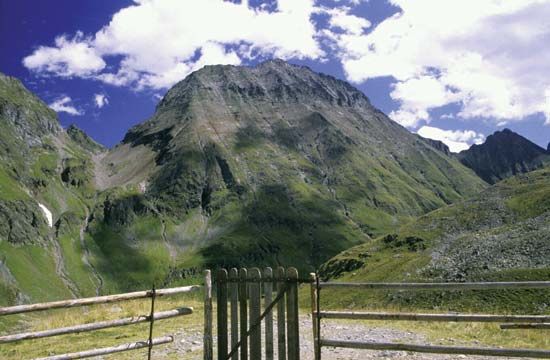
The range is geographically divided into three sections: the Radstädter Tauern, the Schladminger Tauern, and the Rottenmanner Tauern. A notable mountain pass, the Radstädter Tauern, crosses the range at an elevation of 5,705 feet. Characterized by scenic, well-forested terrain and cattle-grazing meadows, the area is a popular destination for summer resorts and winter-sports centers. It is distinct from the Hohe Tauern, which contains Austria’s highest peak, the Grossglockner.12
How do the Niedere Tauern differ from the Hohe Tauern?
The Niedere Tauern and the Hohe Tauern are distinct ranges within the Eastern Alps of Austria. While the Niedere Tauern—or “Lower Tauern”—is characterized by well-forested slopes and extensive cattle-grazing meadows, the Hohe Tauern, or “High Tauern,” is significantly more rugged and alpine in nature.1
The primary differences include:
- Elevation: The Hohe Tauern contains the highest peaks in Austria, including the Grossglockner, which reaches 12,460 feet (3,798 meters). In contrast, the highest point of the Niedere Tauern is Hochgolling at 9,393 feet (2,863 meters).1
- Topography: The Niedere Tauern is defined by its scenic, forested terrain and accessible mountain passes, such as the Radstädter Tauern. The Hohe Tauern is known for its dramatic high-altitude landscapes, glaciers, and more challenging mountaineering conditions.1
What is the significance of the Enns and Mur rivers in this region?
The Enns and Mur rivers serve as the primary geographical boundaries for the Niedere Tauern, a range of the Eastern Alps in central Austria. The mountain range is situated directly between these two rivers, extending 75 miles (120 km) westward to reach their respective headstreams.1
Beyond defining the physical extent of the Niedere Tauern, these river systems are integral to the broader regional geography. For instance, the upper Mur River also acts as a northern boundary for the Noric Alps, a separate segment of the Eastern Alps that stretches eastward toward the city of Graz. By framing these mountain ranges, the Enns and Mur rivers help delineate the complex topography of the Austrian Alps, influencing the distribution of the region’s valleys, settlements, and transit routes.31
What types of wildlife are found in the Eastern Alps?
Wildlife in the Alps has adapted to the region’s diverse elevations and rugged terrain. Many species exhibit specialized behaviors, such as seasonal migration or hibernation, to survive the harsh mountain climate.45
Mammals
Several iconic mammals are well-suited to the craggy Alpine landscape:
- Nimble Climbers: The ibex (a wild goat) and the chamois are known for their extraordinary agility on steep, rocky slopes.46
- Hibernators: Marmots spend the winter in underground galleries, while other small rodents like ground squirrels and jumping mice also hibernate after consuming vegetation during the summer.45
- Other Species: The mountain hare is notable for assuming a white coat during winter to blend into the snow. Additionally, conservation efforts have successfully reintroduced prized species such as the brown bear and the lynx.46
Birds
The ptarmigan, a type of grouse, also adapts to winter by changing its plumage to white. The bearded vulture, also known as the lammergeier, is a significant bird species that has been successfully reintroduced to the region.46
Sources
- Niedere Tauern — Encyclopædia Britannica
- Grossglockner — Encyclopædia Britannica
- Noric Alps — Encyclopædia Britannica
- Alps - Plant and animal life — Encyclopædia Britannica
- Tundra - Alpine mammals — Encyclopædia Britannica
- Exploring 7 of Earth’s Great Mountain Ranges - Alps — Encyclopædia Britannica
- Himalayas - Animal life — Encyclopædia Britannica
Published on · 3 min read