Sable
The term "sable" refers to two distinct concepts:

What is sable?
The term “sable” refers to two distinct concepts:
The Animal
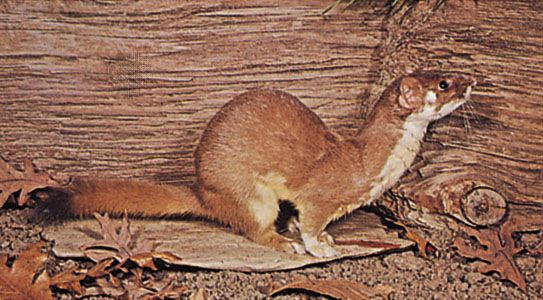
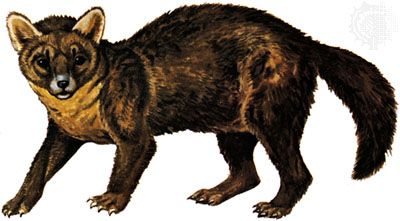
The sable (Martes zibellina) is a graceful carnivore belonging to the weasel family, Mustelidae. Native to the forests of northern Asia, it is highly valued for its fine fur. These solitary, arboreal animals typically weigh between 0.9 and 1.8 kg and are known for their brown-to-black coats. The International Union for Conservation of Nature currently classifies the species as being of least concern.1
Heraldry
In the context of heraldry, sable is a term used to denote the color black. In black-and-white heraldic illustrations, it is represented by a system of crossed horizontal and perpendicular lines.2
What other animals belong to the Mustelidae family?
The Mustelidae family is a diverse group of approximately 62 species of fur-bearing carnivores. While skunks were historically classified within this family, genetic research has placed them in their own separate family, Mephitidae.45
Members of the Mustelidae family are categorized into several subfamilies, including:
- Otters (Lutrinae): Includes sea otters, river otters, and giant otters.45
- Weasels, Minks, and Ferrets (Mustelinae): Includes various weasels, minks, ermines, and ferrets.45
- Badgers (Melinae and Taxidiinae): Includes Eurasian badgers, hog badgers, and the American badger.45
- Martens and Wolverines (Guloninae): Includes martens, fishers, sables, and the wolverine.45
- Other Members: The family also includes the honey badger, grisons, tayras, polecats, and ferret-badgers.45
How does delayed implantation help sables survive in harsh climates?
Delayed implantation is a reproductive strategy used by many mustelids, including the sable, to ensure that their offspring are born during the most favorable environmental conditions. In this process, the fertilized egg does not immediately attach to the wall of the uterus but instead remains in a state of suspended development.87
By delaying implantation, the female can effectively control the timing of the pregnancy. This allows the animal to avoid giving birth during the harshest winter months when food is scarce and temperatures are extreme. Instead, the development of the embryo resumes at a time that ensures the young are born when environmental conditions—such as increased food availability and milder weather—are better suited for their survival and growth. This mechanism contributes to the sable’s unusually long gestation period, which can last between 250 and 300 days.87
What are some other common colors or terms used in heraldry?
In heraldry, the background layer of a shield is known as the field, which is composed of specific tinctures categorized into metals, colors, and furs.910
Metals and Colors
The primary metals are or (gold/yellow) and argent (silver/white). The standard colors include:910
- Gules: Red9
- Azure: Blue9
- Vert: Green (sometimes termed sinople in French heraldry)910
- Purpure: Purple9
- Sable: Black9
Occasionally, British heraldry also utilizes murrey (a reddish-purple tint) and tenné (orange-tawny).9
Furs
Furs are distinct patterns often derived from animal pelts. Common types include:10
- Ermine: A white field with black spots9
- Ermines: A black field with white spots9
- Erminois: A gold field with black spots9
- Pean: A black field with gold spots9
- Vair: Alternating blue and white figures mimicking squirrel fur910
Roundels
Circular charges, known as roundels, are assigned specific names based on their color:
Sources
- sable — Encyclopædia Britannica
- heraldry - The reading of heraldry — Encyclopædia Britannica
- Siberian sable — Merriam-Webster
- List of mustelids — Encyclopædia Britannica
- weasel — Encyclopædia Britannica
- Mustelidae — Merriam-Webster
- mustelid — Encyclopædia Britannica
- Diapause — Encyclopædia Britannica
- heraldry - The field — Encyclopædia Britannica
- coat of arms — Encyclopædia Britannica
- heraldry - Ordinaries — Encyclopædia Britannica
Published on · 3 min read