Tube Worm
A tube worm is a general term for various marine worms that reside within protective tubes, which may be constructed from materials like sand grains or…
What is tube worm?
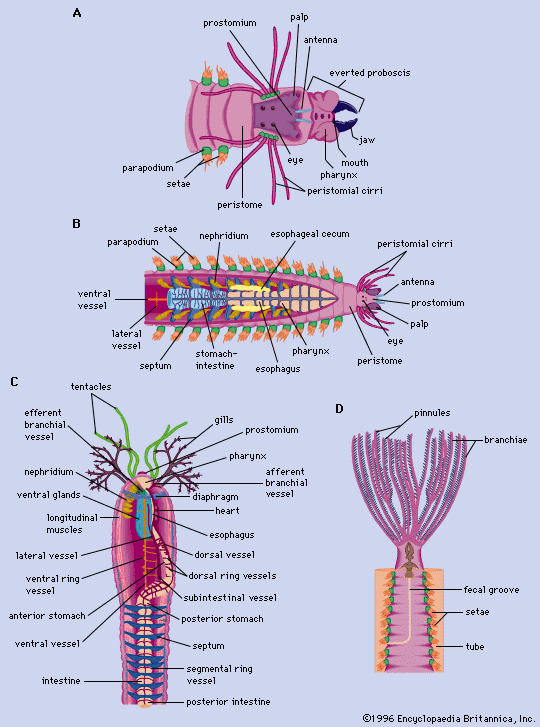
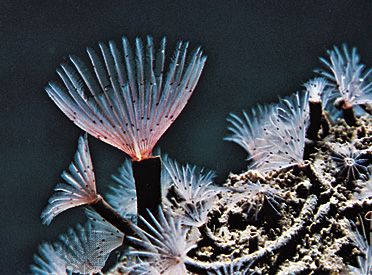
A tube worm is a general term for various marine worms that reside within protective tubes, which may be constructed from materials like sand grains or calcium carbonate.1
Most commonly, these organisms belong to the annelid class Polychaeta, which includes species such as the feather-duster worm and the tentacle worm. However, the term also encompasses other tube-dwelling species from different groups, such as the horseshoe worm (phylum Phoronida) and the beardworm (phylum Pogonophora). These sedentary creatures typically remain fixed to the sea bottom, living within their tubes for protection.23
What are hydrothermal vents?
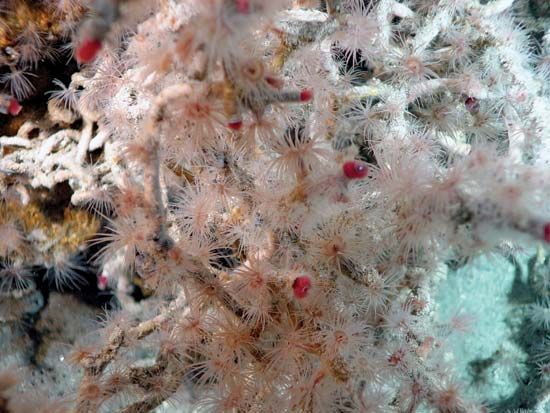
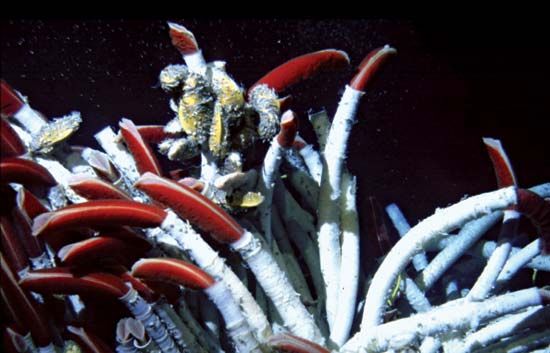
Hydrothermal vents are localized discharges of heated seawater occurring on the ocean floor, typically in areas of volcanic activity or where new oceanic crust is forming. These vents form when cold seawater seeps into seafloor fissures, is heated by magma within the Earth’s mantle, and rises back to the surface laden with hydrogen sulfide and dissolved metals like iron, copper, and zinc.456
These vents support unique ecosystems that are entirely independent of solar energy. Instead of photosynthesis, these communities rely on chemosynthesis performed by sulfur-oxidizing bacteria. Many vent species, such as vestimentiferan worms, mussels, and clams, have evolved mutualistic symbioses with these bacteria to derive nutrition. Since their discovery in the 1970s, these vents have revealed a vast array of previously unknown biological diversity, including hundreds of new species.4657
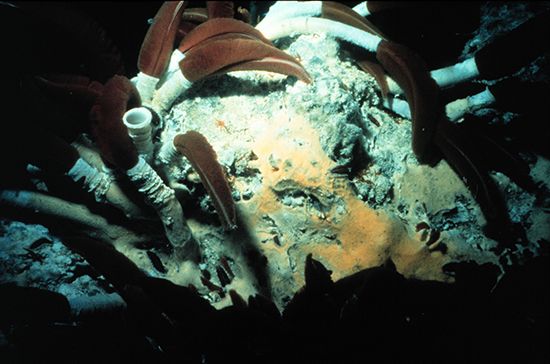
How do bacteria provide energy for deep-sea animals?
In the deep-sea environment, bacteria provide energy to animals through a process called chemosynthesis, which serves as an alternative to photosynthesis. Because these ecosystems exist in the aphotic zone, they rely on geothermal energy rather than sunlight.65
Sulfur-oxidizing bacteria thrive in the mineral-rich water surrounding hydrothermal vents. These bacteria derive chemical energy by oxidizing sulfur compounds, such as hydrogen sulfide, to fix carbon dioxide into organic carbon.65
Deep-sea animals access this energy in two primary ways:
- Direct Consumption: Some organisms, such as certain crabs and copepods, feed directly on free-living bacteria or the thick, weblike mats formed by Beggiatoa-like bacteria.65
- Symbiotic Relationships: Many species, including vestimentiferan worms, mussels, and clams, harbor these bacteria within their bodies. Through these mutualistic symbioses, the animals receive nutrition directly from the bacteria, effectively making the megafauna the primary producers of the vent assemblage.65
What are some other unique creatures found in the deep ocean?
The deep ocean is home to a variety of highly specialized creatures that have evolved unique adaptations to survive in extreme darkness, cold, and pressure.8
Deep-Sea Fish
Many mid-water species are characterized by large mouths, enlarged eyes, and bioluminescence—a chemical process that produces light to attract prey or mates.89
- Anglerfishes: These predators use a modified dorsal fin spine that acts as a “fishing rod” tipped with a luminous “bait” to lure prey. In some deep-sea species, males are significantly smaller than females and live as permanent parasites, fusing their bloodstreams with their mates.810
- Viperfishes: Known for their numerous fanglike teeth, these are formidable predators of the deep.8
- Bristlemouths: These are among the most abundant fishes found in the world’s oceans.8
- Benthic (Bottom-dwelling) Forms: Species such as grenadiers, batfishes, and cusk eels typically have smaller eyes and mouths and often lack light-producing organs.811
Giant Cephalopods
The deep ocean also hosts massive invertebrates that have long captured human imagination.12
- Giant Squid: These elusive creatures can reach lengths of up to 13 meters (43 feet) and possess some of the largest eyes in the animal kingdom, allowing them to spot predators like sperm whales from a distance.1312
- Colossal Squid: Often heavier and more robust than the giant squid, this species is equally elusive and remains a subject of scientific study and debate regarding its maximum size.1312
Sources
- tube worm — Encyclopædia Britannica
- tube worm — Merriam-Webster
- tentacle worm — Encyclopædia Britannica
- deep-sea vent — Encyclopædia Britannica
- community ecology - The pyramid structure of communities — Encyclopædia Britannica
- Marine ecosystem - Organisms of the deep-sea vents — Encyclopædia Britannica
- oceanic ridge - Hydrothermal vents — Encyclopædia Britannica
- deep-sea fish — Encyclopædia Britannica
- Marine bioluminescence — Encyclopædia Britannica
- anglerfish — Encyclopædia Britannica
- How Big Is the Giant Squid? — Encyclopædia Britannica
- giant squid — Encyclopædia Britannica
- bathypelagic zone — Encyclopædia Britannica
- paracanthopterygian - Ecology and behavior — Encyclopædia Britannica
Published on · 3 min read