Water Lily
Water lilies and their relatives, such as the sacred lotus, have served diverse human needs throughout history, ranging from sustenance to artistic…
How have water lilies been used by humans throughout history?
Water lilies and their relatives, such as the sacred lotus, have served diverse human needs throughout history, ranging from sustenance to artistic inspiration.
Culinary and Medicinal Uses The entire sacred lotus plant is edible. Its starchy rhizomes are a staple in many Asian cuisines, often used in soups, curries, or preserved in sugar. Young leaves are consumed as vegetables, while stamens and dried petals are used to flavor tea. Additionally, lotus seeds are a traditional ingredient in mooncakes and are utilized in traditional Eastern medicine for their perceived longevity properties.12
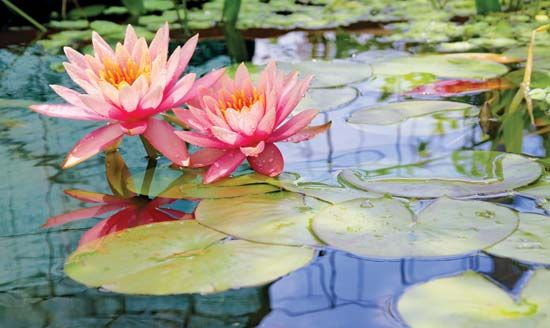
Artistic and Symbolic Significance Beyond utility, these plants hold deep cultural meaning. In ancient Egypt, certain water lilies were held sacred and symbolized rebirth. The lotus has long been a persistent motif in architecture, notably decorating the capitals of columns. In the modern era, the French artist Claude Monet famously immortalized water lilies in his extensive series of oil paintings, which continue to be celebrated for their beauty.3145
Are there any medicinal or culinary uses for water lilies?
Yes, water lilies and their relatives have been used for both culinary and medicinal purposes throughout history.
Culinary Uses
The starchy, horizontal rhizomes of larger water lily species have historically served as a source of food for humans. Similarly, the protein-rich seeds of these plants have been consumed as a nutritional resource. While true water lilies (family Nymphaeaceae) are often cultivated for their aesthetic appeal in gardens and ponds, their close relatives in the lotus-lily family (Nelumbonaceae) are even more extensively utilized in global cuisines. For instance, the rhizomes of the sacred lotus are a common ingredient in soups, curries, and stir-fries across many Asian countries, and they can be boiled or preserved in sugar.4910
Medicinal Uses
In traditional Eastern medicine, the seeds of the sacred lotus have been used to treat a variety of ailments and have long been associated with remarkable properties of longevity.910
What are the key characteristics of plants in the water lily family?
The water lily family, Nymphaeaceae, consists of approximately 60 species of perennial freshwater flowering plants found in temperate and tropical regions worldwide.17
Physical Characteristics
- Leaves: Most species feature rounded, waxy-coated leaves that float on the water’s surface. These leaves are attached to long, flexible stalks containing air spaces, which emerge from thick, fleshy, creeping rhizomes buried in the mud.17
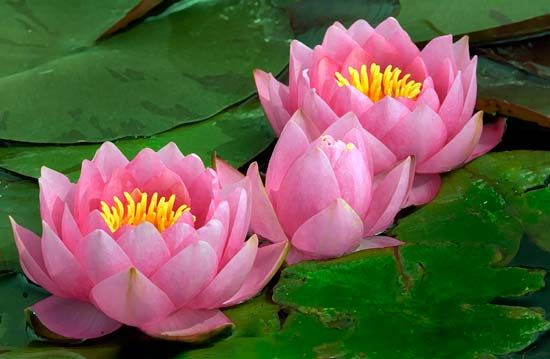
- Flowers: The family is known for showy, often fragrant, solitary flowers. These are typically radially symmetrical and feature a spiral arrangement of numerous petals and stamens. Depending on the species, flowers may bloom during the day or evening to attract insect pollinators.17
- Fruit: The fruit is generally nutlike or berrylike. In many species, the fruit ripens underwater before rupturing to release seeds that float or sink to establish new plants.17
Major Genera
- Nymphaea: The “true” water lilies, including the common white water lily (N. odorata).17
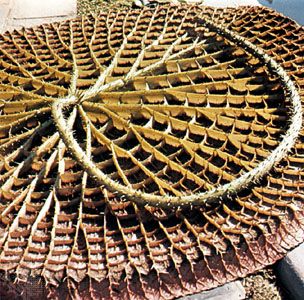
- Victoria: Includes the giant water lilies of South America, which can produce leaves up to 3 meters (10 feet) in diameter.1
- Nuphar: Known as yellow pond lilies or spatterdocks, often characterized by globose flowers held above the water.17
- Barclaya: Distinguished by an extended perianth tube and basally joined stamens.17
How do water lilies reproduce and spread in their habitats?
Water lilies reproduce and spread through both sexual and asexual means, allowing them to thrive in quiet freshwater habitats.
Sexual Reproduction
Most water lilies produce showy, radially symmetrical flowers that rely on insect pollinators to facilitate fertilization. These flowers often emerge at or above the water’s surface to attract visitors. While most species are insect-pollinated, some Nymphaea species can self-pollinate within closed flowers, and at least one species, N. ondinea, is wind-pollinated. Following fertilization, the fruit typically develops underwater, eventually rupturing to release seeds that float or sink until they anchor in the soil substratum to establish new plants.113
Asexual (Vegetative) Reproduction
Water lilies also utilize vegetative propagation to expand their colonies:
- Rhizomes: Many species possess thick, creeping rhizomes buried in the mud. These stems store nutrients and allow the plant to spread horizontally and produce new shoot and root systems.1314
- Runners and Plantlets: Some species, such as N. mexicana, spread via runners, while others like N. micrantha produce detachable plantlets at the junction of the leaf petiole and blade, which can grow into independent plants.13
Sources
- water lily — Merriam-Webster
- Water Lilies — Encyclopædia Britannica
- Egyptian lotus — Merriam-Webster
- Sacred lotus — Encyclopædia Britannica
- lotus — Encyclopædia Britannica
- water-lily tulip — Merriam-Webster
- Nymphaeaceae — Merriam-Webster
- nymphaea — Merriam-Webster
- Nelumbonaceae — Encyclopædia Britannica
- water lily — Encyclopædia Britannica
- Nymphaeales — Encyclopædia Britannica
- gardening - Water gardens — Encyclopædia Britannica
- Pollination - Evolution of insect pollination — Encyclopædia Britannica
- Seed - Dispersal by water — Encyclopædia Britannica
- Pollination - Water — Encyclopædia Britannica
- Rhizome — Encyclopædia Britannica
Published on · 4 min read