Lip Fern
Lip fern refers to any of approximately 150 species of ferns belonging to the genus Cheilanthes within the family Pteridaceae. These plants are distributed…
What is Lip fern?
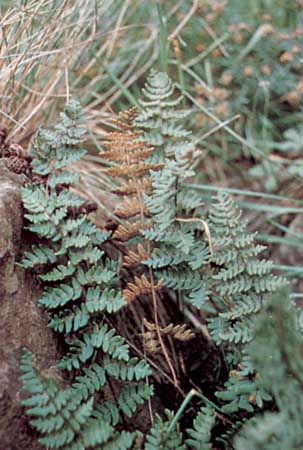
Lip fern refers to any of approximately 150 species of ferns belonging to the genus Cheilanthes within the family Pteridaceae. These plants are distributed across tropical and temperate regions globally, frequently inhabiting dry or seasonally dry environments and rocky areas exposed to full sun.1
Most lip ferns are characterized as small, sturdy, and often evergreen. Their leaves grow from creeping or erect rhizomes and are typically covered in scales or dense hairs. The spore-bearing structures, known as sporangia, are located at the vein tips and are shielded by the curling margins of the leaves, which gives the genus its common name. Due to their resilience, some species are cultivated as ornamentals in rock gardens.1
How do ferns reproduce using spores?
Ferns reproduce through a complex life cycle that alternates between two distinct stages: the sporophyte and the gametophyte.2
The Sporophyte Stage
The familiar fern plant is the sporophyte, which produces haploid spores within specialized structures called sporangia. These sporangia are often clustered into groups known as sori on the undersides of the fronds. In many species, these clusters are protected by a flap of tissue called an indusium, though some remain naked. When mature, the sporangia release spores into the wind.234
The Gametophyte Stage
If a spore lands in a suitable environment, it germinates to form a tiny, heart-shaped, independent plant called a prothallium. This gametophyte produces male sex organs (antheridia) and female sex organs (archegonia).2546
Fertilization
Fertilization requires free water, through which the sperm swim to reach the egg within the archegonium. Once the egg is fertilized, it forms a zygote, which develops into a new, independent sporophyte plant, eventually causing the prothallium to wither and die.624
What are the differences between ferns and flowering plants?
Ferns and flowering plants (angiosperms) are both vascular plants that share a dominant, independent sporophyte generation, but they differ significantly in their reproductive strategies and structural complexity.
Key Differences
- Reproduction: Ferns reproduce via spores, which are dispersed into the environment to grow into a free-living, independent gametophyte. In contrast, flowering plants reproduce via seeds. Their gametophytes are extremely reduced, consisting of only a few cells, and remain embedded within the sporophyte, protecting them from environmental stress.78
- Fertilization: Ferns rely on water for their motile, flagellated sperm to swim to the egg. Flowering plants have evolved nonmotile sperm that are transported to the egg via a pollen tube, and they utilize double fertilization to produce a triploid endosperm for nourishment.78
- Structural Complexity: Flowering plants generally possess a more complex body, including stems that branch laterally and vascular tissue arranged in bundles around the pith. Many also undergo secondary growth, producing wood via vascular cambium, whereas most living ferns are limited to primary growth.78
What are rhizomes and how do they help plants grow?
A rhizome is a horizontal, typically subterranean plant stem that plays a vital role in a plant’s survival and growth. Unlike roots, rhizomes are distinguished by the presence of nodes with reduced scale leaves and internodes.1112
Rhizomes support plants in several key ways:
- Food Storage: They serve as storage organs for starches and proteins. This stored energy allows plants to perennate, or survive through unfavorable conditions such as drought or extended winters.1112
- Vegetative Reproduction: Rhizomes enable plants to propagate asexually. By sending up new shoots from their nodes, they allow the parent plant to spread and form new colonies. Many plants, including bamboos, grasses, and bananas, rely heavily on this method for growth and expansion.1112
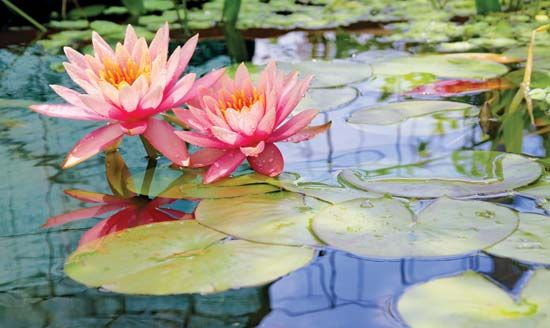
- Structural Support: In some species, such as ferns and water lilies, the rhizome acts as the primary stem, from which leaves and flowers emerge.11
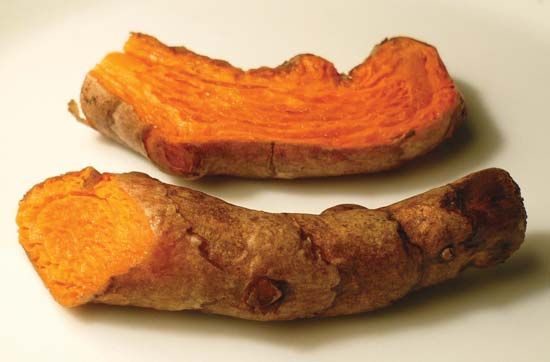
Some rhizomes, such as those of ginger and turmeric, are also valued for their culinary uses.11
Sources
- Lip fern — Encyclopædia Britannica
- Fern - Life cycle — Encyclopædia Britannica
- prothallium — Encyclopædia Britannica
- Fern - The sorus — Encyclopædia Britannica
- Plant reproductive system - Ferns — Encyclopædia Britannica
- Fern - Sexual reproduction — Encyclopædia Britannica
- Plant - Seed plants — Encyclopædia Britannica
- Plant reproductive system - Physiology of plant reproduction — Encyclopædia Britannica
- Plant - Annotated classification — Encyclopædia Britannica
- cycadophyte - Seed ferns — Encyclopædia Britannica
- Rhizome — Encyclopædia Britannica
- Angiosperm - Shoot system modifications — Encyclopædia Britannica
Published on · 3 min read