Western Cordillera
The Western Cordillera is a vast system of mountain ranges in western North America that extends from Alaska through Canada and the United States into…
What is the Western Cordillera?
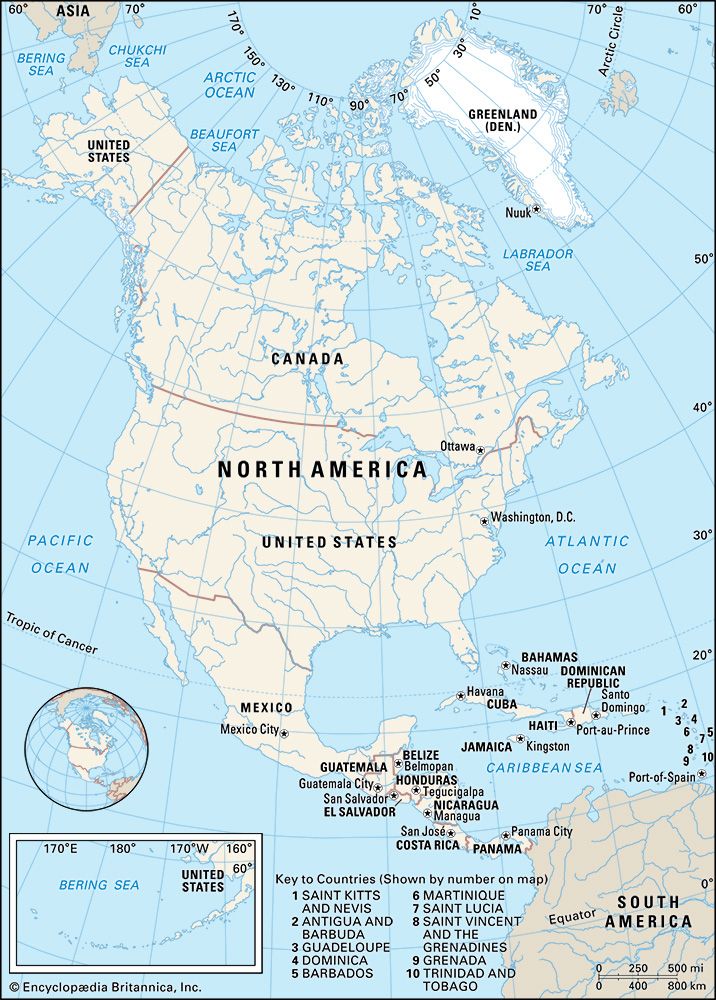
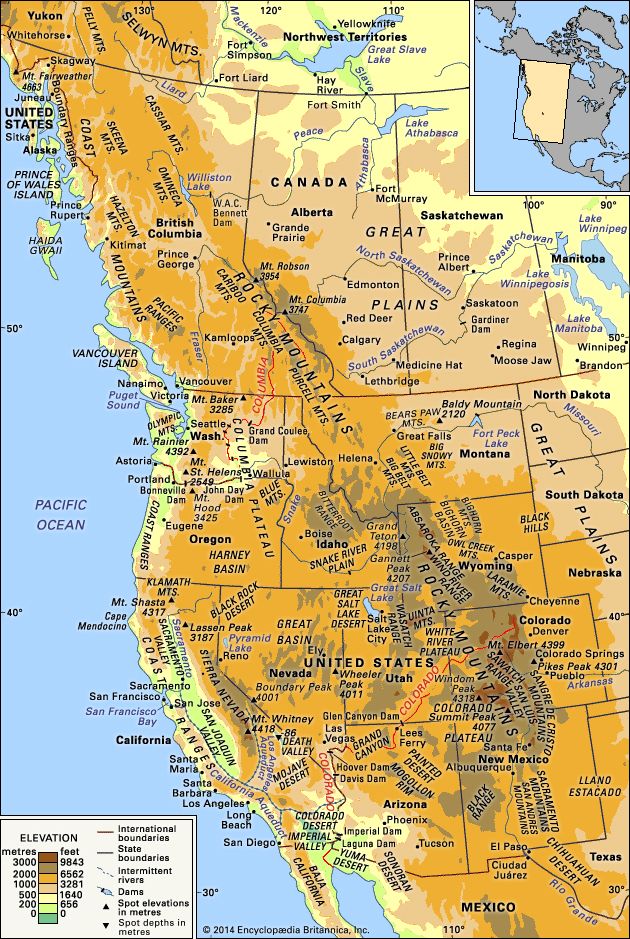
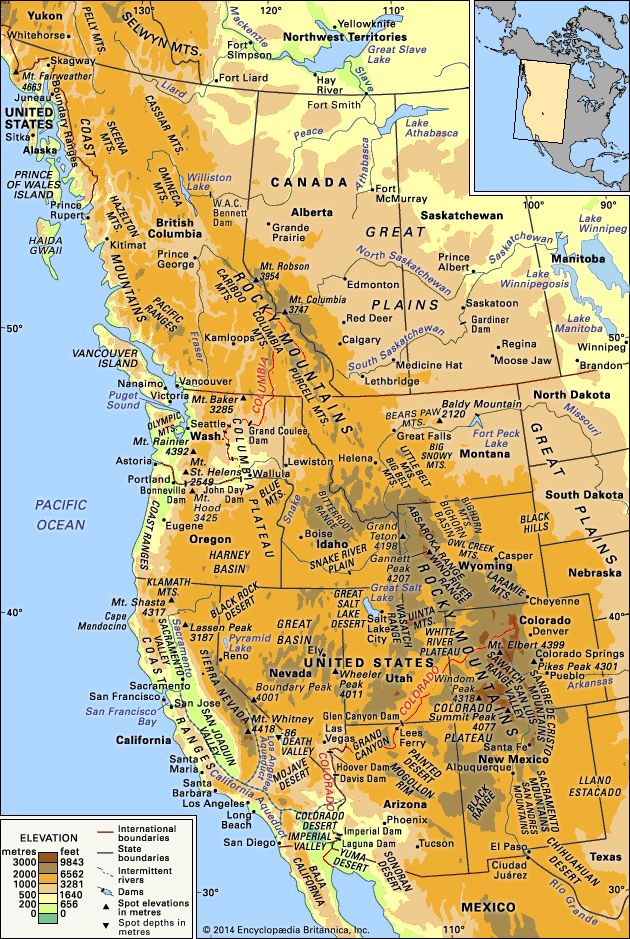
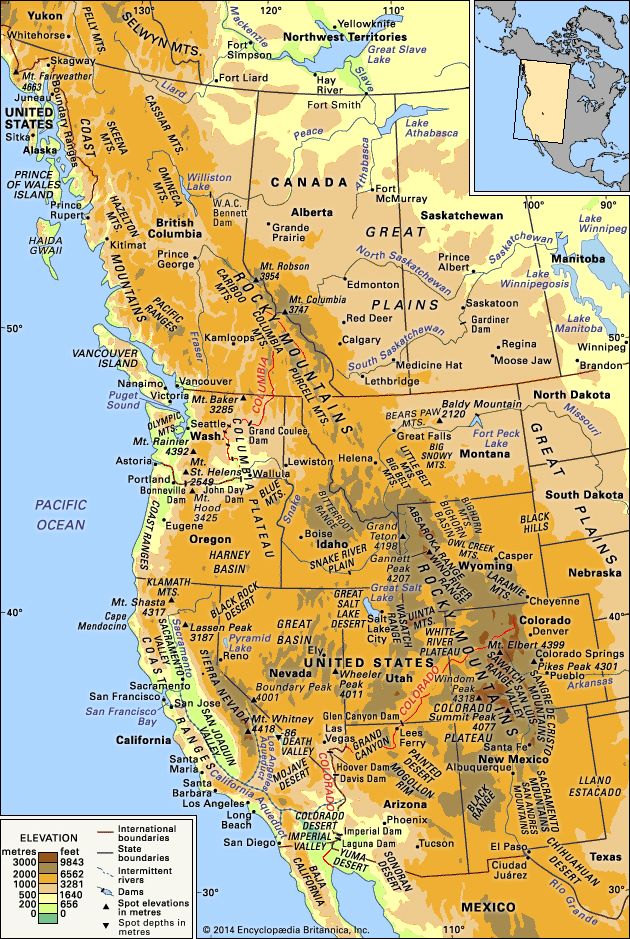
The Western Cordillera is a vast system of mountain ranges in western North America that extends from Alaska through Canada and the United States into Mexico. As the continent’s youngest mountains, they are characterized by high, rugged terrain and include major systems such as the Rocky Mountains, Sierra Nevada, Cascades, and Coast Ranges.1
The formation of the Cordillera was primarily driven by the convergence of lithospheric plates with North America between 170 million and 40 million years ago. This tectonic activity created a complex landscape of volcanic chains, granitic intrusions, and fold-and-thrust belts. In recent geological history, crustal extension and mantle heating have further modified the region’s topography, influencing the elevation of areas like the Colorado Plateau and the Basin and Range Province.1
Due to their elevation and orientation, these mountains significantly influence regional climates, creating wet, windward slopes facing the Pacific and dry, leeward slopes in the interior.23
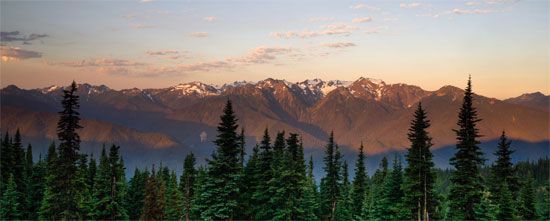
Where is the Western Cordillera located in North America?
The Western Cordillera is a vast system of mountain ranges located in western North America. It extends from the U.S. state of Alaska through northwestern Canada, the western United States, and into Mexico.1
This extensive mountain system includes several major ranges, such as the Rocky Mountains, the Sierra Nevada, the Cascades, and the Coast Ranges. The region is characterized by high, rugged terrain and complex geological history, having been formed primarily through the convergence of lithospheric plates with the North American continent.14
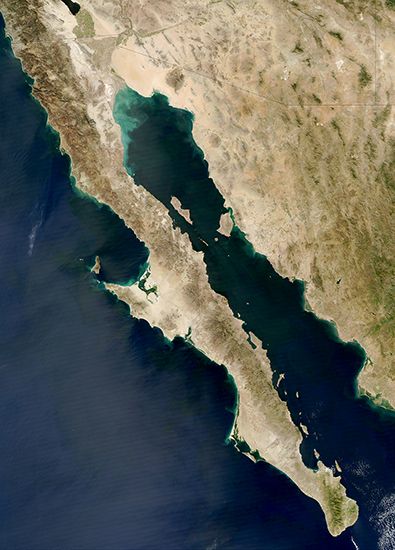
What are some major mountain ranges in the Western Cordillera?
The Western Cordillera is a vast, complex system of mountain ranges in western North America, extending from Alaska through Canada and the United States into Mexico. It is characterized by high, rugged terrain and includes several major mountain systems, most notably:81
- Rocky Mountains: Forming the eastern flank of the Cordillera, the Rockies are geologically diverse, featuring lofty upwarps, volcanic regions, and extensive fold-and-thrust belts, such as those found in the Canadian Rockies.81
- Sierra Nevada: Located primarily in California, this range is composed largely of granite and includes Mount Whitney, the highest peak in the contiguous United States.81
- Cascade Range: Situated to the west of the interior, this range is defined by its volcanic activity, featuring prominent peaks like Mount Rainier and Mount St. Helens.811
- Coast Ranges: Running parallel to the Pacific coast, these ranges consist of various sections of folded and faulted sedimentary and metamorphic rocks, including the Olympic Mountains and the Klamath Mountains.8511
How was the Western Cordillera formed?
The formation of the Western Cordillera is a complex geological process that occurred primarily between 170 million and 40 million years ago, driven by the convergence of lithospheric plates with the western margin of North America.1
Tectonic Origins
As North America drifted westward over the Pacific Ocean floor, oceanic plates were subducted beneath the continent. This process created an Andean-style margin characterized by:
- Volcanic Arcs: A belt of volcanoes formed inland, underlain by extensive granitic intrusions, which now form the core of ranges like the Sierra Nevada.1
- Accretion: Sedimentary and volcanic rocks were sheared off the subducting oceanic plates and accreted to the continental edge as “suspect terranes,” forming much of the Coast Ranges.114
- Fold and Thrust Belts: East of the volcanic arc, the continental basement was underthrust, causing sedimentary layers to fold and thrust over one another, most notably in the Canadian Rockies.1
Cenozoic Modifications
Beginning about 70 million to 80 million years ago, the Laramide orogeny shifted crustal shortening further inland, uplifting blocks of Precambrian rock to form the Rocky Mountains in the United States.1 Over the last 20 million years, large-scale crustal extension has further reshaped the region, creating the Basin and Range Province and continuing to influence the elevation of the mountains today.15116
Sources
- Western Cordillera — Encyclopædia Britannica
- North America - Climate — Encyclopædia Britannica
- United States - The Western mountains — Encyclopædia Britannica
- mountain - The North American Cordillera — Encyclopædia Britannica
- cordillera — Encyclopædia Britannica
- Pacific Ocean - Eastern region — Encyclopædia Britannica
- mountain - The Andes — Encyclopædia Britannica
- United States - The Western Cordillera — Encyclopædia Britannica
- Andes Mountains - Physiography of the Central Andes — Encyclopædia Britannica
- Andes Mountains - Physical features — Encyclopædia Britannica
- Coast Ranges — Encyclopædia Britannica
- Pacific mountain system - Physiography — Encyclopædia Britannica
- list of mountain ranges - North America — Encyclopædia Britannica
- Laramide orogeny — Encyclopædia Britannica
- North America - Mesozoic and Cenozoic orogenic belts — Encyclopædia Britannica
- Cordilleran Geosyncline — Encyclopædia Britannica
- North America - 30 to 2.5 million years ago — Encyclopædia Britannica
- North America - 600 to 250 million years ago — Encyclopædia Britannica
Published on · 3 min read