Why Are Spotted Lanternflies Bad?
The spotted lanternfly (Lycorma delicatula) is considered a highly destructive invasive species because it lacks natural predators in regions where it has…
Why Are Spotted Lanternflies Bad?
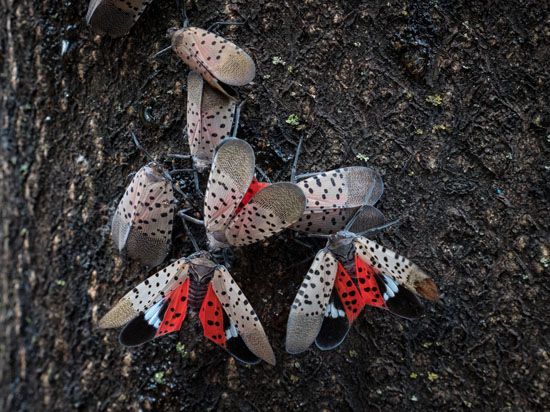
The spotted lanternfly (Lycorma delicatula) is considered a highly destructive invasive species because it lacks natural predators in regions where it has been introduced, such as the United States.12
The insect is harmful for several key reasons:
- Plant Damage: Both nymphs and adults use piercing-sucking mouthparts to feed on the sap of over 70 plant species, including grapevines, fruit trees, and various hardwoods. This feeding weakens plants, making them susceptible to disease and drought, and can ultimately lead to plant death.12
- Sooty Mold: As they feed, they excrete a sticky substance called honeydew. This promotes the growth of sooty mold, which coats leaves and blocks sunlight, significantly interfering with photosynthesis.12
- Economic Threat: Their presence threatens agricultural sectors, particularly vineyards and orchards, as well as the logging industry.12
- Nuisance: Heavy infestations can coat outdoor surfaces, play equipment, and patios with sticky honeydew, while swarms of the insects can become a significant local nuisance.12
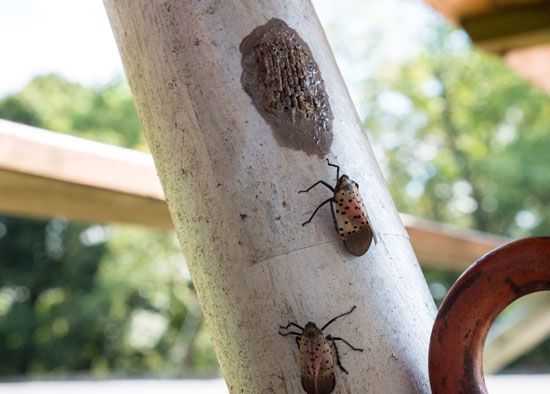
What is the tree of heaven and why is it linked to spotted lanternflies?
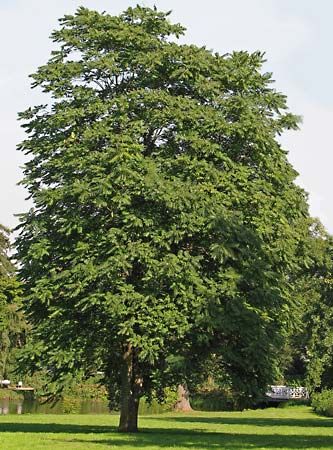
The tree of heaven (Ailanthus altissima) is a rapid-growing, pollution-resistant tree native to China that has become widely naturalized in urban centers globally.4
It is intrinsically linked to the spotted lanternfly because the tree serves as a preferred host for the insect, particularly during its adult stage. Research suggests that the tree of heaven may be a required host plant for the spotted lanternfly to complete its life cycle. Because both species are native to the same regions in Asia and have spread to the United States, the widespread presence of the tree of heaven has facilitated the survival and expansion of the invasive lanternfly in these new environments.3
The relationship is so significant that management strategies often involve using the tree of heaven as a focal point for control efforts. For example, systemic insecticides are sometimes applied to individual trees to render their sap toxic to the lanternflies that feed on them.3
How does the honeydew produced by these insects affect local ecosystems?
The honeydew excreted by spotted lanternflies significantly disrupts local ecosystems by acting as a substrate for sooty mold, a plant disease characterized by dark fungal growth.5
The ecological impacts of this process include:
- Reduced Photosynthesis: As sooty mold forms dense coatings on leaves, it blocks essential sunlight. This interference reduces the rate of photosynthesis, which can weaken trees and, in severe cases, lead to the death of the plant.5
- Forest Understory Damage: In forested areas, the accumulation of this mold can kill the understory vegetation, further degrading the health of the local habitat.5
- Attraction of Other Insects: The sweet, sticky nature of the honeydew attracts various other insects, such as bees, wasps, and ants, which can alter local insect population dynamics and behavior.5
- Surface Contamination: In areas with heavy infestations, the honeydew can coat outdoor structures, play equipment, and patios, creating a persistent, sticky nuisance.5
What are some other examples of invasive insect species in the United States?
Beyond the spotted lanternfly, the United States has been impacted by several other invasive insect species that have caused significant ecological and economic damage. These pests often thrive because they have been introduced without their natural predators, allowing their populations to grow unchecked.
Notable Invasive Insects in the U.S.
- Emerald Ash Borer: Perhaps the most destructive, this beetle from East Asia has killed hundreds of millions of ash trees in North America. Because native ash species lack evolutionary defenses, the larvae—which tunnel into the tree and disrupt its vascular system—can kill both stressed and healthy trees. This loss has dramatically altered forest canopies and food webs, increasing wildfire risks and facilitating the spread of invasive plants.789
- Woolly Adelgids: These aphid-like insects include the hemlock woolly adelgid (Adelges tsugae), which is a serious pest of hemlock trees, and another species (A. piceae) that targets fir trees. They are known for the white, woolly coating they produce.10
- European Corn Borer: An accidentally introduced pest that has become a major threat to agricultural crops, specifically corn, by feeding on the plant and reducing yields.11
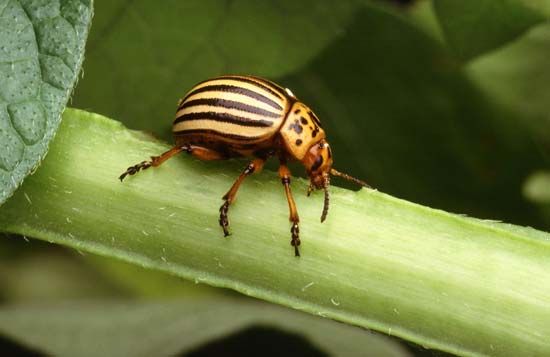
- Colorado Potato Beetle: Originally a native insect of the American semidesert that fed on the buffalo burr plant, this beetle adapted to the introduced potato crop in the 1840s. With an abundant new food source and few natural controls, it became a devastating agricultural pest.11
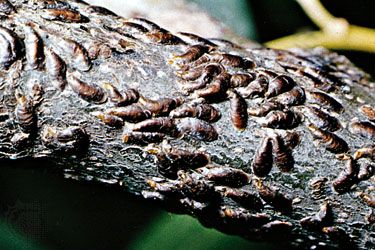
- Scale Insects: Species such as the oystershell scale and the cottony-cushion scale have caused significant damage to fruit and citrus trees. In the case of the cottony-cushion scale, the introduction of a natural predator, the vedalia beetle, successfully mitigated the infestation.11
Management of these species often involves biological control—introducing natural enemies like parasitoid wasps—or strict regulations on the transport of firewood and nursery stock to prevent further spread.8119
Sources
- Why Are Spotted Lanternflies Bad? — Encyclopædia Britannica
- spotted lanternfly — Merriam-Webster
- spotted lanternfly — Encyclopædia Britannica
- tree of heaven — Encyclopædia Britannica
- Sooty mold — Encyclopædia Britannica
- homopteran - Importance — Encyclopædia Britannica
- emerald ash borer: Top Questions — Encyclopædia Britannica
- Emerald Ash Borer: At a Glance — Encyclopædia Britannica
- insect - Ecological factors — Encyclopædia Britannica
- emerald ash borer — Encyclopædia Britannica
- hemlock woolly adelgid — Merriam-Webster
- woolly adelgid — Merriam-Webster
Published on · 4 min read