Alaska Range
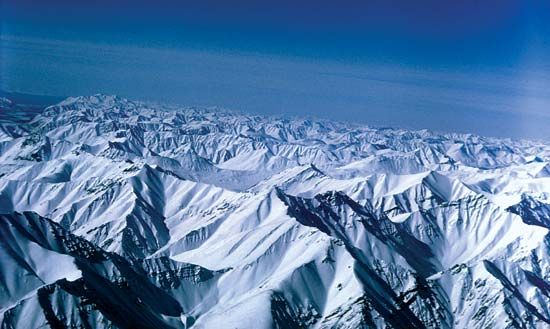
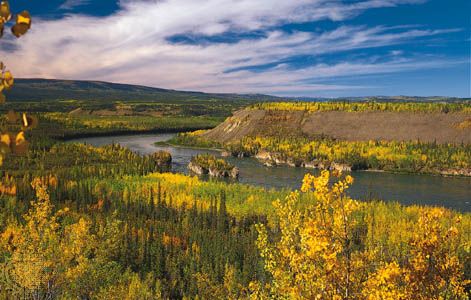
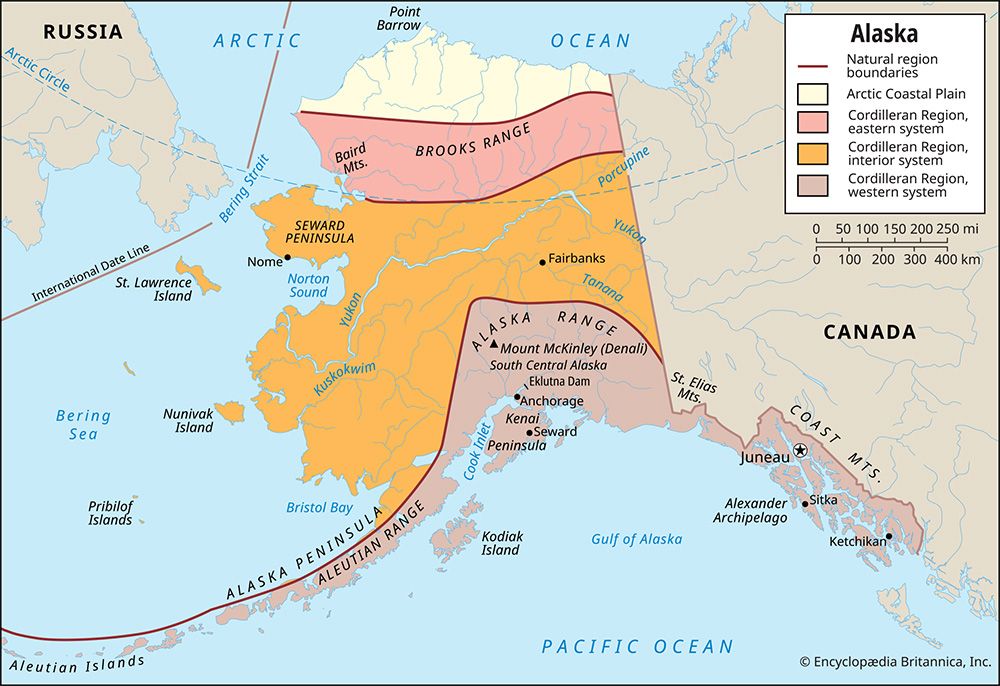
The Brooks Range and the Alaska Range are distinct mountain groups in Alaska, separated by the plains and tablelands of the Yukon and Porcupine river systems.
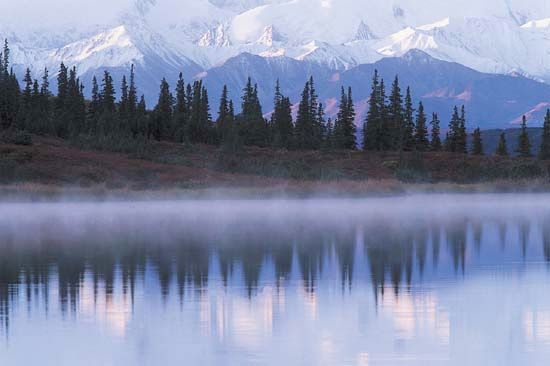
How do the Alaska Range and the Brooks Range differ in terms of their characteristics and location?
The Brooks Range and the Alaska Range are distinct mountain groups in Alaska, separated by the plains and tablelands of the Yukon and Porcupine river systems.1
Brooks Range
Located in northern Alaska, the Brooks Range is the northernmost extension of the Rocky Mountains and lies entirely within the Arctic Circle. It extends approximately 600 miles east-west from the Canadian border to the Chukchi Sea. As the world’s highest mountain range within the Arctic Circle, it features rugged topography, permafrost, and serves as a major drainage divide between the Arctic Ocean and the Yukon River system. It is the driest of the Alaskan ranges, receiving less than 20 inches of annual precipitation.1234
Alaska Range
The Alaska Range is part of the Pacific mountain system and is situated in the interior of the state, south of the Yukon lowlands. Unlike the Brooks Range, which falls within the Arctic zone, the Alaska Range is characterized by a continental climate. It merges southwestward into the Aleutian Range and contains some of the highest peaks in North America.124
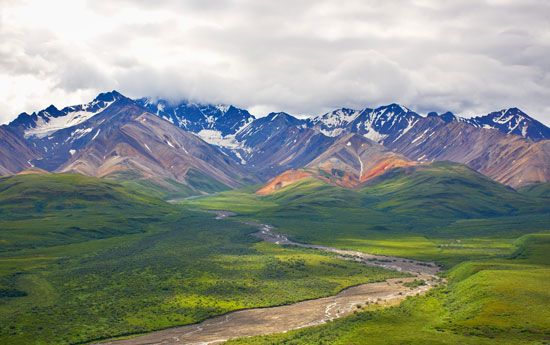
What are some of the major rivers that originate from the Alaska Range, and how do they impact the surrounding ecosystems?
The Alaska Range serves as a critical drainage divide in the state’s interior. While the Yukon River system is the primary drainage network for the region, it receives significant water from the northern slopes of the Alaska Range, notably through its major tributary, the Tanana River.
The rivers originating from these mountainous regions play a vital role in shaping the surrounding ecosystems:
- Hydrological Regulation: Many of these rivers are fed by mountain glaciers. These glaciers act as natural reservoirs that regulate streamflow, providing a stable water supply even during dry periods.
- Sediment Transport: Glacial streams carry high concentrations of sediment, including fine-grained rock flour. This sediment is transported downstream, influencing the clarity and nutrient composition of the water bodies it enters.
- Habitat Creation: The constant movement of water and sediment causes frequent readjustments of stream channels, which helps maintain diverse aquatic habitats. These river systems support various fish species, such as Arctic grayling and whitefish, which are essential components of the local food web.
What is the geographical location and extent of the Alaska Range?
The Alaska Range is a prominent component of the Alaskan mountains and a segment of the larger Pacific mountain system in western North America.1011
Located in southern Alaska, the range extends in an arc for approximately 400 miles (650 km). It stretches generally northward and eastward, beginning from the Aleutian Range and reaching the boundary of the Yukon territory in Canada.103
The range acts as a significant climatic barrier, separating the interior tundra from the Pacific coastal region. It is home to Denali—the highest point in North America—and is characterized by dramatic Arctic scenery, massive glaciers, and high-altitude peaks. The mountains are drained to the north by the Yukon and Kuskokwim rivers, while southern streams flow toward the Gulf of Alaska.1011
How was the Alaska Range formed, and what is its geological significance?
The Alaska Range was formed through complex tectonic processes associated with the convergence of lithospheric plates in southern Alaska. Its geological development is primarily driven by the Pacific Plate being underthrust beneath the North American crust, a process that continues today.10
Geological Formation
The range is largely underlain by large granitic intrusions, known as batholiths, which pushed into older Paleozoic and Mesozoic sedimentary rocks. These sedimentary layers have been significantly metamorphosed and deformed over time. The structural evolution of the range involves both thrust faulting and strike-slip faulting along northwesterly trending planes, most notably the Denali Fault. The uplift of Denali itself is attributed to these tectonic forces, where rocks have been displaced northwestward and pushed upward.310
Geological Significance
- Tectonic Activity: The range serves as a primary example of crustal deformation resulting from rapid plate convergence, with tectonic stresses extending hundreds of kilometers inland from the coast.10
- Climatic Barrier: Geologically, the range acts as a massive wall that separates the interior tundra from the Pacific coastal region, significantly influencing regional climate patterns.53
- Drainage Divide: It functions as a critical drainage divide, separating river systems that flow north into the Yukon and Kuskokwim networks from those that flow south into the Gulf of Alaska.53
Sources
- Alaskan mountains - Physiography of the central ranges — Encyclopædia Britannica
- Brooks Range — Encyclopædia Britannica
- Alaskan mountains — Encyclopædia Britannica
- Brooks Range — Merriam-Webster
- Alaskan mountains - Physiography of the northern ranges — Encyclopædia Britannica
- Alaskan mountains - Climate of the Alaskan mountains — Encyclopædia Britannica
- Alaska - Drainage — Encyclopædia Britannica
- glacier - Glacier hydrology — Encyclopædia Britannica
- Arctic National Wildlife Refuge — Encyclopædia Britannica
- Alaska Range — Encyclopædia Britannica
- Alaska Range — Merriam-Webster
- Western Cordillera — Encyclopædia Britannica
- Alaskan mountains - Physiography of the southern ranges — Encyclopædia Britannica
Published on · 3 min read