Era
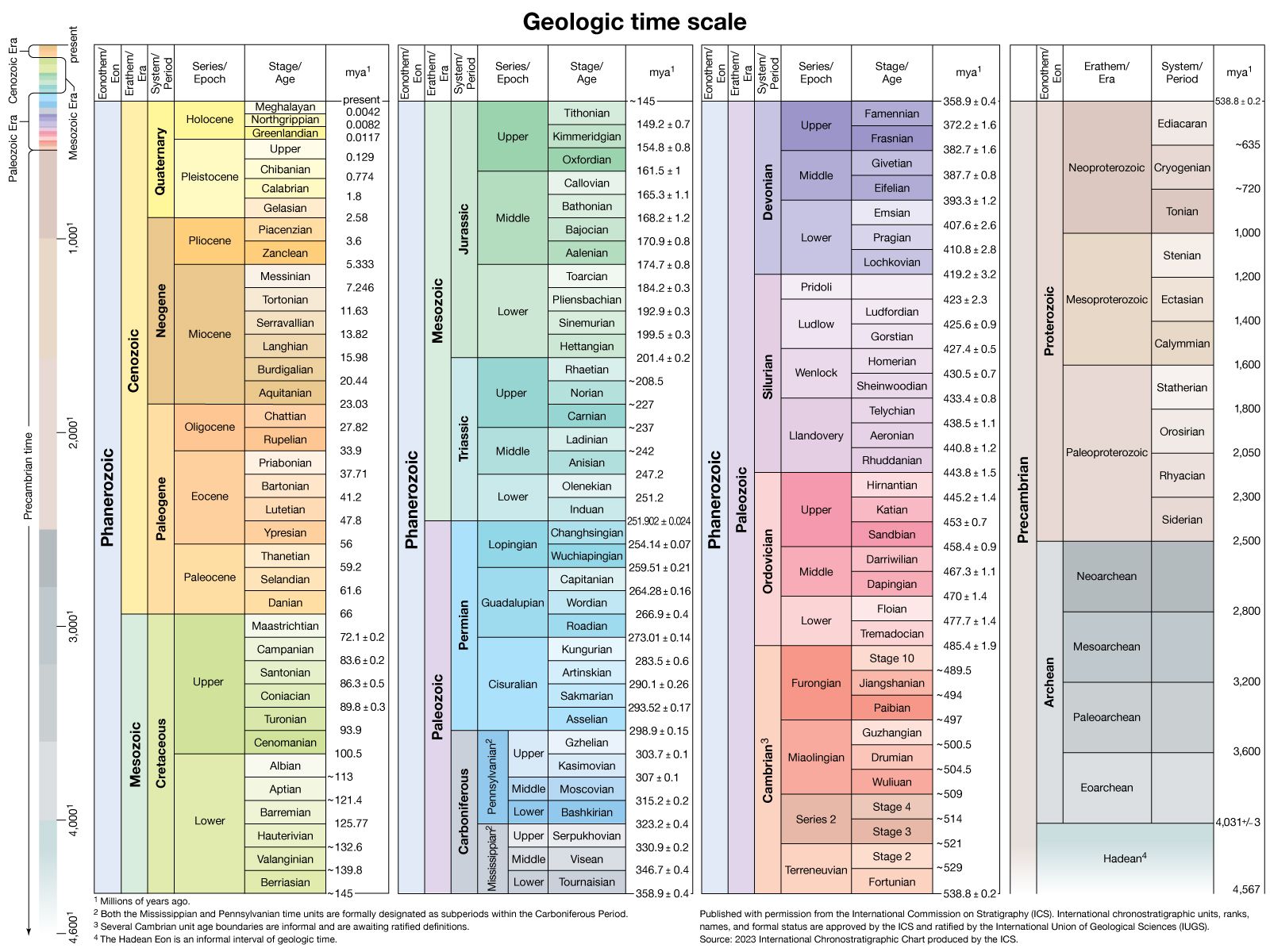
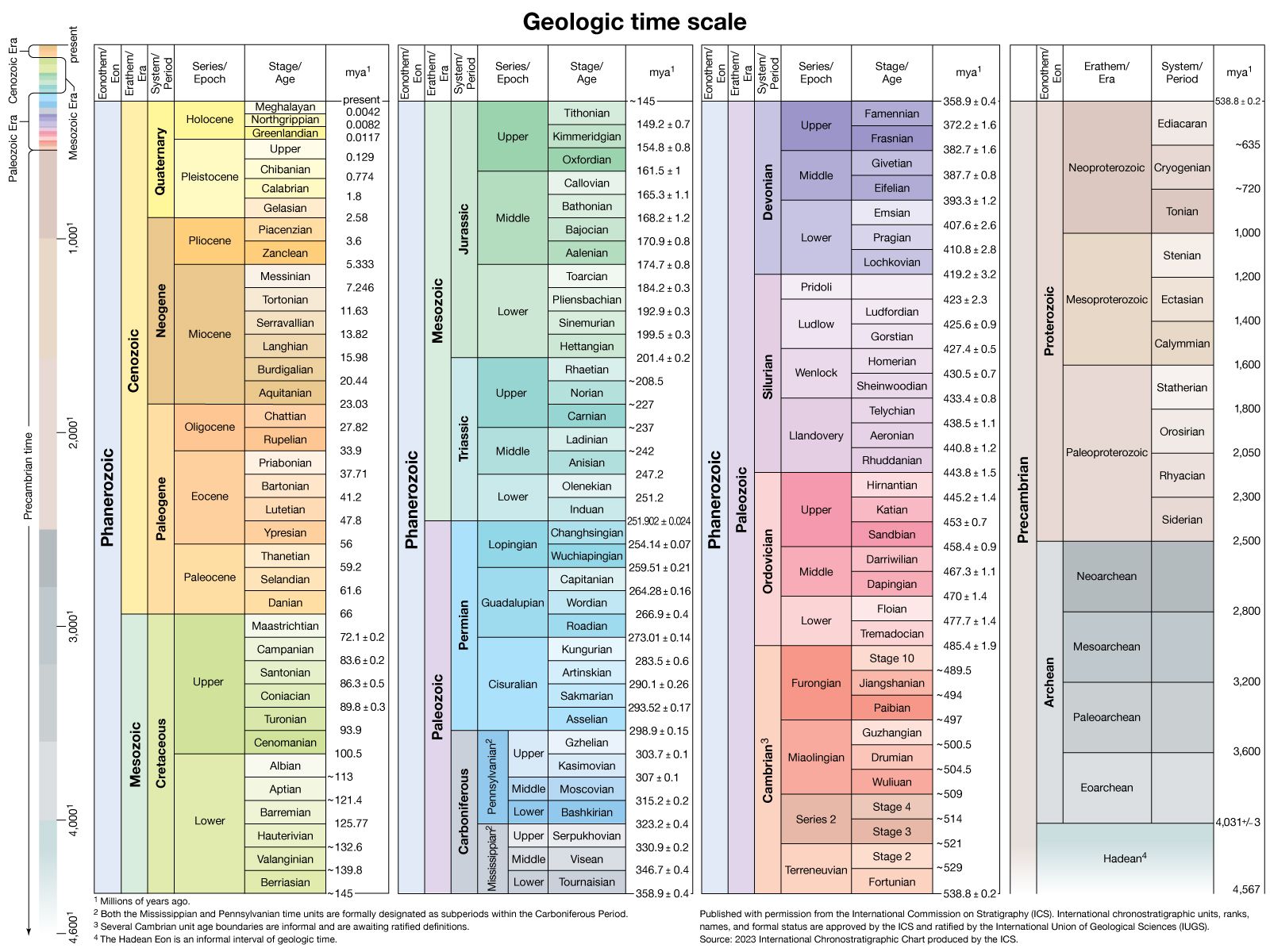
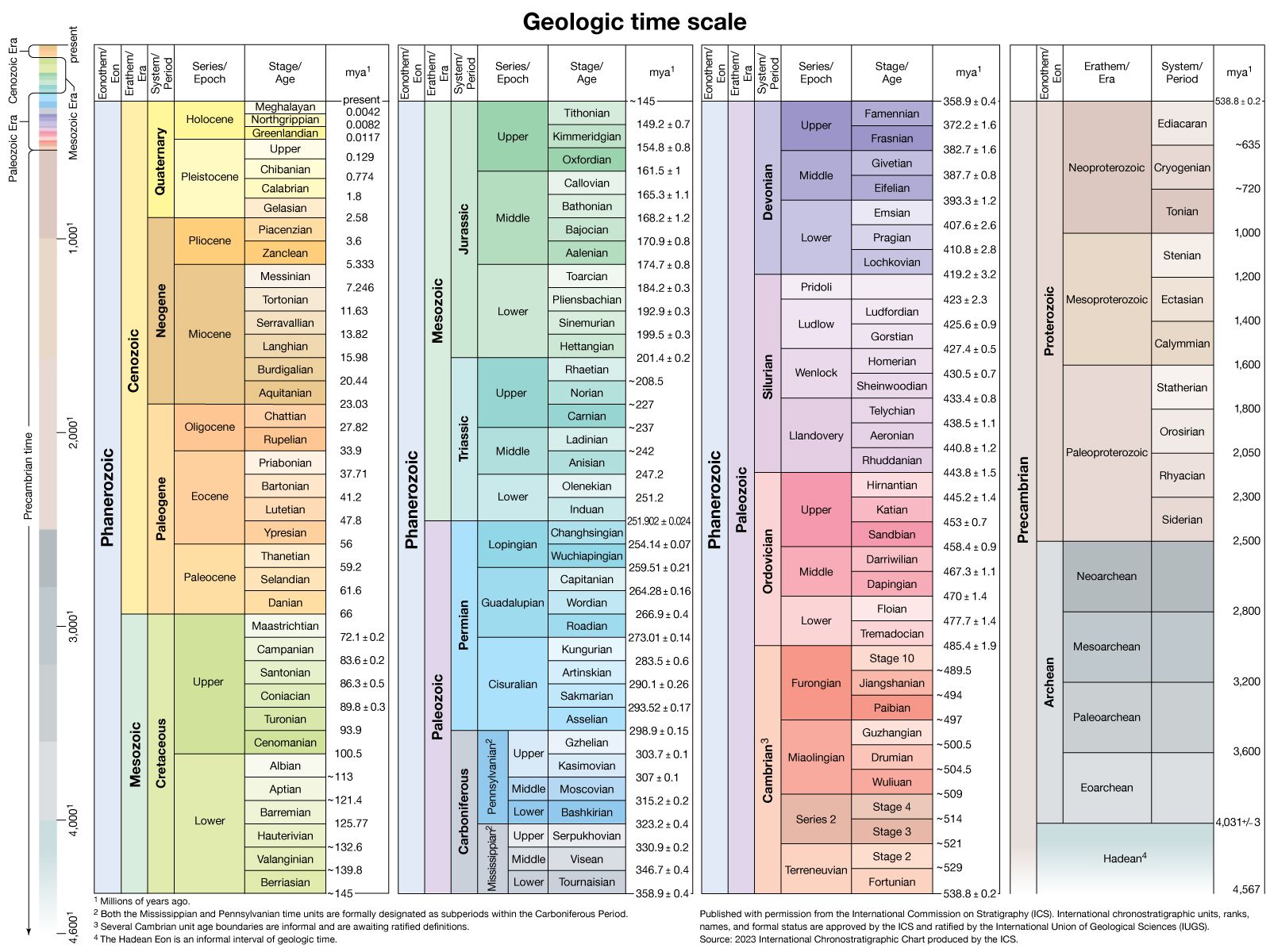
The longest geologic era in Earth's history is the Paleoproterozoic Era, which spanned from 2.5 billion to 1.6 billion years ago, lasting for 900 million…
What is the longest geologic era in Earth’s history?
The longest geologic era in Earth’s history is the Paleoproterozoic Era, which spanned from 2.5 billion to 1.6 billion years ago, lasting for 900 million years.1
In the formal hierarchy of geologic time, eons are the longest units, while eras are the second-longest. Because of the challenges in establishing precise chronologies for the distant past, the eras within Precambrian time are classified independently of the more recent Phanerozoic eras. The Paleoproterozoic Era exceeds the duration of the other recognized eras, such as the Mesoproterozoic Era (600 million years) and the Neoproterozoic Era (approximately 459 million years).12
What is the definition of a geologic era, and how does it fit into the larger geologic time scale?
A geologic era is defined as a very long span of geologic time. In the formal hierarchy of the geologic time scale, eras represent the second-longest units of time, surpassed in duration only by eons.1
The Geologic Time Scale
The geologic time scale serves as a calendar for Earth’s history, subdividing the planet’s 4.5-billion-year existence into hierarchical units of abstract time. In descending order of duration, these units are:
An era is composed of one or more geologic periods. In stratigraphic terms, the rock sequence that corresponds to an era is known as an “erathem”.1
Classification and Delineation
The boundaries of these time units are primarily delineated by the fossil record. Paleontologists identify specific stratigraphic boundaries where certain species appear or disappear, which mark the transitions between different intervals of time. Because establishing precise chronologies for the distant past is difficult, the eras within Precambrian time are classified independently of the more recent Phanerozoic eras (the Paleozoic, Mesozoic, and Cenozoic eras).461
How many eras are there in Earth’s geologic history, and what are their names?
There are 10 recognized geologic eras in Earth’s history, as defined by the International Union of Geological Sciences. These are categorized into the Precambrian eras and the Phanerozoic eras.8
Precambrian Eras
The Precambrian eras are classified independently due to the difficulty of establishing precise chronologies for the early Earth.8
- Eoarchean Era (4.0 billion to 3.6 billion years ago)28
- Paleoarchean Era (3.6 billion to 3.2 billion years ago)28
- Mesoarchean Era (3.2 billion to 2.8 billion years ago)28
- Neoarchean Era (2.8 billion to 2.5 billion years ago)28
- Paleoproterozoic Era (2.5 billion to 1.6 billion years ago)28
- Mesoproterozoic Era (1.6 billion to 1.0 billion years ago)28
- Neoproterozoic Era (1.0 billion to 541 million years ago)28
Phanerozoic Eras
These eras are largely defined by the fossil record and represent the time of visible life.18
- Paleozoic Era (541 million to about 252 million years ago)8
- Mesozoic Era (roughly 252 million to 66 million years ago)8
- Cenozoic Era (66 million years ago to the present)8
How have different geologic eras impacted the evolution and diversity of life on Earth?
Geologic eras have profoundly shaped the evolution and diversity of life on Earth, acting as major milestones marked by the appearance of new organisms and the disappearance of others. These eras are defined by significant transitions in the fossil record, often punctuated by mass extinction events that cleared ecological niches for new life-forms to flourish.91011
The Impact of Eras on Life
- Precambrian: Representing over 80 percent of Earth’s history, this time saw the origin of life, including primitive microorganisms like stromatolites. By the late Precambrian, the development of multicellular organisms and sexual reproduction set the stage for the rapid diversification of life in the following eon.12
- Paleozoic Era: Known for the emergence of complex life, this era saw the first fish, land plants, insects, amphibians, and reptiles. It concluded with the “Great Dying” (the Permian-Triassic extinction), which eliminated the vast majority of species, fundamentally altering the trajectory of biodiversity.13149
- Mesozoic Era: Often called the age of dinosaurs, this era facilitated the rise of major plant and animal groups that exist today. The era ended with the Cretaceous-Paleogene extinction, which wiped out non-avian dinosaurs and paved the way for the dominance of mammals and birds.10149
- Cenozoic Era: Following the Mesozoic, this era is characterized by the explosive diversification of mammals and flowering plants, leading to the development of modern ecosystems and the eventual emergence of humans.152
Sources
- era — Encyclopædia Britannica
- A Journey Through Time Since the Precambrian — Encyclopædia Britannica
- Proterozoic — Merriam-Webster
- geologic time — Encyclopædia Britannica
- eon — Encyclopædia Britannica
- Tertiary Period - Correlation of Tertiary strata — Encyclopædia Britannica
- geologic history of Earth - Time scales — Encyclopædia Britannica
- Precambrian - Major subdivisions of the Precambrian System — Encyclopædia Britannica
- Mesozoic Era — Encyclopædia Britannica
- Did you know? — Merriam-Webster
- Major Mass Extinctions — Encyclopædia Britannica
- Tertiary Period - Tertiary life — Encyclopædia Britannica
- A Journey Through Time Since the Precambrian - Paleogene Period: 66 million to 23 million years ago, and Neogene Period: 23 million to 2.6 million years ago — Encyclopædia Britannica
- evolution - Diversity and extinction — Encyclopædia Britannica
- Precambrian — Encyclopædia Britannica
Published on · 3 min read