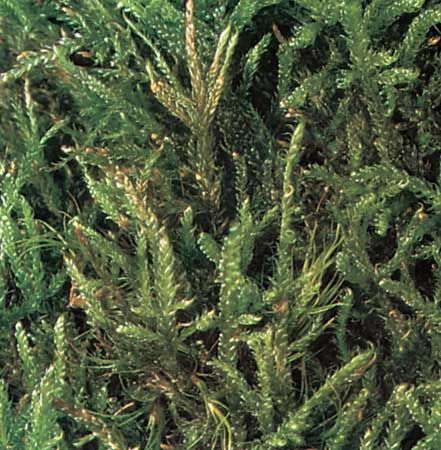
Tree Moss
Tree moss refers to plants in the genus Climacium (order Bryales), which are characterized by their resemblance to miniature evergreen trees. These mosses…
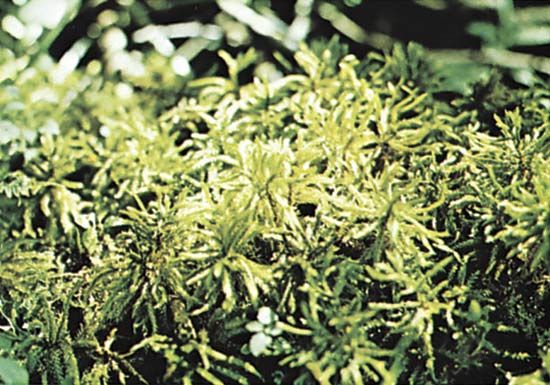
What is tree moss and how does it differ from other types of moss?
Tree moss refers to plants in the genus Climacium (order Bryales), which are characterized by their resemblance to miniature evergreen trees. These mosses typically grow 5 to 10 centimeters (2 to 4 inches) tall in damp, shady environments throughout the Northern Hemisphere, featuring branches clustered at the top of their shoots.12
Distinctions from Other Mosses
While the term “tree moss” specifically identifies the genus Climacium, it is often confused with other organisms that share the name but are biologically distinct:
- Biological Classification: True mosses are nonvascular, spore-bearing plants in the division Bryophyta. Many other organisms commonly called “moss” are not mosses at all. For example, Spanish moss is a flowering epiphyte, while reindeer moss and oak moss are actually lichens.34
- Structural Differences: Mosses are distinguished from one another primarily by the structure and specialization of their sporangia (spore cases). Climacium species are unique for their treelike growth habit, whereas other types, such as peat moss or carpet moss, exhibit different growth patterns like dense cushions or spreading mats.413
Where can tree moss typically be found growing, and what are its preferred environmental conditions?
Tree mosses of the genus Climacium are primarily found throughout the Northern Hemisphere, where they thrive in specific damp and shady environments.1
Preferred Environmental Conditions
The habitat requirements for these plants vary slightly by species:
- General Habitat: Most Climacium species, such as the European tree moss (C. dendroides) and the American tree moss (C. americanum), prefer moist, shaded locations where they can spread via horizontal stems along the soil surface.1
- Wetland Environments: The North American species C. kindbergii is specifically adapted to very wet, swampy areas. Unlike its relatives, this species often grows in dense tufts or cushions that can obscure its characteristic treelike appearance.1
While the term “tree moss” is sometimes colloquially used to describe various lichens or mosses that grow directly on tree bark, the genus Climacium is typically associated with ground-level growth in terrestrial or swampy ecosystems.12
What are some common species of tree moss, and how can they be identified?
Common species of tree moss belong to the genus Climacium and are named for their resemblance to miniature evergreen trees. They are typically 5 to 10 centimeters (2 to 4 inches) tall, with branches clustered at the top of their shoots.1
Common Species and Identification
The most frequently encountered species include:
- European tree moss (C. dendroides): Found in both North America and Europe, this species is a standard representative of the genus.1
- American tree moss (C. americanum): This species is distinguished from the European variety by its unique leaf structure and its reddish-brown spore capsules, which are longer and narrower with longer beaks.1
- Swamp-dwelling tree moss (C. kindbergii): A less common North American species found in very wet, swampy areas. It is identified by its dark green—almost black—color and its tendency to grow in dense tufts or cushions, which often obscures its characteristic treelike shape.1
These mosses reproduce vegetatively each year, producing new shoots from horizontal stems that grow along the soil surface.1
How do lichens differ from true mosses?
While they are often confused due to their similar appearance and habitats, lichens and true mosses are fundamentally different types of organisms.
Key Differences
- Biological Classification: Mosses are small, nonvascular, spore-bearing land plants belonging to the division Bryophyta. In contrast, a lichen is not a single plant but a composite organism—a symbiotic community consisting of fungi (the mycobiont) living in association with algae or cyanobacteria (the phycobiont).456
- Reproduction: Mosses reproduce through an alternation of generations involving independent, photosynthetic gametophytes and dependent sporophytes that release spores. Lichens primarily propagate vegetatively through the fragmentation of their thallus or through specialized structures like soredia and isidia that distribute the fungal-algal association.4758
- Structure: Mosses possess stemlike and leaflike structures (phyllids) that are part of the plant’s gametophyte generation. Lichens lack true leaves or stems; their body, or thallus, is organized into layers of fungal filaments that house the photosynthetic partners.4958
Many organisms commonly called “moss” are actually lichens, such as Iceland moss, oak moss, and reindeer moss.410
Sources
- tree moss — Encyclopædia Britannica
- tree moss — Merriam-Webster
- list of mosses — Encyclopædia Britannica
- moss — Encyclopædia Britannica
- lichen — Encyclopædia Britannica
- fungus - Form and function of lichens — Encyclopædia Britannica
- list of lichens — Encyclopædia Britannica
- bryophyte - General features — Encyclopædia Britannica
- bryophyte — Encyclopædia Britannica
- fungus - Basic features of lichens — Encyclopædia Britannica
- beard lichen — Encyclopædia Britannica
Published on · 3 min read