Flannelbush
The flannelbush (Fremontodendron californicum) is a shrub belonging to the mallow family (Malvaceae), native to southwestern North America.
What is flannelbush?
The flannelbush (Fremontodendron californicum) is a shrub belonging to the mallow family (Malvaceae), native to southwestern North America.1
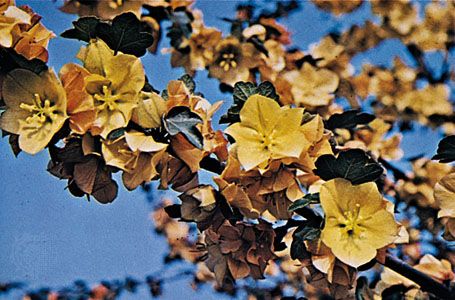
It is characterized by its distinct, felty texture on the undersides of its leaves, which gives the plant its common name. The shrub can reach heights of up to 5 meters (16 feet) and features lobed, alternate leaves. During its blooming period, it produces solitary, yellow flowers that measure approximately 5 centimeters (2 inches) across. Taxonomically, the genus Fremontodendron is a synonym for Fremontia.123
What other plants belong to the mallow family?
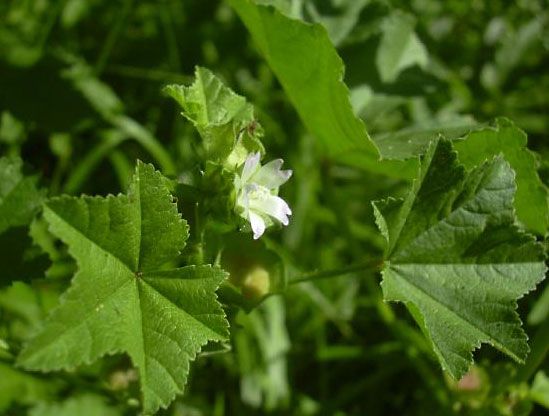
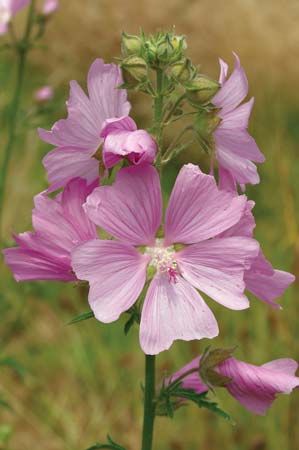
The mallow family (Malvaceae) is a diverse group comprising approximately 243 genera and over 4,225 species of herbaceous plants, shrubs, and trees. These plants are distributed globally and are valued for their ornamental flowers, natural fibers, and food products.45
Below are some notable members of the family categorized by their primary uses:
Food Crops
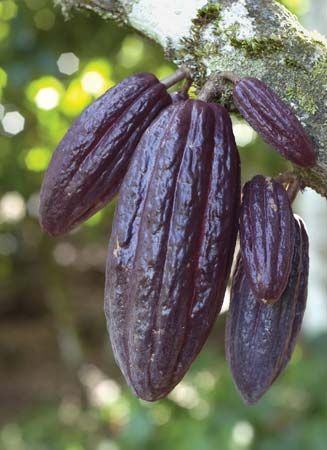
- Cacao: The source of cocoa beans.45
- Durian: Known for its large, pungent fruit.45
- Kola nut: Produced by the genus Cola.45
- Okra: A widely consumed vegetable.45
Fibers and Wood Products
- Balsa: Valued for its lightweight wood.45
- Cotton: A major global source of textile fiber.45
- Jute: Including white and tossa jute, used for fiber.465
- Kapok: Derived from the Ceiba genus.45
Ornamentals
- Hibiscus: Includes the Chinese hibiscus and rose of Sharon.45
- Hollyhock: A popular garden flower.45
- Linden: Also known as basswood.45
- Marsh mallow: Historically used to make confections.46
Other members include the baobab, velvetleaf, and various species of mallow (Malva).46
Why is the plant named after John C. Frémont?
The plant genus Fremontodendron (commonly known as flannelbush) is named after the American military officer and explorer John C. Frémont.
The name is derived from New Latin, combining his surname with the suffix -dendron (meaning “tree”). This naming convention honors Frémont’s significant role as an early explorer and mapmaker of the American West, particularly his extensive expeditions through California and the Pacific Northwest during the mid-19th century. Similarly, the Fremont cottonwood (Populus fremontii) also bears his name in recognition of his contributions to the exploration and documentation of the southwestern United States.10113
How do plants adapt to the climate of southwestern North America?
Plants in the arid climate of southwestern North America have evolved diverse strategies to survive moisture shortages and capitalize on brief, infrequent wet periods. These plants are generally categorized as xerophytes, which prevent water loss, or phreatophytes, which possess deep root systems to tap into permanent groundwater.1213
Key adaptations include:
- Water Storage: Succulents, such as cacti and agaves, store water in fleshy stems or leaves.1413
- Metabolic Efficiency: Many succulents utilize crassulacean acid metabolism, keeping their stomata closed during the hot day to minimize transpiration and opening them at night for carbon dioxide uptake.14
- Physical Protection: Plants may feature waxy leaf coatings, dense hair coverings, or the ability to fold leaves to reduce sunlight absorption and water loss.1315
- Dormancy and Ephemerals: Perennial plants may become physiologically inactive during dry spells, while ephemeral plants survive as dormant seeds, germinating rapidly after rain to complete their life cycles quickly.15
Sources
- flannelbush — Encyclopædia Britannica
- flannelbush — Merriam-Webster
- Fremontodendron — Merriam-Webster
- list of plants in the family Malvaceae — Encyclopædia Britannica
- Malvales — Encyclopædia Britannica
- mallow — Encyclopædia Britannica
- Malvales - Common characteristics — Encyclopædia Britannica
- list of economically important members of the family Malvaceae — Encyclopædia Britannica
- musk mallow — Encyclopædia Britannica
- John C. Frémont — Encyclopædia Britannica
- Fremont cottonwood — Merriam-Webster
- Succulent — Encyclopædia Britannica
- North American Desert - Plant life — Encyclopædia Britannica
- Xerophyte — Encyclopædia Britannica
- Desert - Population and community development and structure — Encyclopædia Britannica
Published on · 2 min read