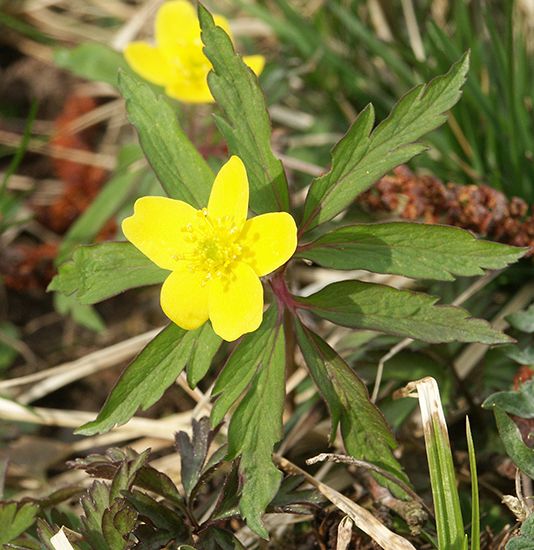
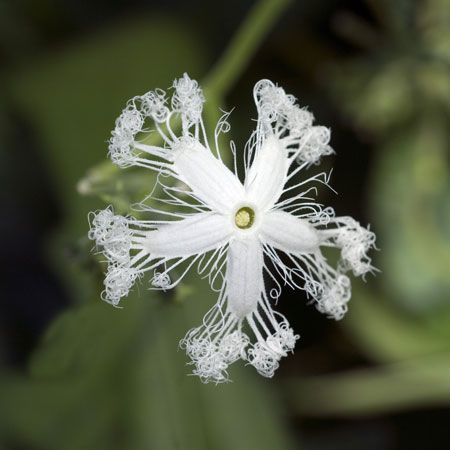
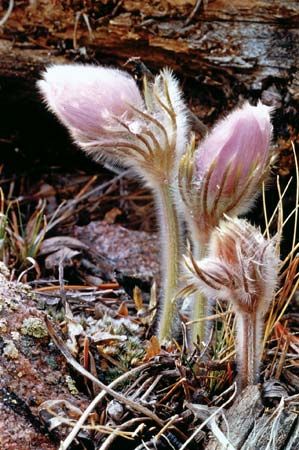
Meadow Rue
Meadow rue (genus Thalictrum) is a group of approximately 330 species of perennial herbaceous plants belonging to the buttercup family. These plants are…
What is meadow rue?
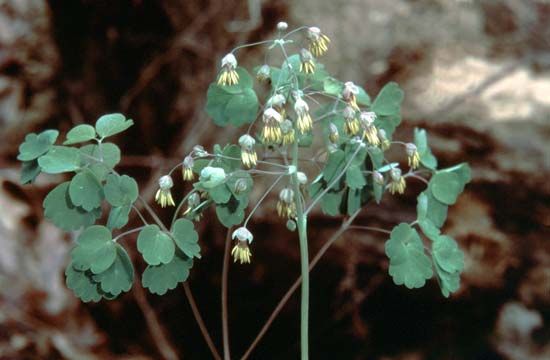
Meadow rue (genus Thalictrum) is a group of approximately 330 species of perennial herbaceous plants belonging to the buttercup family1. These plants are widely distributed across the North Temperate Zone, as well as parts of Africa and South America, where they thrive in both wooded areas and sunny, open spaces.12
The plants are characterized by compound leaves made up of three stalked leaflets. Their small, fuzzy flowers grow in clusters and typically feature four or five sepals, though they lack petals. While some species are native to North America—such as Thalictrum dioicum (quicksilver weed) and T. polygomum (muskrat weed)—other Eurasian varieties, like T. aquilegiofolium and T. delavayi, are often cultivated for their showy appearance in gardens.1
What other plants belong to the buttercup family?
The Ranunculaceae family, commonly known as the buttercup family, encompasses approximately 2,252 species of flowering plants across 62 genera. These plants are primarily herbaceous and are found globally, with the highest diversity occurring in temperate and subtropical regions.34
Beyond meadow rue, the family includes a wide variety of popular wildflowers and garden ornamentals, such as:34
- Anemone (Anemone)
- Baneberry (Actaea)
- Bugbane (Cimicifuga)
- Buttercup (Ranunculus)
- Clematis (Clematis)
- Columbine (Aquilegia)
- Globeflower (Trollius)
- Goldenseal (Hydrastis canadensis)
- Hellebore (Helleborus)
- Hepatica (Hepatica)
- Larkspur (Delphinium)
- Love-in-a-mist (Nigella damascena)
- Marsh marigold (Caltha palustris)
- Monkshood (Aconitum)
- Mousetail (Myosurus)
- Pheasant’s-eye (Adonis annua)
- Winter aconite (Eranthis)
How do perennial plants survive through the winter?
Perennial plants survive the winter by adapting their growth cycles to seasonal changes, often entering a state of dormancy to endure unfavorable conditions. These survival strategies vary depending on the plant’s structure:5
- Herbaceous Perennials: In cold climates, these plants typically die back to the ground in autumn. They survive the winter by relying on protected underground storage organs, such as bulbs, corms, tubers, or rhizomes, which store essential starches and proteins.67
- Woody Perennials: Trees and shrubs often cease shoot growth and form resting buds before winter. These buds contain a short axis protected by modified leaves, which shield the stem from drying and cold. Deciduous trees further adapt by shedding their leaves to prevent freezing damage and reduce energy loss.58
These processes are often triggered by environmental cues like shortening day lengths and decreasing temperatures, which signal the plant to produce inhibitory hormones like abscisic acid to halt growth.5
What are the differences between native and ornamental plants?
The primary distinction between native and ornamental plants lies in their origin and the purpose for which they are cultivated.
Native plants are indigenous to a specific region, meaning they have evolved over time within a particular ecosystem and are adapted to its local climate, soil, and wildlife. Because they are part of the local natural heritage, they often support regional biodiversity and require less intervention to thrive in their native environment.10
Ornamental plants, by contrast, are cultivated primarily for their aesthetic appeal rather than for practical utility. While some ornamental plants may be native to a region, many are introduced or exotic species selected for specific visual traits such as color, form, or texture. In ornamental horticulture, these plants are often propagated as named cultivars to serve as design elements in landscape architecture, where they are used to enhance the beauty of gardens, parks, and urban spaces.111012
Sources
- meadow rue — Encyclopædia Britannica
- meadow rue — Merriam-Webster
- Ranunculaceae — Encyclopædia Britannica
- list of plants in the family Ranunculaceae — Encyclopædia Britannica
- horticulture - Frost control — Encyclopædia Britannica
- Rhizome — Encyclopædia Britannica
- Perennial — Encyclopædia Britannica
- Plant development - Seasonal adaptations — Encyclopædia Britannica
- Temperate forest - Environment — Encyclopædia Britannica
- nonnative — Merriam-Webster
- ornamental — Merriam-Webster
- horticulture - Trees — Encyclopædia Britannica
Published on · 3 min read