Hepatica
Hepatica refers to a genus of about seven species of small, herbaceous perennial plants belonging to the buttercup family. These plants are native to shady…
What is hepatica?
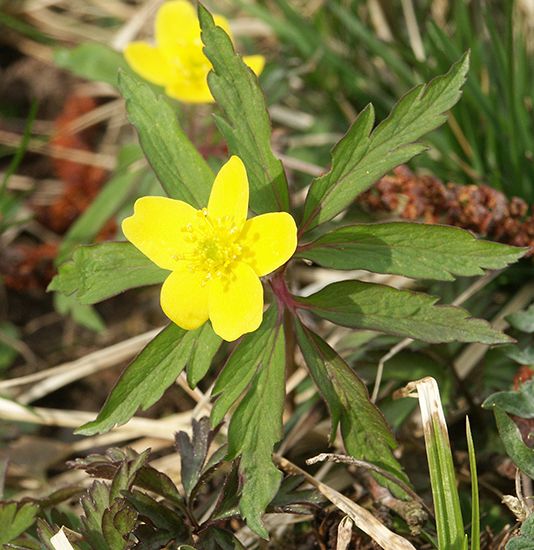
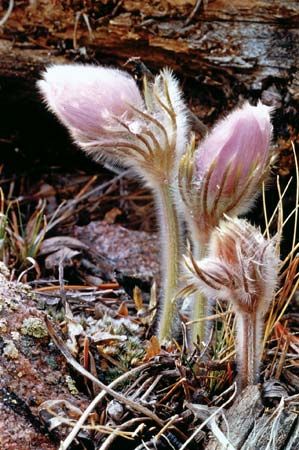
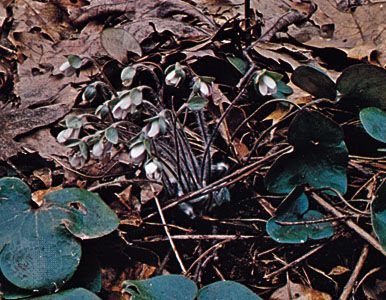
Hepatica refers to a genus of about seven species of small, herbaceous perennial plants belonging to the buttercup family. These plants are native to shady, wooded regions throughout the north temperate zone.1
Key characteristics include:
- Appearance: They are stemless plants featuring three-lobed leaves that persist through the winter.1
- Flowering: They produce flowers in shades of purple, lavender, blue, pink, or white, typically blooming in early spring before the plant’s new leaves emerge.1
- Historical and Medicinal Use: The name is derived from the plant’s historical association with the liver, as it was once believed to be a remedy for liver diseases. While H. nobilis is sometimes utilized in herbal medicine for respiratory conditions, it is important to note that the species is poisonous.1
Common varieties include H. americana, found in eastern North America, and the widely distributed H. nobilis.1
What other plants belong to the buttercup family?
The Ranunculaceae family, commonly known as the buttercup family, is a diverse group comprising approximately 2,252 species across 62 genera of flowering plants. These plants are primarily herbaceous and are widely distributed throughout temperate and subtropical regions.23
Beyond hepatica, the family includes many well-known wildflowers and garden ornamentals, such as:
- Anemone
- Baneberry
- Bugbane
- Buttercup
- Clematis
- Columbine
- Globeflower
- Goldenseal
- Hellebore (including the Christmas rose)
- Larkspur
- Love-in-a-mist
- Marsh marigold
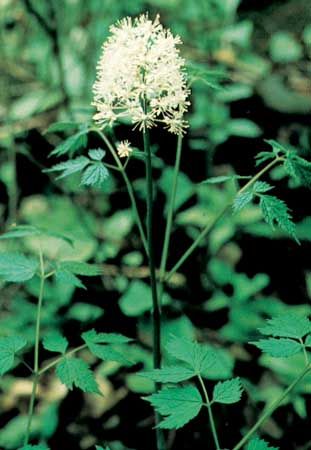
- Meadow rue
- Monkshood
- Mousetail
- Pheasant’s-eye
- Winter aconite3
Why do some plants keep their leaves green throughout the winter?
Plants that retain their foliage throughout the year are known as evergreens. Their ability to stay green during winter is primarily an adaptation to their specific environment and resource availability.
In milder climates where photosynthesis is possible year-round, plants benefit from keeping their leaves because it avoids the high energy cost of growing new foliage every season. In contrast, in drier environments, plants often develop thickened, leathery leaves—sometimes called sclerophyllous foliage—to minimize water loss through transpiration. Because these specialized leaves require significant energy and nutrients to produce, the plant retains them for multiple years to maximize their utility.4
In colder regions, evergreens often possess tough, needlelike or scalelike leaves that are resistant to freezing damage and dehydration. While deciduous trees shed their leaves to avoid the stress of winter, these evergreen adaptations allow the plant to continue food production whenever conditions are favorable. By maintaining foliage, these plants are prepared to perform photosynthesis whenever moisture is available and temperatures are sufficiently warm, providing a competitive advantage in environments where resources may be unpredictable.564
How do early spring flowers survive late frosts?
Early spring flowers and other plants survive late frosts through a combination of physiological adaptations and environmental management.
To withstand freezing temperatures, many plants undergo a process known as hardening off. This involves a gradual exposure to cold or the restriction of water and fertilizer, which prevents the formation of succulent, frost-tender tissues that are easily damaged by ice crystal formation within plant cells. Furthermore, some organisms utilize biological substances that act similarly to antifreeze, such as glycerol or specific proteins, to inhibit the formation of ice crystals in their tissues.89
In agricultural and horticultural settings, growers employ active methods to protect sensitive flower parts and crops from frost injury:
- Heat Conservation: Using hot caps, cold frames, or mulches to reduce radiational heat loss.8
- Heat Addition: Utilizing wind machines to mix warmer air with cold air trapped near the ground, or using heaters to raise ambient temperatures.810
- Sprinkler Irrigation: Continuously spraying water over plants allows the water to freeze; the process of ice formation releases heat, which helps maintain the plant tissue at approximately 0 °C (32 °F), preventing further freezing damage.810
Sources
- hepatica — Encyclopædia Britannica
- Ranunculaceae — Encyclopædia Britannica
- list of plants in the family Ranunculaceae — Encyclopædia Britannica
- Evergreen — Encyclopædia Britannica
- Temperate forest - Environment — Encyclopædia Britannica
- Plant - Classification of angiosperms — Encyclopædia Britannica
- evergreen — Merriam-Webster
- horticulture - Frost control — Encyclopædia Britannica
- vernalization — Encyclopædia Britannica
- antifreeze — Encyclopædia Britannica
- Frost — Encyclopædia Britannica
Published on · 3 min read