Saint Peter and Saint Paul Rocks
The Saint Peter and Saint Paul Rocks are a remote archipelago located in the Atlantic Ocean, approximately 685 miles (1,100 km) off the northeastern coast of…
What is Saint Peter and Saint Paul Rocks?
The Saint Peter and Saint Paul Rocks are a remote archipelago located in the Atlantic Ocean, approximately 685 miles (1,100 km) off the northeastern coast of Brazil. Situated just north of the Equator, the formation consists of six large islands, four smaller ones, and several exposed rock tops.1
These islets are uninhabited and characterized by an inhospitable environment. Despite their isolation, they serve as a significant site for the fishing industry in northeastern Brazil, as several migratory species are caught in the surrounding waters annually. To facilitate research in this remote location, a scientific station was established on the rocks in 1998. In Portuguese, the archipelago is known as Penedos de São Pedro e São Paulo.12
How do tectonic plates influence the formation of oceanic islands?
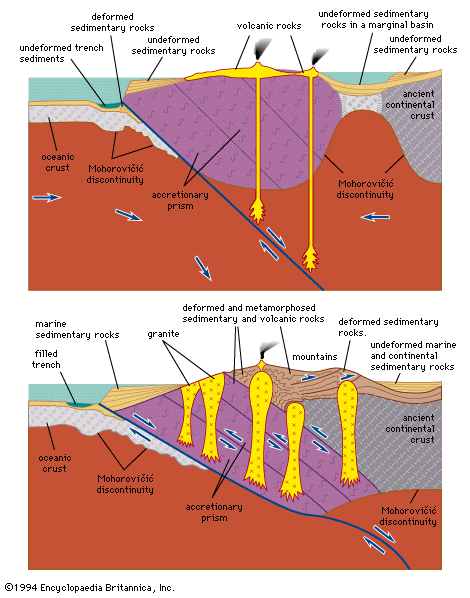
Tectonic plates influence the formation of oceanic islands primarily through volcanic activity occurring in three distinct geologic settings:
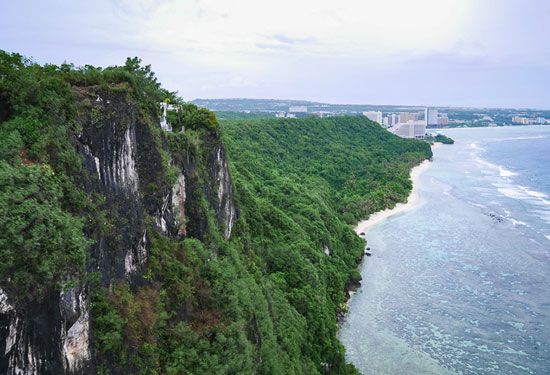
- Subduction Zones: When two oceanic plates converge, one is forced beneath the other into the mantle. This process generates magma that rises to the surface, creating curved chains of volcanic islands known as island arcs, such as the Mariana Islands.34
- Oceanic Ridges: At divergent boundaries, plates move apart, allowing magma to well up from the mantle to create new ocean floor. While most of this activity is underwater, some ridges are sufficiently elevated to emerge above sea level, forming islands like Iceland.3
- Hotspots: These occur within the interior of a tectonic plate, far from its margins. As a plate moves over a stationary mantle plume, a chain of volcanoes is formed. Over time, the plate carries older volcanoes away from the heat source, where they cool, subside, and eventually become atolls or submerged seamounts, as seen in the Hawaiian island chain.35
What kind of marine life thrives in isolated island ecosystems?
Isolated island ecosystems often host unique and diverse marine life, though the specific composition depends heavily on the island’s geological origin and its distance from major landmasses.
Marine Biodiversity in Island Ecosystems
- Coral Reefs: Many tropical islands are built upon coral reefs, which are among the most complex ecosystems on Earth. These reefs support approximately 25 percent of all marine species, providing essential habitats for a vast array of fish, invertebrates, and symbiotic organisms like zooxanthellae.1
- Endemic Species: Islands are hotspots for endemic species—organisms found nowhere else in the world. Because these species are restricted to small geographic ranges, they are often highly specialized but also particularly vulnerable to environmental changes and extinction.67
- Migratory Hubs: Remote islands often serve as critical waypoints or breeding grounds for highly migratory species. For example, the Pribilof Islands are essential for the reproduction of northern fur seals, while other islands provide refuge for migrating whales and sea birds.89
- Benthic Communities: The surrounding waters often feature rich benthic assemblages, including sponges, anemones, and various crustaceans that thrive in rocky substrates or sediment-rich environments.10
While these ecosystems can be incredibly rich, their isolation means they are often species-poor compared to continents, as many organisms struggle to reach them across vast oceanic barriers.11
Why are scientific research stations built in such remote locations?
Scientific research stations are established in remote locations to provide unique, direct access to environments that are critical for understanding Earth’s systems and the broader universe. These stations allow scientists to conduct in situ measurements—gathering data directly at the point of interest—which is essential for studying phenomena that cannot be accurately observed from a distance.15
Key reasons for maintaining these remote outposts include:
- Environmental Monitoring: Stations in regions like the Arctic and Antarctica are vital for documenting climate change and global warming. By monitoring ice sheets, glaciers, and atmospheric conditions, researchers can track environmental shifts that have global implications.1617
- Unique Scientific Conditions: Remote areas often offer unparalleled conditions for specialized research. For example, the South Pole provides exceptional atmospheric clarity and a stable, massive ice sheet that acts as a detector for cosmic particles, such as neutrinos.17
- Logistical Hubs: Facilities like McMurdo Station serve as essential staging grounds, providing the infrastructure and logistics necessary to support expeditions into otherwise inaccessible interior regions.18
- Geophysical Data: Continuous occupation allows for long-term data collection on the ionosphere, ozone depletion, and the Earth’s response to solar activity, which is critical for scientific modeling.1617
Sources
- Saint Peter and Saint Paul Rocks — Encyclopædia Britannica
- Saint Peter and Saint Paul Rocks — Merriam-Webster
- volcanism — Encyclopædia Britannica
- plate tectonics - Hotspots — Encyclopædia Britannica
- plate tectonics - Island arcs — Encyclopædia Britannica
- coral island — Encyclopædia Britannica
- Migration - Marine mammals — Encyclopædia Britannica
- endemic species — Encyclopædia Britannica
- Migration - Lower invertebrates — Encyclopædia Britannica
- Marine ecosystem - Benthos — Encyclopædia Britannica
- Coral Bleaching: A Threat to Our Reefs — Encyclopædia Britannica
- French Polynesia - Plant and animal life — Encyclopædia Britannica
- biogeographic region - Components of species diversity: species richness and relative abundance — Encyclopædia Britannica
- conservation - Endemism and rarity — Encyclopædia Britannica
- Arctic - The Arctic Ocean — Encyclopædia Britannica
- Atmosphere - Measurement systems — Encyclopædia Britannica
- Antarctica - Climate of Antarctica — Encyclopædia Britannica
- McMurdo Station — Encyclopædia Britannica
Published on · 3 min read