Screamer
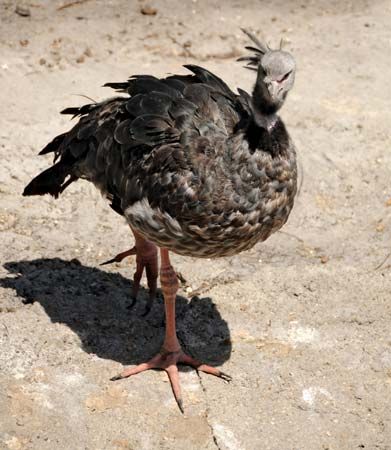
The screamer family (Anhimidae) consists of three species of South American waterfowl characterized by several unique anatomical and behavioral traits:
What are the key characteristics that define birds in the screamer family?
The screamer family (Anhimidae) consists of three species of South American waterfowl characterized by several unique anatomical and behavioral traits:
- Physical Appearance: They are large, plump birds with long legs, ringed necks, and short, chickenlike bills that are nonlamellate and slightly hooked, adapted for tearing aquatic plants.123
- Wing Spurs: Each wing features a pair of sizable, bony, forward-pointing spikes near the bend, which are used to strike adversaries.13
- Unique Anatomy: Screamers possess a highly pneumatic skeleton—even the outermost toe bones are hollow—and lack uncinate processes (prongs) on their ribs. Their skin contains a system of air sacs that produce unique crackling sounds.1
- Plumage: Unlike most birds, their feathers grow uniformly over the entire body (excluding the legs) rather than in distinct tracts.1
- Feet: Unlike typical waterfowl, their feet are unwebbed.2
- Behavior: They are known for their raucous, far-carrying cries and their ability to soar for hours at great heights. They inhabit marshes, where they feed gregariously on water plants and construct reed nests.1
How do screamers communicate, and why are they called ‘screamers’?
Screamers derive their name from their characteristic, raucous, and far-carrying cry. This vocalization is a primary method of communication for these South American waterfowl, helping them interact within their marshy habitats.1
Beyond their vocal calls, screamers possess a unique anatomical feature that contributes to their sound production: their skin contains a system of tiny air sacs that generate distinct crackling sounds. While air sacs in many birds primarily serve to increase respiratory efficiency, in screamers, this specialized system is uniquely linked to these audible crackles. Additionally, the name of the crested screamer, also known as the chaja, is derived directly from the sound of its specific cry.16
How do screamers reproduce, and what are their nesting habits?
Screamers exhibit reproductive behaviors that differ in several ways from other members of the waterfowl group. Their nesting and breeding habits are characterized by the following:
- Nesting Sites: Screamers construct substantial, bulky nests on marshy ground or in shallow water. These structures are often quite large, sometimes reaching a height of 30 cm (1 foot) or more.1
- Clutch Size: The number of eggs laid varies depending on the specific species, with a typical clutch ranging from two to six eggs.1
- Development of Young: Upon hatching, young screamers are covered in yellow down. Unlike many other bird species that remain in the nest for an extended period, young screamers are mobile and leave the nest when they are only a few days old. Once they depart, they follow their parents in a manner similar to other young waterfowl.1
While many other waterfowl species are known for specific territorial behaviors or nest-site selection processes, the nesting habits of screamers are distinctively adapted to their marshland environments.1
What is the evolutionary history of screamers, and how are they related to other bird families?
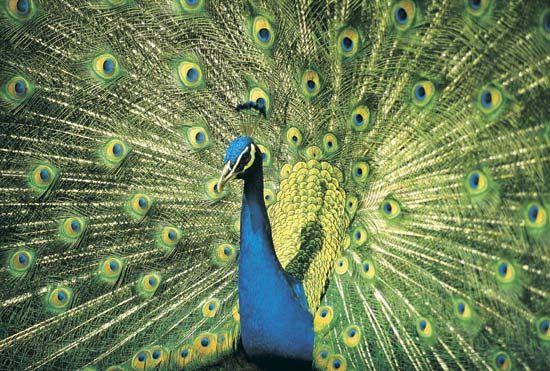
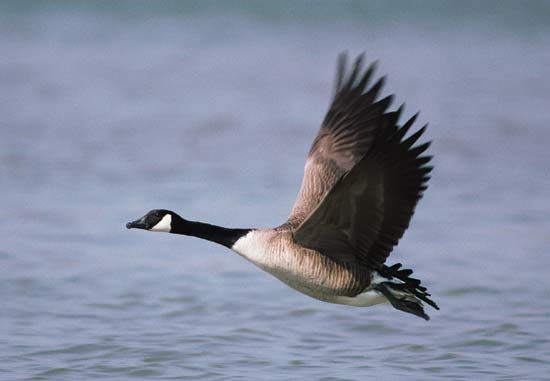
Screamers belong to the family Anhimidae, which is part of the order Anseriformes—the same group that includes ducks, geese, and swans (family Anatidae). Despite their superficial resemblance to pheasants, screamers are evolutionarily akin to geese.113
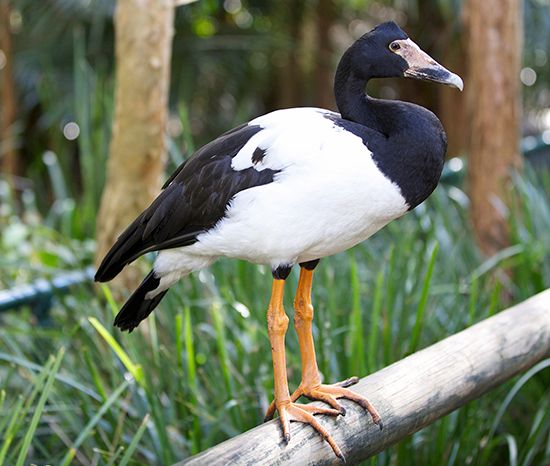
Anseriformes represent an ancient lineage, with ancestors dating back to the Cretaceous Period more than 65 million years ago. Fossil and genetic evidence suggests that the order likely diversified in the Southern Hemisphere, where primitive lineages like screamers and the magpie goose still reside. While the Anatidae family underwent rapid and extensive diversification, screamers are considered to have remained relatively unspecialized, retaining features that may resemble the ancestral forms of the order, which were likely long-legged, generalized birds similar to galliform curassows.14
Screamers possess unique anatomical traits, such as a highly pneumatic skeleton and a lack of uncinate processes on their ribs, distinguishing them from their relatives.13
Sources
- Screamer — Encyclopædia Britannica
- Anseriform - Annotated classification — Encyclopædia Britannica
- Anseriform - General features — Encyclopædia Britannica
- Anseriform - Anatomy — Encyclopædia Britannica
- screamer — Merriam-Webster
- scream — Merriam-Webster
- screams — Merriam-Webster
- Air sac — Encyclopædia Britannica
- Why do coyotes scream? — Encyclopædia Britannica
- Anseriform - Reproductive behaviour — Encyclopædia Britannica
- Gruiform - Nesting — Encyclopædia Britannica
- Psittaciform - Reproduction — Encyclopædia Britannica
- Anseriform — Encyclopædia Britannica
- Anseriform - Evolution and paleontology — Encyclopædia Britannica
- Anhimidae — Merriam-Webster
Published on · 3 min read