Senna
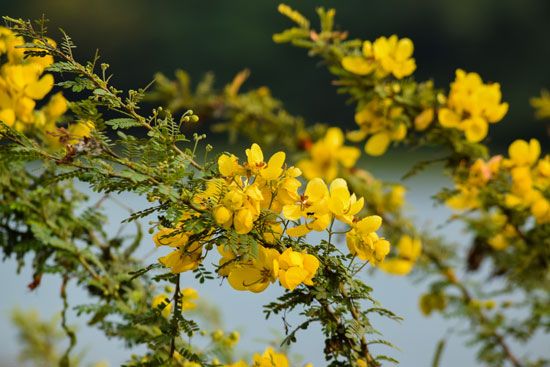
Senna refers to various species of trees or shrubs within the Fabaceae family, primarily native to tropical and subtropical regions.
How is senna cultivated and what are its ideal growing conditions?
Senna refers to various species of trees or shrubs within the Fabaceae family, primarily native to tropical and subtropical regions.1
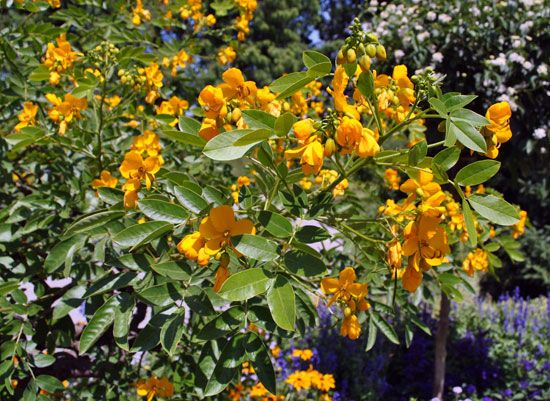
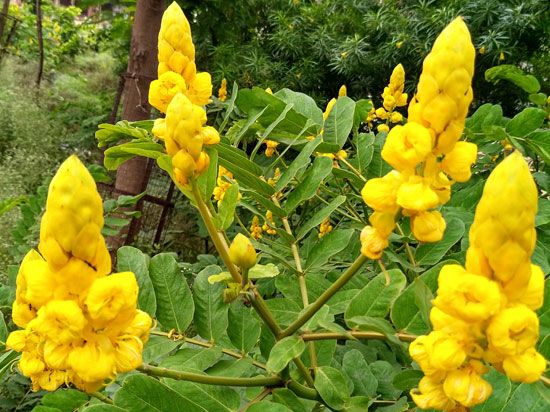
While specific cultivation techniques vary by species, these plants are generally grown for their medicinal properties or as ornamental plants. For instance, Senna alexandrina and Cassia sieberana are cultivated in India for their cathartic uses, while other varieties like the candlestick senna are grown in tropical climates and regions such as California for their showy flowers. Because these plants are predominantly native to warmer climates, they thrive in environments that mimic these tropical and subtropical conditions.1
It is important to note that some species, such as the Christmas senna, can become an invasive species when introduced to non-native environments, which necessitates careful management to protect local ecosystems.1
What is senna and what plant family does it belong to?
Senna refers to various species of trees or shrubs characterized by their yellow flowers. These plants primarily belong to the genera Cassia and Senna within the pea family (Fabaceae).1
Found mostly in tropical and subtropical regions, many senna species are valued for their medicinal properties, particularly as cathartics and laxatives, while others are cultivated as ornamental plants due to their showy flowers. Additionally, some species are rich in tannins and are used to produce tanbark for leather preparation.1
The Fabaceae family itself is the third-largest family of angiosperms, encompassing a vast diversity of plants including vines and herbs, and serves as a critical source of food and industrial products globally.2
What other plants are closely related to senna and have similar properties?
Several plants are closely related to senna or share its functional properties, particularly regarding their use as laxatives or medicinal agents.
Related Plants within the Fabaceae Family
Senna belongs to the pea family (Fabaceae), which is one of the largest and most economically significant plant families. Within this family, various species are categorized as “wild sennas,” such as S. hebecarpa, S. marilandica, and S. occidentalis (coffee senna), all of which are recognized for their cathartic and laxative properties. Other plants in the family, such as the bladder sennas (Colutea species) and scorpion senna (Hippocrepis emerus), share the characteristic yellow flowers and shrubby growth habit of the genus Senna.134
Plants with Similar Properties
While not botanically related to senna, other plants are used for similar medicinal purposes, most notably as bulk-forming laxatives:
- Blond Plantain (Plantago ovata): Also known as psyllium, this plant is cultivated for its seeds, which are rich in soluble dietary fiber. Its husks absorb water to form a gel, making them a common, effective laxative and fiber supplement.2
How long has senna been used in traditional medicine and in which cultures?
Senna has a long history of use in traditional medicine, particularly for its cathartic and laxative properties. While the term “senna” was first recorded in English in 1543, its etymological roots trace back to the Arabic word sanā, indicating its historical significance and use within Arabian and Middle Eastern traditions.1
The plant has been utilized across various cultures for centuries:
- Egypt, Sudan, and Nigeria: Senna alexandrina (Alexandrian senna) is native to these regions and has long been cultivated for its medicinal efficacy.4
- India: The plant is extensively cultivated in India, where it is highly valued for its purgative qualities. Additionally, S. auriculata, known as avaram or tanner’s senna, is a traditional staple in southern India, used both for its medicinal properties and as a source of tanbark.4
- The Americas: Various species, such as the North American wild senna (S. marilandica) and the coffee senna (S. occidentalis), have been historically employed in local traditional practices for their laxative effects.46
Sources
- senna — Encyclopædia Britannica
- Fabaceae — Encyclopædia Britannica
- Plantago — Encyclopædia Britannica
- wild senna — Merriam-Webster
- Fabales: Top Questions — Encyclopædia Britannica
- senna — Merriam-Webster
- Indian senna — Merriam-Webster
- compound infusion of senna — Merriam-Webster
Published on · 3 min read