Shallot
The shallot (Allium cepa, variety aggregatum) is a mildly aromatic plant in the amaryllis family (Amaryllidaceae) that is closely related to the common…
What is Shallot?
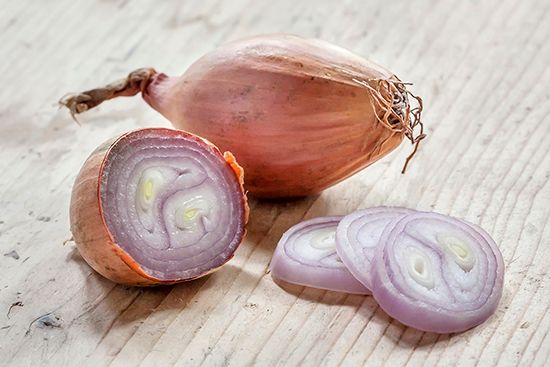
The shallot (Allium cepa, variety aggregatum) is a mildly aromatic plant in the amaryllis family (Amaryllidaceae) that is closely related to the common onion. Unlike standard onions, shallots produce small, angular bulbs that grow in clusters on a common base, similar to garlic in clusters on a common base, similar to garlic.12
These perennial plants, often cultivated as annuals, are prized for their mild flavor and are commonly used to season meats and sauces. While the bulbs are the primary culinary focus, the plant’s small, hollow leaves are also edible. Typically planted in early spring, shallots are harvested in the summer. Though sometimes confused with green onions (scallions), shallots are a distinct variety characterized by their clustered bulb structure.123
How do shallots differ from common onions in cooking?
While both shallots and common onions belong to the same species (Allium cepa) and are used to flavor a wide variety of dishes, they differ in their culinary profile and physical characteristics:
- Flavor Profile: Shallots are noted for their mild, delicate flavor, making them a preferred choice for seasoning meats and sauces where a subtle aromatic quality is desired. In contrast, common onions vary significantly in pungency; while some varieties are sweet, many possess a stronger, sharper flavor due to their sulfur-rich volatile oils, which are often utilized in stews, roasts, and soups.
- Physical Structure: Shallots grow in small, angular clusters on a common base, similar to garlic. Common onions typically develop as a single, larger, concentric bulb.
- Usage: Because of their mildness, shallots are often used to provide a nuanced base for refined sauces. Common onions are more versatile in their application, serving as a primary vegetable in cooked dishes, a raw component in salads, or a base for hearty, long-cooked meals.
What other plants belong to the amaryllis family?
The Amaryllidaceae family is a diverse group of perennial herbs comprising 73 genera and at least 1,600 species. These plants are categorized into three subfamilies, each containing distinct varieties ranging from food crops to garden ornamentals.45
Subfamily Allioideae
This group is well-known for its important culinary crops, primarily within the genus Allium:
- Onion (A. cepa)
- Green onion
- Shallot (A. cepa, variety aggregatum)
- Leek (A. porrum)
- Garlic (A. sativum)
- Chive (A. schoenoprasum)
Subfamily Amaryllidoideae
This subfamily features many popular garden ornamentals:
- Amaryllis: Includes the belladonna lily and Hippeastrum.4
- Narcissus: Includes the daffodil and jonquil.odil) and jonquil.5
- Others: Snowdrop, snowflake, Cape tulip, and Cornish lily.45
Subfamily Agapanthoideae
This subfamily consists of the single genus Agapanthus, which includes the African lily, a common ornamental plant.45
We could dive deeper into the specific cultivation requirements of these ornamental versus edible varieties if you’re interested.
Why do onions and shallots make people cry when cut?
When you cut onions or shallots, you trigger a chemical reaction that causes your eyes to tear up. These plants absorb sulfur from the soil, which they incorporate into amino acids. When you slice into them, you rupture their cells, allowing previously separated enzymes to mix with these sulfur-rich compounds6.
This interaction creates unstable sulfenic acids, which quickly rearrange into a volatile gas called syn-propanethial-S-oxide. Because this chemical vaporizes easily, it travels through the air to your eyes, where it creates a burning sensation. Your body responds by producing tears to flush out the irritant.6
To minimize this reaction, you can refrigerate or freeze the onions before cutting, as cold temperatures slow down the activity of the enzymes involved. Additionally, choosing less sulfurous varieties, such as sweet onions, can reduce the intensity of the effect.6
Sources
- Shallot — Encyclopædia Britannica
- shallot — Merriam-Webster
- Onion — Encyclopædia Britannica
- Amaryllidaceae — Encyclopædia Britannica
- list of plants in the family Amaryllidaceae — Encyclopædia Britannica
- Why Do Onions Make You Cry? — Encyclopædia Britannica
Published on · 3 min read