Tetrapod
Tetrapods are a superclass of vertebrates characterized primarily by the presence of two pairs of limbs. Emerging roughly 397 million years ago, this group…
What are the defining characteristics of tetrapods?
Tetrapods are a superclass of vertebrates characterized primarily by the presence of two pairs of limbs. Emerging roughly 397 million years ago, this group includes amphibians, reptiles, birds, and mammals.12
While early tetrapods were likely aquatic, their evolution involved significant skeletal adaptations for life on land. Key morphological characteristics shared by tetrapods include:3
- Limb Structure: Primitively, limbs feature a specific pattern: one proximal bone, two distal bones, and a wrist or ankle joint, with digits at the end of each limb.42
- Ear Anatomy: They possess an oval window (fenestra ovalis) in the skull that opens into the middle ear, along with a stapes (ear bone).2
- Skeletal Support: To counter gravity during terrestrial locomotion, tetrapods developed a more rigid vertebral column and a pelvic girdle firmly anchored to the axial skeleton.3
- Neck Mobility: The pectoral girdle lost its attachment to the skull, allowing for increased head mobility.3
How did tetrapods evolve from their aquatic ancestors?
The evolution of tetrapods from their aquatic ancestors—specifically sarcopterygian (lobe-finned) fishes—was a gradual process spanning over 80 million years, beginning in the Devonian Period.33
The Transition from Fins to Limbs
The transition began while these animals were still fully aquatic, likely inhabiting shallow, vegetation-dense waters. Rather than evolving for land, early limb-like appendages likely served as supports for navigating dense environments or walking along the bottoms of watercourses.35
Key evolutionary developments included:
- Skeletal Support: Ancestral fishes already possessed lungs for aerial respiration, which were later repurposed in tetrapods. Over time, natural selection favored stronger, more rigid skeletons to support body weight against gravity.3
- Joint Development: The evolution of elbow, knee, wrist, and ankle joints allowed for greater flexibility, replacing the rigid fin-ray structure with distinct skeletal elements.53
- Structural Reorganization: As limbs became primary tools for propulsion, the pelvic girdle became firmly anchored to the vertebral column to support weight, while the pectoral girdle detached from the skull to allow for a flexible neck.23
Transitional Forms
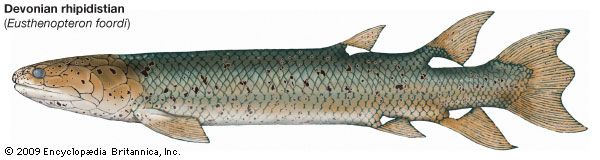
Fossil discoveries such as Tiktaalik roseae have provided critical insights into this shift. Tiktaalik possessed features intermediate between fins and limbs, including a flattened skull and robust joints, yet it retained primitive traits like fin rays, indicating it was still a capable swimmer. Other significant forms include Eusthenopteron, Panderichthys, and Acanthostega, which collectively illustrate the emergence of vertebrates onto land.53
What are the four main groups of modern tetrapods?
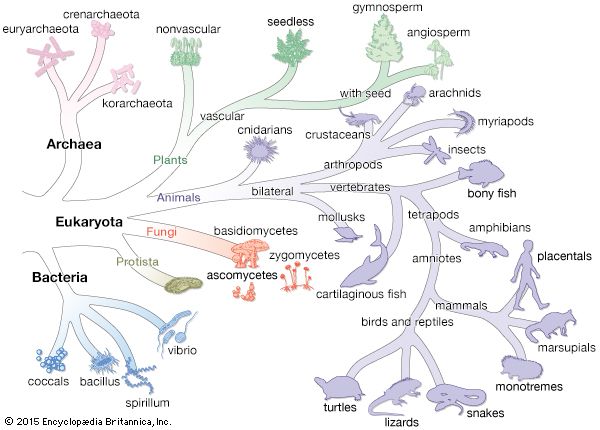
Modern tetrapods are classified into four main groups: amphibians, reptiles, birds, and mammals.bird-animal), and mammals.1
While these groups are traditionally categorized as distinct classes, modern phylogenetic studies have refined our understanding of their evolutionary relationships:7
- Amphibians: Representing the earliest tetrapod lineage, they typically undergo a dual life strategy, often involving an aquatic larval stage and a terrestrial adult phase.89
- Reptiles: These are air-breathing, amniotic vertebrates characterized by epidermal scales and internal fertilization.89
- Birds: Although traditionally separated, birds are evolutionarily nested within the Archosauria group of reptiles. They are distinguished by their feathers, warm-blooded metabolism, and forelimbs modified into wings.8710
- Mammals: This group is uniquely defined by the presence of mammary glands, hair, and a specialized middle ear structure consisting of three tiny bones.89
What is the significance of the transition from fins to limbs in tetrapod evolution?
The transition from fins to limbs was a fundamental evolutionary shift that enabled vertebrates to move from an aquatic lifestyle to a terrestrial one, a process spanning over 80 million years during the Devonian Period. This transformation was not an abrupt event but a gradual adaptation that began in fully aquatic, lobe-finned sarcopterygian fishes.13
Significance of the Transition
The evolution of limbs provided the structural support necessary to overcome the challenges of gravity and locomotion outside of water. Key aspects of this significance include:213
- Structural Support and Locomotion: Early limb-like appendages likely evolved to help predators navigate dense vegetation or walk along the bottoms of shallow watercourses. Over time, natural selection favored stronger skeletons and the development of joints—such as elbows, knees, wrists, and ankles—which replaced rigid fin rays with flexible, weight-bearing structures.135
- Reorganization of the Body: To support body weight on land, the pelvic girdle became firmly anchored to the vertebral column. became firmly anchored to the vertebral column. Simultaneously, the pectoral girdle detached from the skull, allowing for the development of a flexible neck, which was essential for feeding and movement in a terrestrial environment.13
- Shift in Propulsive Force: In fish, propulsion is primarily driven by axial musculature and body undulations. In tetrapods, this force shifted to the limbs, allowing for more efficient movement on land. This transition required the development of rigid vertebral columns to counter gravity and specialized musculature for limb extension and flexion.213
Fossil forms like Tiktaalik roseae illustrate this intermediate stage, showing how aquatic animals began to develop the skeletal features that would eventually define terrestrial life.14
Sources
- Did you know? — Merriam-Webster
- muscle - Origins of the tetrapod limbs — Encyclopædia Britannica
- tetrapod — Encyclopædia Britannica
- amphibian - Evolution and classification — Encyclopædia Britannica
- Tiktaalik roseae — Encyclopædia Britannica
- reptile - Historical development — Encyclopædia Britannica
- 5 Vertebrate Groups — Encyclopædia Britannica
- Vertebrate - Annotated classification — Encyclopædia Britannica
- muscle - Tetrapod musculature — Encyclopædia Britannica
- tetraodontiform - Critical appraisal — Encyclopædia Britannica
- reptile - Critical appraisal — Encyclopædia Britannica
- Bird: Top Questions — Encyclopædia Britannica
- skeleton - General features — Encyclopædia Britannica
- skeleton - General characteristics — Encyclopædia Britannica
- lungfish - Evolution — Encyclopædia Britannica
Published on · 4 min read